
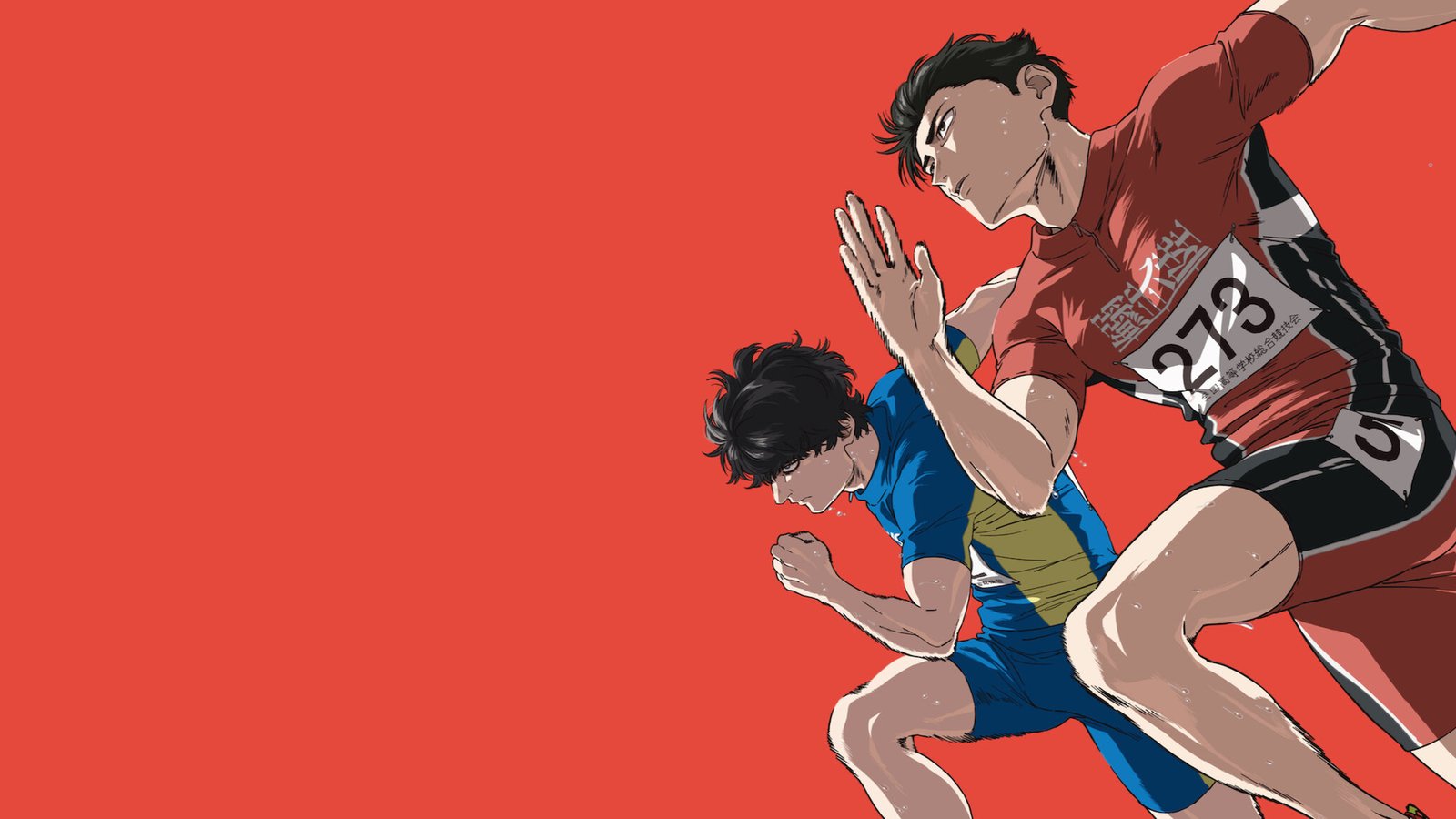
Kenji Iwaisawa twists the 100 meter sprint into a powerful exploration of failure and self-improvement in “100 Meters”. Based on the original manga by Uoto, this sports anime quickly gained recognition after ranking eighth in its opening weekend in Japan. A few months after its initial release, it became available on Netflix and immediately entered the top 6 of the global top 10 non-English movie list in the first week.
Click the image below to follow our Tribute to Netflix
Since then, this passionate track and field story has also solidified its impact by being nominated for multiple awards. Among them are “Award of Excellence” for the Best Animated Film category in the 49th annual Japan Academy Film Prize.
“100 Meters” follows the life of Togashi, a talented track star. As a child, he was the fastest among his peers and always won races. One day, he meets a transfer student, Komiya, running with determination but lacking skill. Togashi then decides to teach him, unaware that this sparks an obsession with winning in Komiya. Even after they part ways, their lives intertwine as the two meet in different stages of their lives. Until, finally, as adults and professional athletes, Togashi and Komiya face each other again on the track.
It’s through the depiction of sports that “100 Meters” conveys the message that there is always a chance to rise after hitting the lowest point in life. Both of the main characters had moments of defeat. Togashi was introduced as an exceptional sprinter, but he thinks of quitting multiple times. On the other hand, Komiya has had anxiety since childhood which extends into his teenage years so he has second thoughts about pursuing track and field. Despite it all, their passion fuels them to keep going. Togashi would train rigorously because he sets his sights on winning. Meanwhile, Komiya uses his weakness as motivation to become a national record breaker.
Even though the protagonists repeatedly fail and try again, the story does not feel repetitive. It becomes exhilarating and motivates the audience to do better because there is a chance to overcome their limits. One notable example is Kaido, an athlete who is more experienced than Togashi. He is famous for always finishing second, but he never gives up and gives it his all in every competition.
Iwaisawa’s direction for the animation is mesmerizing as it constantly mixes digital and traditional art. Most shots utilize painted environmental backgrounds to immerse viewers in the world of the movie, but it also adds emotional depth. A huge turning point in Togashi and Komiya’s relationship is when they compete in the rain. The droplets in the background are drawn by hand and gradually grow heavier to add intensity to Togashi’s hopelessness.
Since the narrative follows the protagonists as they grow from adolescence to adulthood, their build changes over time. Keisuke Kojima, who is in charge of character design, is able to depict this by the different facial features and body shapes. Rock`n Roll Mountain, the studio in charge of animation, translates the characters’ skills by using extensive rotoscoping for the running scenes. This gives each one unique sprinting styles, especially as they improve throughout the movie.
Outside of the races, rotoscoping is sometimes used in daily life scenes to better display certain body language. In a scene where Asakusa, a student at Togashi’s high school, approaches him to join the track and field team, she walks with a skip in her step, reflecting her excitement to see the national-level athlete. On the other hand, Togashi walks quickly while dragging his feet because he’s trying to ignore her.
While “100 Meters” takes its title from the sport, it’s not just about athletes competing against each other. It’s a story of getting back up despite reaching a mental breakdown, and starting over. With the use of dynamic animation styles, the characters’ determination inspires the audience to continue pushing toward their dreams. Through Togashi, Komiya, and the rest of the cast, this movie shows that sometimes, anyone can surpass their own limits.



