
Key Takeaways
- These five locations share access to quality health care, mild climates, and a cost of living far lower than in the U.S.
- Before relocating, research visas, health care, language, and local conditions. Consider living in the chosen destination for a few months before fully committing.
More Americans are looking to retire abroad—driven by rising costs in the U.S. or a desire for something new. South America offers many compelling options.
South America can cost far less than Europe, another popular destination for American retirees. Depending on the destination, retirement in South America can deliver solid health care, mild weather, and flights home that don’t take a full day.
We evaluated dozens of cities across the continent for cost, health care, safety, climate, and expat community size. Five stood out.
Cuenca, Ecuador
Alan Falcony / Getty Images
Dating to the 1500s and now a UNESCO World Heritage Site, Cuenca offers walkable cobblestone streets, quality private health care, and an expat community estimated at 8,000 to 10,000 people. Perched at an elevation of about 8,500 feet, it stays springlike year-round.
Ecuador uses the U.S. dollar as its currency, so you won’t pay fees for exchanging cash. Residents 65 and older get half-price public transportation, tickets for events, and utilities if they own their home.
The cost of living runs about 70% below U.S. levels. International Living estimates a couple can live comfortably in Cuenca on about $1,835 a month.
Medellín, Colombia
Helen Camacaro / Getty Images
Colombia’s second-largest city has undergone a dramatic transformation since it was the home of Pablo Escobar. Another city that has springlike weather all year, Medellín is known as one of Latin America’s most livable cities.
Medellín has reliable public transit and affordable private health care. The cost of living in Medellín is estimated to be 59% lower per person than in the U.S.
The city offers many farmers’ markets with fresh coffee beans, tropical fruits, and avocados. Often dubbed “the city of flowers,” the cultural calendar is full. The city hosts Colombiamoda (fashion week) in July, a Flower Festival in August, an International Jazz Festival in September, and one of South America’s most spectacular Christmas light displays in December. Botero Plaza features 23 large bronze sculptures by the homegrown artist Fernando Botero.
Arequipa, Peru
Piero Damiani / Getty Images
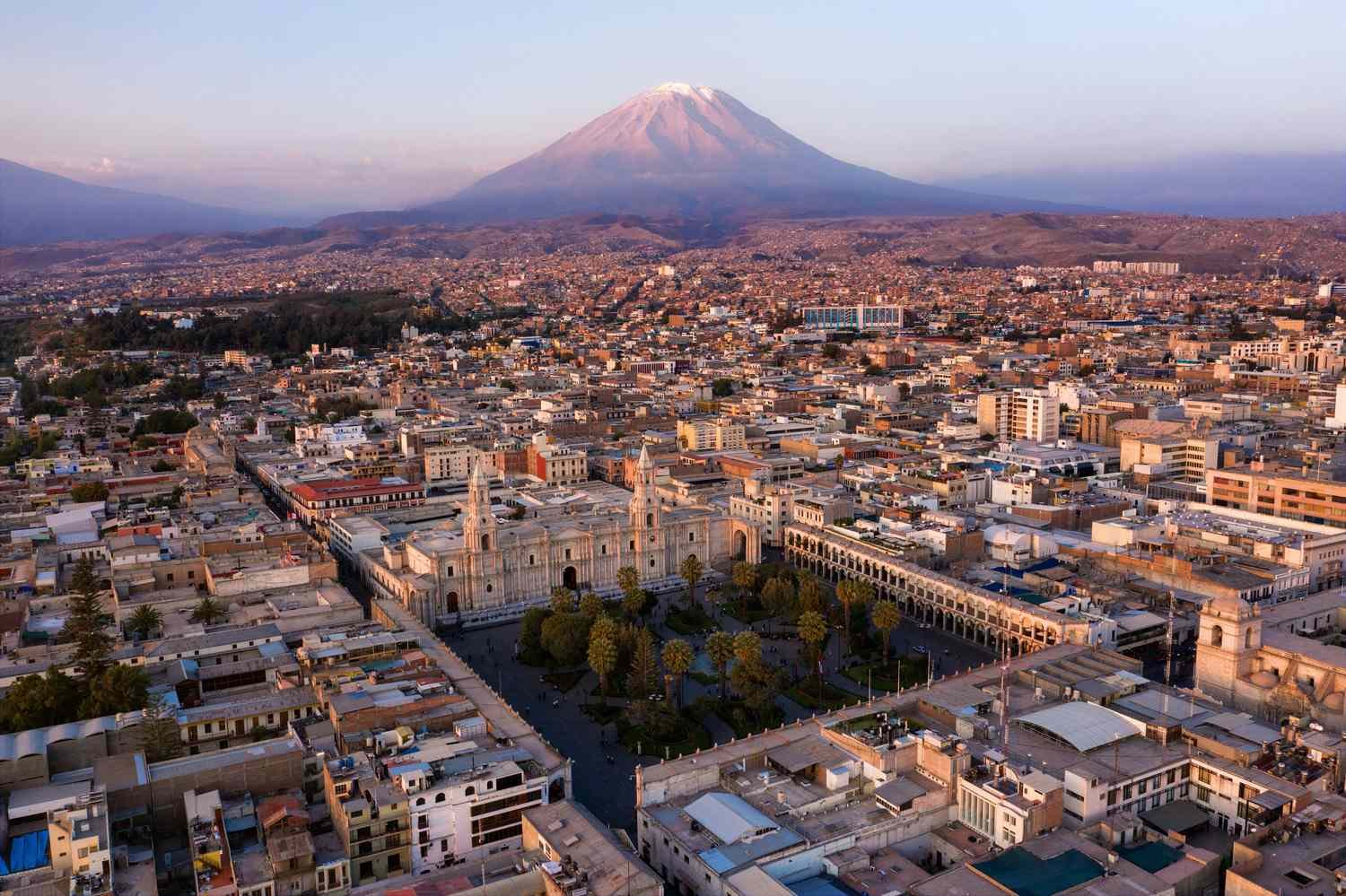
In Peru, the cost of living is estimated to be two-thirds less than in the U.S. In Arequipa, it’s 75% less. Sitting at 7,660 feet up in the Andes and surrounded by dramatic volcanoes, the city center was designated a World Heritage Site by UNESCO for the hundreds of colonial-era buildings that blend Spanish Baroque and indigenous Andean design.
A three-course lunch at a traditional picantería—there are hundreds in the city—can run less than $3, and Arequipa’s food scene earned a UNESCO Creative City designation for Gastronomy designation in 2019. Local offerings include alpaca steaks and rocoto relleno, a fiery stuffed pepper that’s one of the city’s signature dishes.
There’s a growing expat population, and the city has reliable public transportation, internet, and health care services typical of larger cities. Private clinics in Arequipa and Lima offer quality care—doctor visits run $30 to $60—while the public system has longer wait times.
Salta, Argentina
Domingo Leiva / Getty Images
Located in the country’s northwest, this city has well-preserved colonial architecture, a mild climate, and mountain scenery that opens onto natural getaways.
Unlike Buenos Aires, which absorbed waves of European immigration, Salta retains deep connections to indigenous traditions, blending Spanish Baroque design with Quechua and Andean culture. The Train to the Clouds, one of the world’s highest railways, climbs from Salta into the Andes across an immense desert viaduct.
Argentina’s health care system ranks among the best in Latin America. As for the cost of living, a single person can get by on $841 a month, which is 26% less than Buenos Aires and 67% less than in the U.S.
Warning
Argentina’s economy has long grappled with high inflation and currency volatility. While income in U.S. dollars stretches farther, the peso’s fluctuations can quickly shift purchasing power.
Vilcabamba, Ecuador
This small town in southern Ecuador’s Loja Province—population about 4,000 to 5,000—sits at about 4,900 feet in a lush Andean valley flanked by the Mandango Mountains. The area has become a hub for yoga, sustainable living, and holistic health, attracting expats from North America and Europe drawn by its back-to-basics ethos.
Like the rest of Ecuador, a couple can live here for just under $2,000 a month, or about 70% less than in the U.S. for a single person. Vilcabamba offers access to Podocarpus National Park, which is 565 square miles where the Northern Andes, Southern Andes, Amazonian, and Pacific ecosystems converge.
The trade-off is fewer amenities than in larger cities, but you’re not completely cut off. Vilcabamba has a small hospital with an ambulance and emergency department, but for anything beyond basic care, you can head 28 miles north to Loja, a city of about 250,000 with hospitals, clinics, and more specialized services.
Important
Visas in these countries are generally obtainable if you have a permanent monthly retirement income that meets the threshold (minimums range from $1,000–$2,000), proof of health insurance, and pass background and criminal checks. All documents must be approved and translated by a certified translator, and additional information, such as your health status, may also be required.
Important Considerations Before Moving
Before you commit:
- Research visa and residency requirements.
- Understand health care options and, in the case of specific health conditions, determine if the nearest facilities can meet your needs.
- Investigate local tax laws.
- Consider language barriers and learning basic Spanish.
- Explore strategies to cut the impact of currency volatility.
- Analyze the political and economic environment.
- Try living in the location for a few months before committing—a vacation won’t show you what daily life feels like.



