
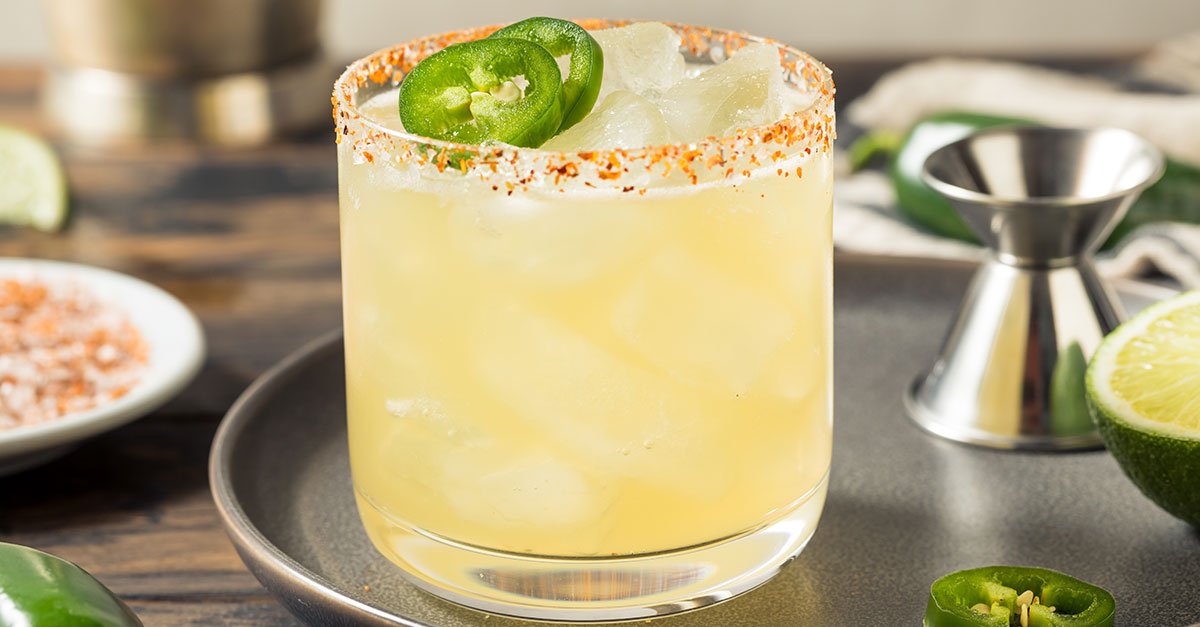
Around 2020, a fiery version of a beloved classic cocktail hit the mainstream: the Spicy Margarita. Takes on the drink had existed for years, but the 2020s saw the cocktail’s popularity increase exponentially, with Google searches for the spicy drink surging over 340 percent from December 2019 to May 2020. Interest in the cocktail quickly spread to other drinks, with spicy Martinis, canned cocktails, hot pepper-flavored vodkas, and even jalapeño rosé entering the fold.
Today “make it spicy” is a common plea bartenders hear when fielding orders, but what are the best ways to actually execute the request? Is it as simple as muddling a few chili peppers in the bottom of your glass when you want to take a classic Margarita to the next level? Well, not really. Depending on your spice preference, there are dozens of ways to add heat to your favorite cocktails, with some methods imbuing drinks with much more chili flavor than others.
To figure out the best techniques for incorporating heat into cocktails, we chatted with five bartenders from across the country. From preparing homemade tinctures and infusing spirits with chilis to taking one of Ina Garten’s preferred corner-cutting routes (i.e., store-bought), keep reading to check out the best ways to make your cocktail spicy.
Don’t Miss A Drop
Get the latest in beer, wine, and cocktail culture sent straight to your inbox.
Make a Syrup
One of the most important things to keep in mind when making a spicy cocktail is what your ultimate goal is. Are you aiming for vegetal flavors or to make the drink as hot as possible? According to Ivy Mix, co-owner of Whoopsie Daisy and Fiasco! Wine & Spirits in Brooklyn and co-founder of Speed Rack, identifying why you want to use spice is crucial when selecting the right chili pepper, especially considering how drastically heat levels can vary.
“Chilis are so tricky. These things are plants and their spice level changes from pepper to pepper and from season to season,” she says. “All peppers have different flavors, and you can get even more nuanced when they’re dried. Now, though, I think the most frequent request is ‘Just make it spicy!’”
Given the overwhelming demand for spiced-up versions, Mix likes to make syrups, which allow the flavor of the peppers to shine through. As she explains, this can be done by blending — a great option for fresh peppers — or by boiling and soaking with sugar before straining, which is better for dried peppers. If you want your syrup to be extra hot, be sure to include the pepper’s seeds and pith.
Try a Tincture
Where spicy cocktails are concerned, one of the most important things to keep in mind is consistency. And to stay reliable in your spice levels, making a chili tincture might be the best move, as syrups and infusions can result in too much heat.
“When I add spice to my cocktails, I want it to be deliberate and consistent,” says Ramsey Musk, founder of nationwide bar pop-up Mama’s Boy. “That’s why I stay away from muddling and infusing whole chilis into spirits.”
If it’s just pepper flavor you’re after, Musk says syrups and infusions work great — he makes his by deseeding a jalapeño and letting it rest in a bottle to infuse or sous viding for a syrup. But for true, punchy spice, Musk relies on tinctures.
“I like using a medley of spicy chilis for a round chili flavor and spice, but I concentrate it so that a dash or two will do the trick,” he explains. “This way, I can also omit the spice if someone is sensitive or dial it up if they are a sicko spice-heathen.”
Luckily, making a tincture is relatively easy. It just takes a bit of time. You’ll start with a “heap of chilis.” For complex flavor, make sure to select a variety — like a mixture of Thai, habanero, and Serrano, which is Musk’s preferred blend. Use equal amounts of each and chop the peppers without deseeding before adding them to a bottle of high-proof, neutral spirit. Allow the mixture to rest at room temperature for at least three days, though you can stretch it to five days for maximum spice. If the option is available, sous viding for four hours at 145 degrees Fahrenheit is also a worthy infusion method. Be sure to strain the mixture through a coffee filter before bottling to remove any solids. Once complete, just a few dashes should be enough to deliver a robust spice profile. “This method allows for control and deliberate adjustments where needed,” Musk says.
Stay Flexible
While some might shy away from hot pepper infusions out of fear of creating too spicy a spirit, others argue that it’s one of the most consistent ways to achieve heat in cocktails. According to Nick Hirsch, mixology manager for San Diego’s RMD Group, the key to successfully pulling off a flavorful, spicy infusion is working in short intervals.
“Chili heat extracts cleanly in alcohol, and once the infusion is dialed in, every cocktail pours the same without surprises,” he explains. “At home, the key is infusing in short intervals and tasting frequently — most jalapeño infusions are done in under 30 minutes.”
To infuse a spirit at home, select your preferred base spirit and slice up a jalapeño with or without seeds, depending on your spice preference. You can also add in more than one pepper for even more heat, but as previously noted, tasting often is key for nailing your spirits’ flavor profile.
If you’re looking to add bright, vegetal spice rather quickly, Hirsch says fresh, muddled peppers “have their place,” but he argues that they are far less forgiving and require a much lighter touch. To avoid overdoing it, opt for a method that will allow you more flexibility. In these instances, spicy bitters or tinctures work best, as they allow for tailoring to personal preference.
“Overall, the goal isn’t to make a cocktail ‘hot,’ but to use spice the same way you’d use acid or bitterness,” he says. “It’s a supporting element that enhances the drink rather than overpowering it.”
Prep a Spicy Concentrate
In high-volume bars, speed is often the name of the game. And while infusing tinctures might be a great way to achieve heat, it can often be time-consuming. To cut back on prep time, opt for a spicy concentrate like the ones prepared at Puesto in Southern California.
“Spicy Margs are here to stay, so consistency has to be a priority. Muddling peppers can be extremely inconsistent and slows down the very busy bartenders,” says the chain’s vice president of bar & spirits, Beau du Bois. “What I’ve found to always be a consistent spicy ingredient that can be measured accurately is a spicy concentrate.”
Making the concentrate is much easier than you might think. All you have to do is select your preferred pepper and blitz it into a high-proof vodka. According to du Bois, one liter of vodka blended with 10 habanero peppers will result in a concentrated, flavorful, spicy cocktail modifier. From here, package your concentrate in a bitters bottle and dole out dashes depending on how fiery you want your drink to be.
“Three dashes I consider level one heat, six dashes is level two, and nine dashes is for sickos like me,” he says. “Having heat-level options makes it easy to check on guests’ preferences; you’re only asking what they’re quietly thinking.”
Use Pre-Packaged Spicy Bitters…
For moments when homemaking tinctures, concentrates, or infusions feel too labor-intensive, it is more than fine to take a page out of Ina Garten’s book. By this, we of course mean that store-bought is fine. In fact, it’s one of the best ways to ensure true consistency.
“I’m a pretty simple man when it comes to adding spice to cocktails,” says Scott Kitsmiller, bar manager and assistant general manager at Chicago’s Gus’ Sip & Dip and Crying Tiger. “I tend to use the tried-and-true option of some prepackaged spicy bitters for the random calls for something spicy. Bittermens Hellfire Shrub gets the job done for me.” Mix agrees that “the most convenient thing is just buying one,” adding that she really likes Bennett Scorpion Bitters.
… or a Spiced-Up Liqueur
Fiery bitters are a fantastic way to add concentrated spice flavor to your cocktail of choice. That said, if you’re looking for a way to incorporate heat from the booze itself (and don’t want to ruin a bottle with a failed infusion experiment), opting for a premade chile-based or chile-steeped spirit is also a noble pursuit. Especially when there are high-quality bottles like Ancho Reyes, Alma Tepec, and more available for purchase.
“When making cocktails spicy, I typically find it’s very easy for the spice to make the drink feel undynamic and flat, so I like to keep a couple of options behind the bar for cocktail creation,” explains Max Reis, beverage director at Mírate in Los Angeles. “My personal favorite way to add spice is through a chile-based amaro or liqueur, such as Amla Tepec. The spice is dry and nuanced, creating an amazing layer of flavor in the beverage without it becoming monotonal. It’s very consistent.”



