Behind Trump, Rubio labored to project a blank expression. Last April, writing in Time, he had called Machado “the Venezuelan Iron Lady,” whose “leadership is a beacon of hope.” In 2024, Machado, who’d been barred by Maduro from running for office, backed Edmundo González, a seventy-four-year-old diplomat, to run against Maduro. According to publicly available election returns, González won by an overwhelming margin. When Maduro declared victory anyway, U.S. officials, including Joe Biden, called the result a sham. As Secretary of State, Rubio has argued that Maduro was not the country’s legitimate President. On Saturday, once the news broke that Maduro had been captured, Machado issued a triumphant statement. “Venezuela will be free,” she wrote. “We have fought for years. We have given everything, and it has been worth the pain. What had to happen is happening.”
The Venezuelan opposition has always been riven with divisions. During Trump’s first term, the U.S. recognized Juan Guaidó, a legislator, as the legitimate head of the country’s interim government, on the erroneous assumption that American support would pressure members of the military to defect from the regime. The gambit failed, and the interim government fell apart in 2022. Machado distinguished herself by her belief that Maduro could only be forced from power with the direct intervention of a foreign power. The irony is that she turned out to be right but at a steep personal cost. Machado appears to be experiencing a fate shared by those who put their trust in Trump. “He just doesn’t like her,” the former White House official told me. “Maybe it has to do with his loss of enthusiasm for the opposition over all. He views them as losers. He hates losers. And, frankly, there’s Trump’s ego. She stole his Nobel Prize from him.”
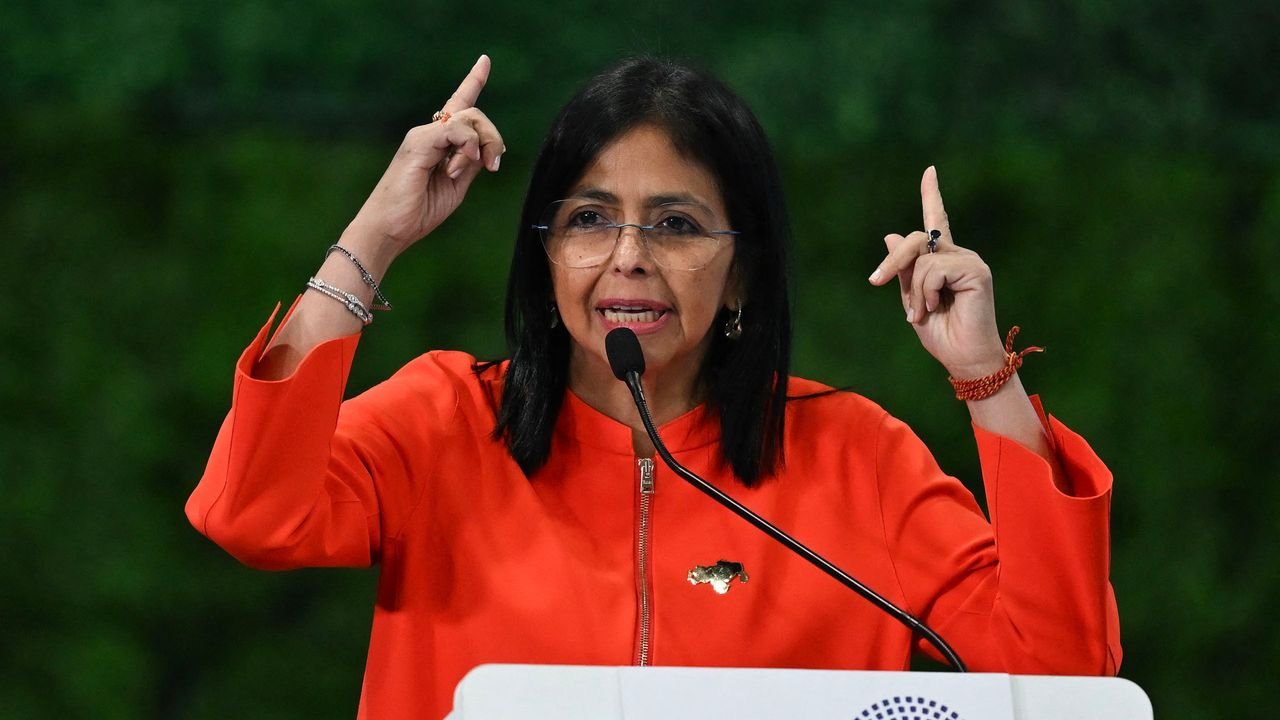
There’s been speculation that, prior to Maduro’s capture, Rodríguez may have spoken with members of the Trump Administration. For now, it’s impossible to say. “I found it interesting that the United States had such an easy time capturing Maduro and his wife while they slept,” Francisco Rodríguez, a former Venezuelan legislator and economist, told Foreign Affairs. “That strongly suggests there was some type of internal collaboration from the Venezuelan forces that were guarding him.” Rodríguez, however, remains one of the Venezuelan regime’s staunchest loyalists. At the Saturday press conference, Trump said that Rubio had already spoken with Rodríguez, who’d just been installed as interim President by the Venezuelan Supreme Court. Rodríguez, for her part, wasted no time repudiating the U.S.’s actions. “There is only one President in this country,” she said, on Saturday. “His name is Nicolás Maduro Moros.” Venezuela, she went on, “will never again be anyone’s colony—neither of old empires nor of new empires, nor of empires in decline.”
Rodríguez, who is fifty-six, was a middling government bureaucrat before Maduro took power. Her father, a Marxist guerrilla known for his role in the kidnapping of an American businessman in 1976, was later jailed by the Venezuelan government; he died in custody after being tortured by the secret police. “All her hate for Venezuela’s old political establishment”—which was strongly pro-U.S.—“goes back to that abuse,” Brian Naranjo, a former American diplomat, told the Wall Street Journal. Her brother Jorge was Maduro’s chief political strategist; he went on to head the Venezuelan legislature, overseeing the 2024 elections that were marred by fraud. Delcy, a lifelong ideologue, earned a reputation for ruthlessness and competency, running Maduro’s foreign ministry and later managing both the economy and the country’s oil industry. “I’ve been watching her career for a long time,” a senior U.S. official told the Times. “She’s certainly someone we think we can work at a much more professional level than we were able to do with [Maduro].”
By Sunday, there were some indications as to what Trump and Rubio might consider to be a productive “working” relationship. “If she doesn’t do what’s right, she is going to pay a very big price, probably bigger than Maduro,” Trump told The Atlantic. Rubio, who spent the day largely sidestepping questions about Trump’s plans to “run” the country after Maduro’s ouster, reasserted his long-standing position in a string of television interviews. “We don’t believe that this regime in place is legitimate,” he said, in an ABC interview. During another appearance, he added, “What you’re seeing right now is a quarantine that allows us to exert tremendous leverage over what happens next.”