
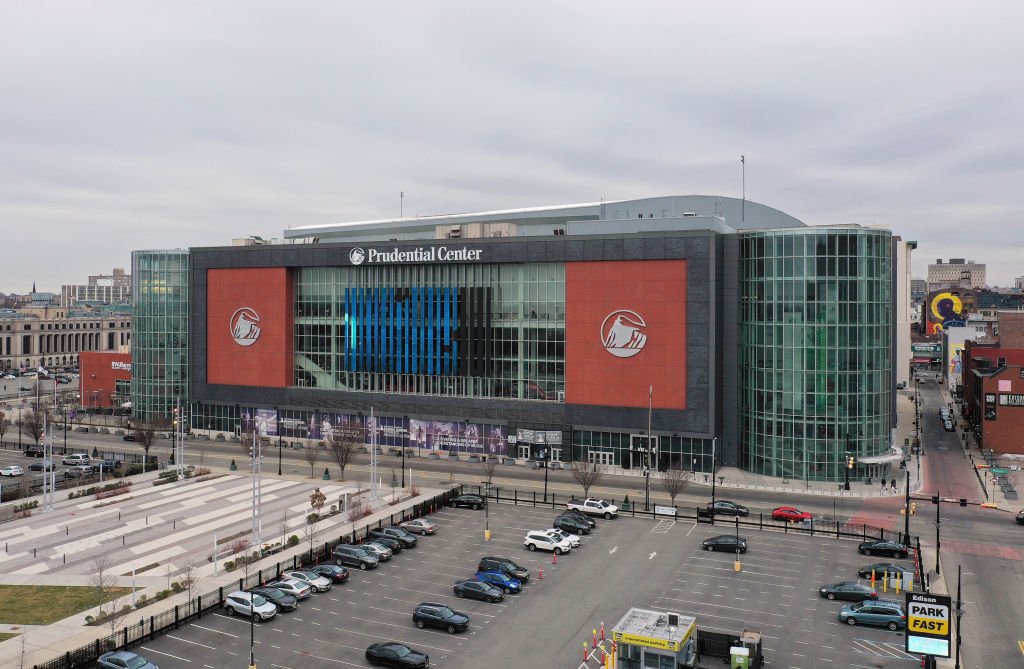
A plan to expand New Jersey’s corporate tax breaks by billions and grant Newark’s Prudential Center new tax subsidies cleared another hurdle Thursday on its gallop to the governor’s desk.
The Senate’s budget and appropriations committee unanimously approved a bill that still needs to pass both full chambers by Tuesday, when the current two-year legislative session ends, to become law.
The bill advanced despite objections from critics who said raising the state’s current cap on corporate tax credits from $11.5 billion to $14.3 billion, as the bill proposes, is “reckless” during a time of worsening budget constraints.
Peter Chen, a senior policy analyst with New Jersey Policy Perspective, predicted people and community groups around the state would be stiffed in favor of “billionaire sports owners.”
“They are going to be told: ‘Sorry, there’s no money. Sorry, we only have this much for you this year.’ But now, when it comes to raise the cap on corporate subsidies, suddenly checkbooks open, right? Suddenly, it’s: ‘OK, let’s raise the $3 billion’ in the blink of an eye,” Chen said.
Dena Mottola Jaborska, executive director of New Jersey Citizen Action, urged lawmakers to direct the state Economic Development Authority to show evidence of any benefits such subsidies have generated for the state in the past five years before doling out more.
But Sen. Teresa Ruiz (D-Essex), a committee member and the bill’s prime sponsor, bristled at the criticism and called the bill necessary for Newark, which is in her legislative district.
“People throughout this state have tropes and stereotypes about the district that I represent. When they come down to the Pru Center for a hockey game or for a mega concert or for some other kind of venue, perhaps in those four hours that they’re down there, they realize the greatness of our great city,” Ruiz said.
Jake Reynolds, who’s president of both the center and the New Jersey Devils, who play there, told lawmakers the facility needs $400 million in repairs and renovations, and the new subsidies would help fund them.

“We’re proud to be an anchor for both the economy and the community. Now the age of the building, plus the 23 million visitors who have come through it and the nearly 3,000 events, has taken a toll on the facility and its infrastructure,” Reynolds said.
The Senate and the Assembly both have their final voting sessions of the current session Monday and are expected to consider the fast-tracked bill, which was first introduced three days before Christmas.
GET THE MORNING HEADLINES.



