
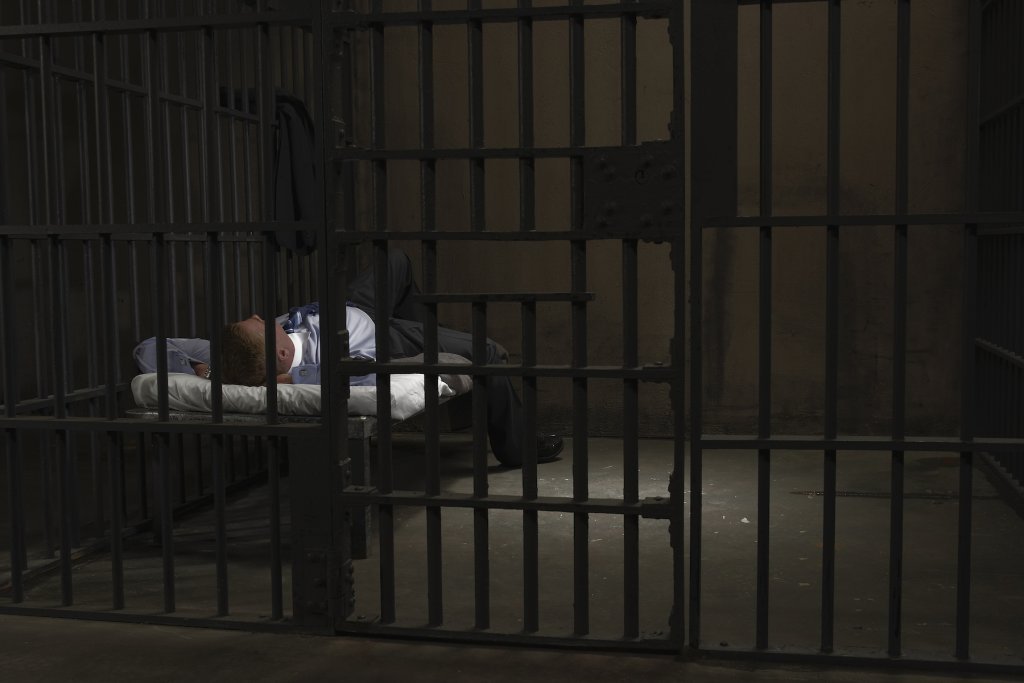
New Jersey officials have released recommendations for how the state should repurpose two jails for law-breaking youth, even though the jails remain open nearly a decade after the state first vowed to close them.
Former Gov. Chris Christie in 2017 ordered the closure of the New Jersey Training School in Monroe, a 200-bed facility for boys in Monroe, and the Female Secure Care and Intake Facility, a 48-bed facility known as Hayes in Bordentown. The jails are to be replaced by three smaller lockups that look and function more like schools, to be located in north, central, and southern parts of the state.
In a new report released Tuesday, a youth justice working group convened in July 2024 by Attorney General Matt Platkin urged policymakers to convert the sites into places of restorative or therapeutic programming that serve low-income communities and people impacted by the criminal justice system.
NJ lawmakers pass bill to expand protections for women in prison
Their suggestions include a school, vocational and career training, reentry programming, affordable housing, recreational uses, a heritage center that tells the story of the sites, or a New Jersey Center for Peace and Restorative Justice modeled after the Equal Justice Initiative’s Legacy Sites in Montgomery, Alabama, which are part museum and part memorial.
Neither site should be used for correctional purposes, and their reuse should honor their history, the working group said.
Hayes is located on the site of a historic boarding school for Black youth called the New Jersey Manual Training and Industrial School for Colored Youth. That school was founded in 1886 by the Rev. Walter A.S. Rice, a formerly enslaved Civil War veteran, and was once known as the “Tuskegee of the North,” attracting visitors including Nat King Cole, W.E.B. DuBois, and Booker T. Washington, and lecturers including Albert Einstein and Paul Robeson. The state closed it in 1955 after integration attempts failed.
The New Jersey Training School, which is known as Jamesburg, opened in 1867 as the New Jersey State Reform School to remove troubled youth from adult prisons.
Platkin acknowledged he won’t be around to supervise the sites’ reuse, with Gov.-elect Mikie Sherrill naming Jen Davenport to Platkin’s post. Sherrill will be sworn in Tuesday. But he applauded the recommendations as “staying true to my mandate of providing innovative opportunities for populations historically and disproportionately, disadvantaged by the youth criminal justice system.”
“The Working Group’s proposals are significant, thoughtful, and a critical contribution to the discussions that this State is having around the future of these sites set for closure,” Platkin wrote in the report. “While my Office will not be the ultimate decision-maker as to the disposition of these facilities, I know that this Report will provide essential guidance as these projects proceed.”
Just over 400 juveniles and young adults, from age 14 into their 20s, are in custody or under the supervision of juvenile justice authorities in New Jersey, according to state data. Most — 244 boys and four girls — are in youth prisons, while another 32 are in residential community homes and 118 are under parole supervision in the community.
Construction on the smaller replacement jails has begun in Ewing and Winslow, though they’re not expected to open until at least 2027. The state is still finalizing a location for the northern site, the report says.
Members of the working group include advocates from the New Jersey Institute for Social Justice, Salvation and Social Justice, and the Bordentown Historical Society, as well as youth justice officials and experts.
GET THE MORNING HEADLINES.



