
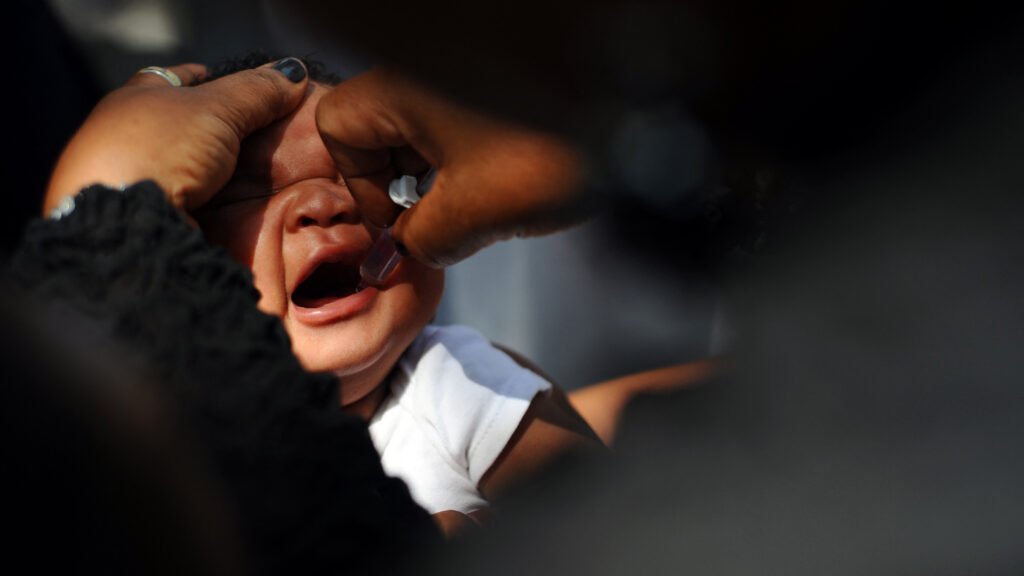
The Department of Health and Human Services has removed the rotavirus vaccine, along with five others, from the list of universally recommended childhood immunizations. This makes the U.S. an outlier. According to the International Vaccine Access Center, more than 130 countries universally recommend rotavirus vaccination. Globally, the vaccine has the potential to prevent over 100,000 deaths every year.
I am an infectious disease epidemiologist and have spent decades studying diarrheal diseases. I started my career in the U.K., pursing a Ph.D. on the viruses that cause diarrhea, including rotavirus. I know the health impact of these infections on children worldwide — and I’ve seen it up close as a parent. It turns out that knowledge is not enough to avoid these highly infections pathogens.
My first son was born in the U.K. in 2007, one year after the rotavirus vaccine was recommended in the U.S. European countries are often slower to introduce new vaccines, so the rotavirus vaccine wasn’t yet available in England through the National Health Service. Around his first birthday — when kids are most vulnerable — my son suffered the severe, dehydrating diarrhea that rotavirus causes. He became listless and unable to take in fluids himself.
That’s how we ended up in a North London hospital, my infant son getting rehydrated intravenously while his mom and I were curled up sick in the next bed. Babies pass infections to everyone around them, parents included.
It was humbling to see how quickly this virus can lead to dehydration, rapidly rendering an otherwise energetic child essentially unresponsive — a situation that can lead to death if the right help isn’t available. Being in a high-income country with access to health care, he got the care he needed and recovered, but not without suffering.
That’s not the case for every kid. Globally, about 450,000 children die annually from diarrheal disease — nearly half from rotavirus.
My second child was born in Atlanta, where I moved to work at the Centers for Disease Control and Prevention. At the CDC, I worked with the team that was evaluating the global rollout of rotavirus vaccination. First in the U.S., then in Latin America, Africa, and Asia, we saw the profound impact of rotavirus vaccination. The pediatric wards at the hospitals I visited were empty during the time of the year that used to be the peak of rotavirus season. Back in Atlanta, my younger son got the rotavirus vaccine — a series of liquid drops. He’s never had rotavirus or needed medical care for diarrhea.
My experience is in line with thousands of parents and their babies. Here’s what the data show: Before vaccine introduction, over 50,000 U.S. children were hospitalized annually from rotavirus. With universal vaccination, that burden was slashed by 80% to 90%. Disease was even prevented among unvaccinated kids, older children, and adults — the demonstrable benefit of herd immunity.
So what is the government’s rationale for downgrading the recommendation for the rotavirus vaccine? To justify the new guidelines, they offered a “comprehensive scientific assessment” that cites safety concerns. Yes, safety monitoring confirmed a rare link between rotavirus vaccination and intussusception — a potentially severe obstruction in the intestine. But this finding represents a success of vaccine safety surveillance — it allowed a careful assessment of benefits versus risks, which overwhelmingly favor vaccination.
The new vaccine schedule report, authored by two newly appointed HHS officials, is the product of motivated reasoning by a tiny group. It notes that Belgium, Denmark, and Portugal don’t recommend universal rotavirus vaccination. (Actually, Belgium does.) Why not mention that nearly every other “peer nation” (Western European nations, Canada, and Australia) does recommend it?
And the report is a stark contrast to the careful, comprehensive, expert-driven process that for decades developed U.S. vaccine recommendations. The HHS report initially claimed essentially no deaths from rotavirus occur in the U.S. (Expert reviews estimated about 25 annually before vaccine introduction.) After criticism, the HHS report was edited to acknowledge U.S. deaths declined following vaccine introduction — then claims without evidence “there may be many reasons for this very small decrease in mortality that are unrelated to the vaccine.” Regardless, this vaccine can do a lot more than prevent death — surely averting tens of thousands of painful hospitalizations is an outcome worth preserving.
What will be the effect of downgrading the rotavirus vaccine from “universal” to “shared clinical decision-making”? Likely that fewer babies will be vaccinated.
Already, fewer kids get rotavirus vaccines than other routine infant immunizations, partly because kids who don’t see pediatricians regularly are less likely to receive it. Clinicians look to public health experts for policies that prevent infections — so their clinics aren’t overwhelmed, so they don’t have to deliver bad news to parents about deaths that could have been avoided. Now we’re asking them to make case-by-case decisions without clear guidance, inevitably leading to more sick kids and more frustrated clinicians treating diseases that need not occur in the first place.
There’s a broader cost to this decision. The U.S. has long led global vaccine policy — American data informed WHO recommendations and American expertise guided national programs worldwide. When I worked at the CDC helping countries introduce rotavirus vaccination, American credibility opened doors. This decision doesn’t just put American children at risk — I worry it will give permission to governments worldwide to ignore their own experts.
My second son never needed a hospital for rotavirus. My first son did. The difference was a vaccine — one that hundreds of thousands of American kids may now go without, leading to more illness, hospitalization and, I fear, death.
Ben Lopman is professor of epidemiology and global health at Emory University’s Rollins School of Public Health.



