
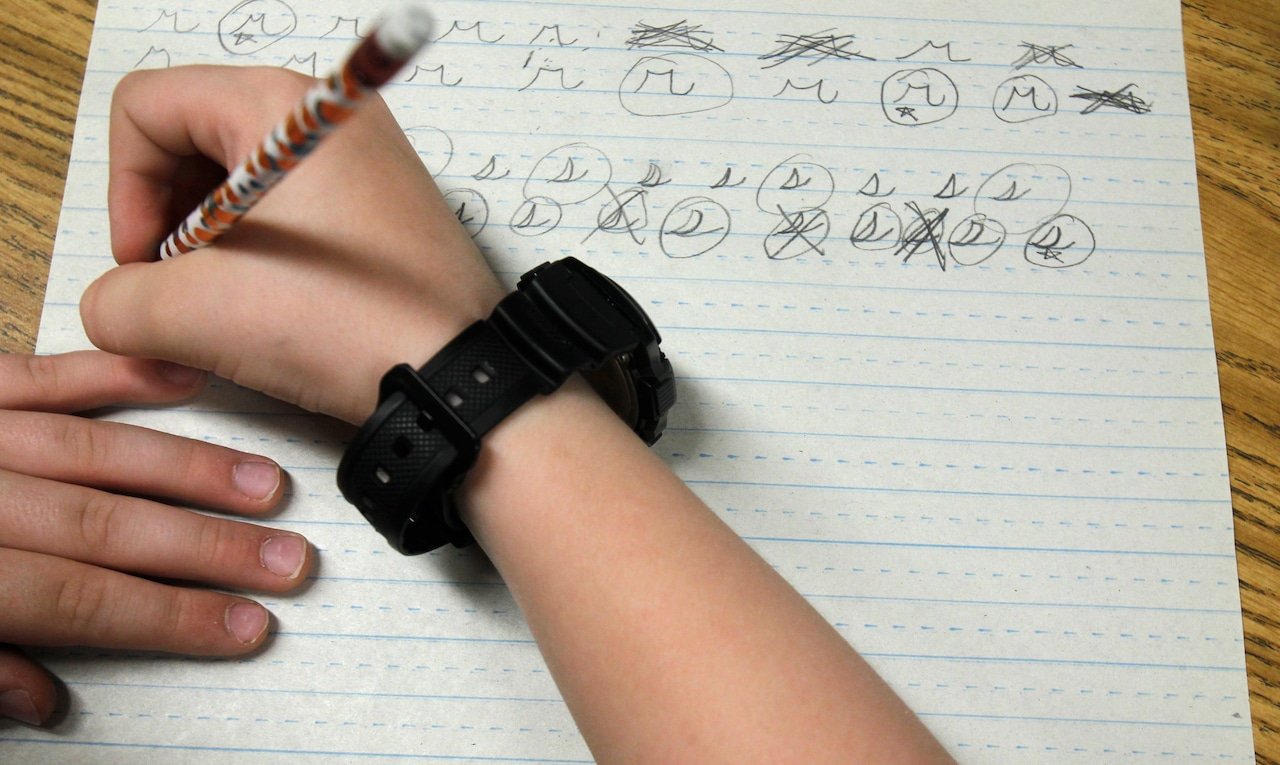
Break out the No. 2 pencils, kids. Cursive handwriting, long mourned as a lost art, is coming back to New Jersey schools thanks to one of Gov. Phil Murphy’s final acts.
A new state law signed Monday mandates cursive instruction in grades 3 to 5 beginning this fall. Public schools must teach students how to write cursive legibly and become fluent in reading it.
Murphy, whose second and final term ends Jan. 20, signed the law just days after banning cell phones during classroom instruction. Now schools will reintroduce what some call a relic from a time when “TikTok” was just the sound that clocks make.
“The return to including cursive instruction is especially meaningful as New Jersey celebrates the upcoming 250th anniversary of our country’s founding – giving our students the skills they need to read our nation’s founding documents and complete tasks like opening a bank account or signing a check, in addition to offering cognitive benefits,” Murphy said after signing the bill.
“We owe it to our students to give them a well-rounded education that ensures they have the tools to fully understand our rich history and become competent leaders,” the governor added.
State Sen. Shirley Turner, D-Mercer, a longtime advocate in the fight to revive cursive instruction, agreed.
“Cursive is a timeless and necessary skill that we must incorporate into our curriculum again,” Turner said.
The decline of cursive has been bemoaned for generations, and artful “As” and fanciful “Fs” seemed to be on life support after handwriting instruction became optional about 15 years ago in New Jersey.
Some schools still teach cursive, a life skill some parents consider less essential in the digital age. But any hope to mandate it statewide seemed lost as recently as 2024, when educators told NJ Advance Media they’re thankful when students can simply muster legible printing by hand.
Yet students should know how to sign their name on a legal document and be able to read historical artifacts, or at the very least, cards from their grandmother, cursive supporters say.
Learning handwriting can also unlock creativity and improve brain function, they argue.
Previous attempts to bring back cursive failed to gain traction with state leaders. But this push came during a period of backlash against screens and electronics, according to Betsy Ginsburg, executive director of the Garden State Coalition of Schools.
Some schools have realized that high school students lack signatures because they don’t know how to write in cursive, said Ginsburg, who represents about 100 New Jersey districts. Supporters also made a strong case that lower-income students are less likely to learn cursive and that a new law is a matter of equity, she added.
However, some school leaders pushed back against making cursive mandatory again.
Decisions about teaching cursive should be made locally, the New Jersey School Boards Association and other education advocacy groups told state lawmakers last year in testimony.
New Jersey schools are already required to incorporate lessons in civics, climate change, financial literacy and other topics over the past few years, leaving little time for yet another initiative, according to those school groups.
But making room for cursive will be in the best interest of students, according to supporters.
“We are giving them a valuable skill they will use throughout their lives,” said state Sen. Angela McKnight, D-Hudson, a sponsor of the bill signed into law.



