
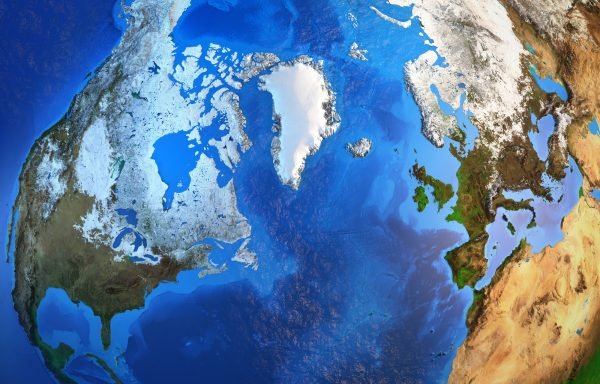
As the World Economic Forum convenes in Davos, U.S. President Donald Trump’s announcement that he will impose tariffs on eight European allies – Denmark, Finland, France, Germany, Norway, Sweden, the Netherlands, and the United Kingdom – has quickly become a focal point of this year’s agenda. The tariffs are framed as retaliation for the deployment of European troops to Greenland following Trump’s renewed insistence on acquiring the island, whether by negotiation or by force.
According to Trump, a 10 percent tariff on imports from these countries will take effect on February 1, rising to 25 percent on June 1 unless a deal is reached for the “complete and total purchase” of Greenland.
Greenland is a semi-autonomous territory within the Kingdom of Denmark, exercising authority over its domestic (political, economic, and social) affairs, while Denmark retains responsibility for foreign and security policy.
In one sense, the 10 percent levy is unsurprising, given Trump’s predilection for using trade policy as leverage – indeed, last year’s meeting in Davos featured a similar, though less consequential, ultimatum to build factories in the United States or face tariffs. Even so, the explicit linkage of economic coercion to territorial ambition marks a qualitative escalation. The move is all the more unsettling given its implicit threat to undermine NATO from within.
As Trump’s newly articulated interest in hemispheric dominance takes concrete form – from Caracas to Nuuk – the repercussions extend well beyond transatlantic trade. Questions are being raise worldwide, including in Taiwan, about the credibility of U.S. economic, security, and other commitments under a more openly transactional “Donroe Doctrine.”
Rational Interests, Irrational Narratives?
U.S. interest in Greenland is not new; there is a long history of negotiations between Washington and Copenhagen over the island. President Harry Truman made a purchase offer in 1946, which eventually led to the 1951 defense agreement. Denmark also sold part of its territory to the United States as late as 1917, when it transferred the Danish West Indies (now the U.S. Virgin Islands), a sale influenced by the Monroe Doctrine.
From a strategic perspective, Greenland’s value to the United States is undeniable. Located in the North Atlantic, the island is rich in rare earth elements such as neodymium and praseodymium, as well as other critical minerals and metals, including copper, graphite, nickel, uranium, and zinc, not to mention its significant – though largely untapped – oil and gas reserves.
That said, the U.S. does not need to own Greenland to pursue its security interests there. Its military presence on the island dates back to World War II and persisted throughout the Cold War, when Thule Air Base (renamed Pituffik Space Base in 2023), central to the North American Aerospace Defense Command (NORAD), was constructed. Although the 1951 defense agreement was amended in 2004, with Greenlandic authorities joining as signatories, its core provisions allowing U.S. military bases and activities in and around Greenland remained unchanged, making the Trump administration’s fixation on formal ownership all the more puzzling.
Arguably the most alarming facet of Trump’s recent actions is the obvious imperial intent to seize a territory that has already been colonized, evoking an interwar-era (if not earlier) logic of great power-rivalry in which small states across both the Global North and the Global South were treated as expendable. Look at the narratives used to justify the Trump administration’s interest (which itself is not new, dating back to the president’s first term). Several scholars have questioned the plausibility of claims regarding an emerging China-Russia Arctic alliance, given the many frictions, disagreements, and at times fundamentally divergent interests between Beijing and Moscow. These include differences over energy, infrastructure, and mining projects, as well as competing interpretations of the Polar Silk Road. Moreover, while China has in the past showed interest in investing in Greenland, major investments in critical infrastructure – including airports and naval facilities – were blocked by Denmark, at least partly in response to concerns raised by the first Trump administration.
This, of course, does not mean that China’s Arctic ambitions should be taken lightly. The polar regions have been classified by Beijing as one of its “strategic new frontiers,” alongside outer space, cyberspace, and the deep sea, and cooperation with Russia across these domains has both broadened and deepened. The point, rather, is that fundamental disagreements persist, complicating any formal alliance.
At the same time, European members of the Arctic Council are taking Chinese activities in the Arctic increasingly seriously, particularly given their dual-use nature, though a more comprehensive and strategic EU approach is still needed – one that goes beyond the Arctic strategies of individual member states.
The resource-based justification appears more plausible, especially given estimates that place Greenland’s fossil fuel and rare earth potential on par with that of the United States. Chinese firms are among those active in mineral exploration and mining projects. The constraints, however, are substantial. Harsh topography, a lack of skilled labor, high operational costs, environmental concerns, and opposition from the local population all significantly complicate large-scale extraction.
It therefore appears that the primary driver of Trump’s interest in Greenland lies in his broader hemispheric worldview, in which not only Greenland but also other U.S. allies in the Western Hemisphere, such as Canada, are cast as part of a vast, resource-rich frontier that could buffer the United States against political, economic, or environmental shocks in an emerging, power-based international (dis)order.
A Hierarchy of Regional Interests
In an era in which long-standing rules of international conduct are being challenged by revisionist powers, calls for the EU to develop credible deterrence capabilities reflect growing recognition that Washington itself may no longer act as a status quo power. Against this backdrop, uncertainty in Taiwan regarding U.S. security commitments is understandable, particularly amid concerns that Trump’s actions may embolden Beijing (even if such fears are often overstated). After all, if the United States is willing to disregard formal defense arrangements like the Defense of Greenland Agreement, what guarantees remain that it will commit to defending Taiwan, which is not legally a requirement of the Taiwan Relations Act (TRA)?
At the same time, the Greenland episode has reinforced the notion that Trump’s statements, however unbelievable they may sound at first, should be taken at face value. The 2025 National Security Strategy is particularly illuminating in this regard. The document effectively establishes a hierarchy of U.S. regional priorities, making clear that Europe (including Denmark) now ranks below the Western Hemisphere (including Greenland) and the Indo-Pacific (including Taiwan). The emphasis on the Indo-Pacific is consistent with previous strategies, though the language on Taiwan is notably stronger, highlighting its role in regional deterrence and semiconductor supply chains.
Moreover, while Trump’s rhetoric on Taiwan signals a return to strategic ambiguity consistent with the TRA, the U.S. Congress has adopted a more assertive stance. Legislative measures such as the Porcupine Act, designed to expedite arms sales and transfers to Taiwan, and the recently passed Taiwan Assurance Implementation Act, which mandates regular reviews of Taiwan-U.S. policy guidance, point to sustained bipartisan support.
In December 2025, the Trump administration also approved its largest-ever arms sales package to Taiwan, valued at $11.1 billion. This came less than a month after Taiwanese President Lai Ching-te announced a $40 billion defense budget for 2026-2033, supplementing Taiwan’s regular budget of around $30 billion. Together, these measures aim to strengthen Taiwan’s asymmetric defense capabilities and raise overall defense spending to roughly 5 percent of GDP – a long-standing U.S. demand not only of Taiwan but also of other allies, including NATO members.
These developments suggest that the United States does not intend to significantly alter its posture in the Taiwan Strait or the broader Indo-Pacific, which is particularly significant in light of the increasing intensity of China’s large-scale air and naval exercises near Taiwan, as demonstrated during the recent “Justice Mission 2025” drills. These included live-fire activity in Taiwan’s contiguous zone and built on a pattern of blockade-themed exercises prevalent since 2023.
Beyond Security
While the Trump administration’s defense expectations toward the Indo-Pacific may be clearer and more predictable than those directed at Europe, at least for now, the same cannot be said for economic relations. The “Liberation Day” tariff regime imposed on Taiwan – alongside other U.S. allies – underscores the risks posed by Washington’s mercantilist turn. And although Taiwan’s tariff rate has since been reduced to 15 percent, matching those applied to Japan and South Korea, the broader U.S. trajectory poses serious challenges for Taiwan’s export-oriented economy.
The EU is debating its response to renewed U.S. tariff threats, including calls for the first-ever deployment of its Anti-Coercion Instrument – ironically, a mechanism created with China in mind. Scholars have emphasized that such EU measures would be most effective if coordinated with “like-minded” countries such as Norway and the United Kingdom, which have also been threatened by a new round of tariffs. More broadly, if the EU seeks to preserve elements of the (neo)liberal order – albeit likely in smaller, subregional formats – cooperation with other non-revisionist partners will be essential.
For Taiwan, these dynamics open a narrow but meaningful window of opportunity. As the EU deepens its economic ties with countries like India and regional groupings such as MERCOSUR, Taiwan should likewise accelerate efforts to diversify its economic relationships beyond the United States. As demonstrated by several countries along the First Island Chain, most notably Japan, trade diversification need not come at the expense of security cooperation with Washington, provided such strategies do not entail overt accommodation of Beijing. Instead, maintaining this balance may prove essential in navigating an increasingly transactional international environment.



