
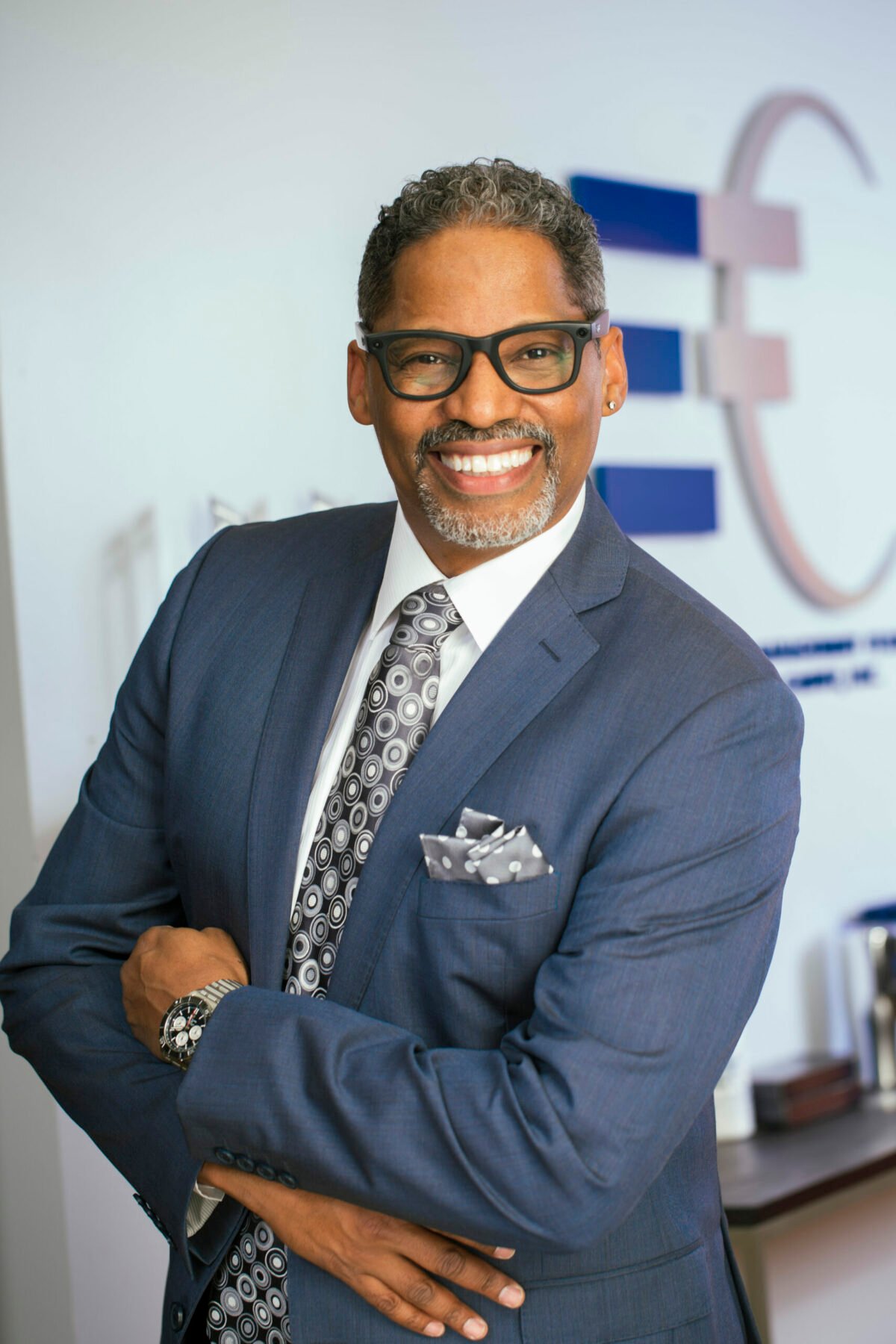

Cory J. Chapman
Founder/CEO
EFC Wealth Management Firm, INC.
Navigating Finance, Private Equity and Wealth Management in Los Angeles in 2026
As 2026 unfolds, the financial landscape is being shaped by persistent market volatility, evolving tax policies, geopolitical uncertainty, and rapid advances in financial technology. For individuals and families seeking to protect and grow their wealth, smart money management is no longer just about chasing returns—it’s about building resilience, managing risk, and planning with intention for both the near and long term.
For this conversation, we spoke with seasoned wealth management expert Cory J. Chapman of EFC Wealth Management Firm, LLC to explore how investors, individuals and families can navigate today’s complex environment with confidence. From safeguarding personal assets and mitigating downside risk to developing flexible financial plans that can adapt to changing economic conditions, this conversation focuses on practical strategies designed for real-world challenges. Chapman also shares how retirement planning is evolving in 2026, particularly as longer lifespans, shifting work patterns, and healthcare costs continue to reshape traditional assumptions.
Chapman’s comprehensive background spans several domains, including mortgage, real estate, estate planning, and taxation, providing a solid foundation for his advisory role. His educational endeavors, such as writing on financial planning and personal development and engaging in various media engagements, underscore his commitment to financial education. His insights, drawn from a robust career, offer valuable perspectives to those seeking financial guidance.
Technology also plays a role in the discussion, as digital tools, data-driven insights, and AI-powered platforms increasingly influence how portfolios are managed and monitored. Chapman shares perspectives on how investors can responsibly leverage these innovations without losing sight of long-term goals. Whether you are building wealth, preserving it, or preparing for retirement, this Q&A offers timely guidance for making informed financial decisions in the year ahead.
How should individuals and families think about protecting and growing personal wealth in 2026 given ongoing market volatility, interest rate uncertainty, and shifting economic conditions?
In 2026, protecting and growing wealth amid volatility and rate uncertainty starts with a plan, not predictions. Individuals and families should first define the income they need today and in the future, then evaluate how to build that income reliably across changing markets. Next, focus on tax efficiency—because what you keep matters more than what you earn. Finally, understand the true level of risk in your portfolio, including how much downside you can tolerate. When income, taxes, and risk align with a clear plan, confident decisions follow.
What financial planning considerations are becoming more important as professionals balance long-term security with short-term market fluctuations?
As the founder of EFC Wealth Management, I’ve seen that professionals who stay confident through short-term market swings are the ones who plan with intention. The most important considerations today are: having a clear written plan, understanding the income you need now and later, keeping the right level of cash reserves, and making sure your portfolio’s risk truly matches your goals and tolerance. From there, tax efficiency, disciplined diversification and rebalancing, and strong protection planning (insurance and estate structure) help turn volatility into something you manage—not something that manages you.
What common financial planning mistakes do you see individuals making during periods of economic uncertainty, and how can a disciplined, long-term approach help mitigate risk?
One of the most common financial planning mistakes I see during economic uncertainty is letting market noise drive decisions. When headlines are loud and volatility is high, people often react emotionally—chasing performance, panic-selling, or constantly changing strategies. In my experience, the most successful individuals are the ones who turn down the noise and stay anchored to a clear long-term plan.
A disciplined approach helps mitigate risk because it keeps your decisions aligned with what you can control: your goals, your cash flow, your savings rate, your tax strategy, and your risk exposure. I always encourage clients to focus on their personal economy, not the world economy. When you commit to a well-built plan and follow it consistently, you build confidence—and long-term results tend to follow.
What role does technology—such as AI-driven forecasting, automation, or real-time financial dashboards—play in smarter capital and cash management?
Technology—especially AI-driven forecasting, automation, and real-time dashboards—plays a powerful role in smarter capital and cash management, but I always remind clients of one thing: AI is a tool, not a replacement for human judgment. When used correctly, it helps us enhance what we already know by identifying patterns faster, stress-testing scenarios, and highlighting risks or opportunities that might otherwise be missed.
Automation improves the execution side of financial management—helping with consistent savings, systematic investing, timely bill pay, and disciplined rebalancing—so progress doesn’t rely on willpower or emotion. Real-time dashboards provide clarity, allowing individuals and business owners to see cash flow, spending, liquidity, and investment performance in one place and make decisions based on facts, not assumptions.
Ultimately, these tools add value because they create speed, efficiency, and better checks and balances, allowing advisors like me to focus on strategy, planning, and guidance—where the real impact is made.
What is the one area that most people don’t think about when planning for retirement?
One area most people overlook in retirement planning is tax planning—and it can dramatically change the outcome of their entire strategy. I always say: what you keep matters more than what you earn. Understanding how your money is distributed across taxable, tax-deferred, and tax-free buckets helps you make smarter decisions and avoid unnecessary tax drag. Too many Americans hold the majority of their wealth in tax-deferred accounts without realizing the future tax liability can become a ticking time bomb. Put tax planning at the forefront, and your retirement plan becomes stronger, clearer, and more efficient.
Looking ahead, what does true financial resilience look like for successful Los Angeles businesses in 2026?
Looking ahead, true financial resilience for successful Los Angeles businesses in 2026 still comes down to the fundamentals—executed with discipline. In my experience, resilience starts with knowing your cash flow cold: what’s coming in, what’s going out, and what must be protected. It’s also having the clarity to know when to deploy cash for growth and when to curb or reallocate spending before small issues become big ones.
What many business owners forget is that what got them here wasn’t luck—it was grit, focus, and sticking to the basics. A resilient business follows a roadmap, keeps strong financial controls, and stays proactive instead of reactive. Volatility will always exist, but businesses that stay grounded in the fundamentals and lead with resilience will be the ones that continue to grow and thrive.




