
The documentary opens with Fahdel’s daughter playing inside their home as Israeli bombs begin falling in the surrounding area. The commentary is already eloquent from these initial scenes. While one might expect fear in the face of such destruction, the child treats the unfolding events as a game, perhaps reflecting the grim normalization of violence for children in the region. What follows is widespread panic, as local authorities and, at times, citizens themselves urge people to evacuate, inevitably creating massive traffic jams.
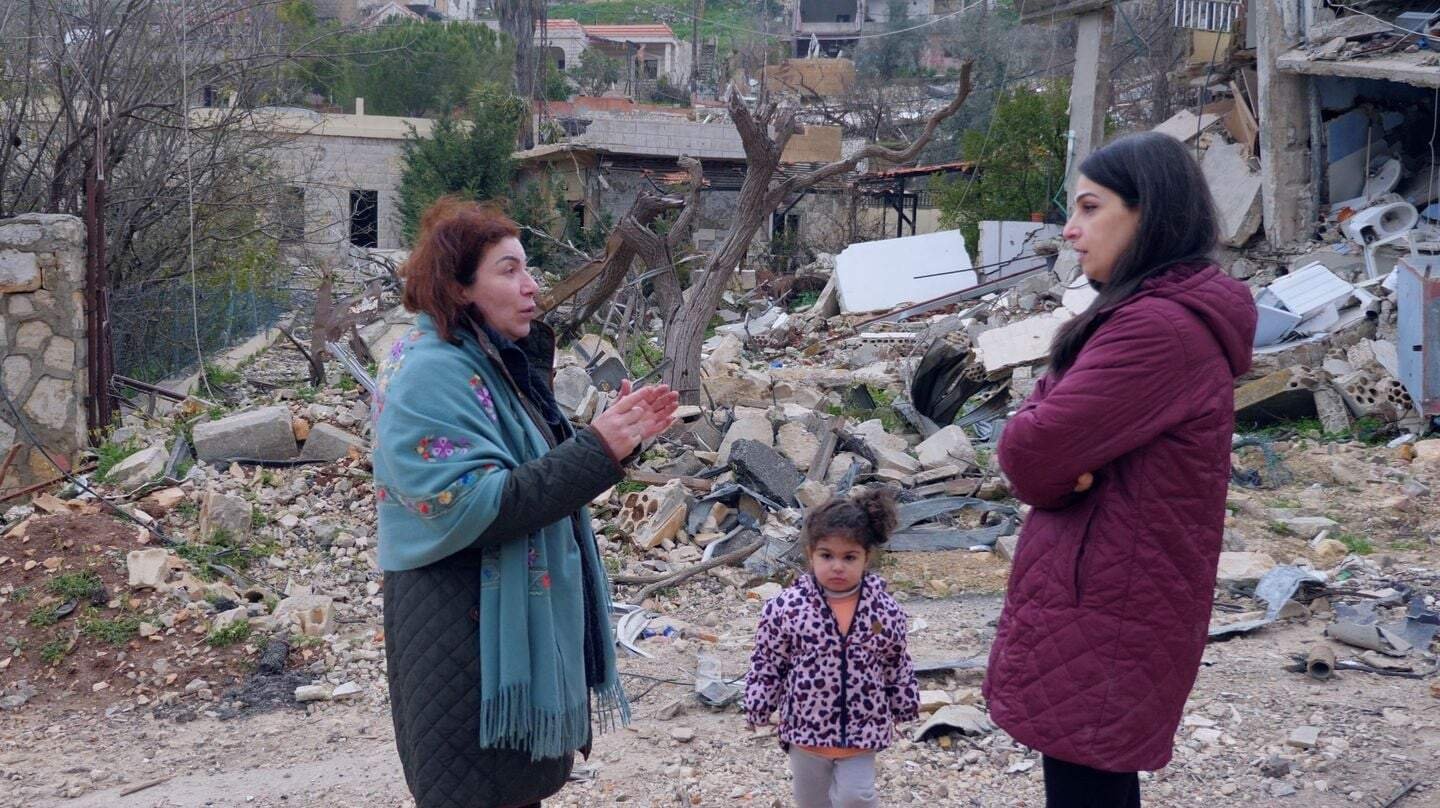
The second and most substantial part focuses on the return of residents to the devastated area and their attempts to rebuild their lives. Through interviews conducted with locals, the extent of the destruction is conveyed with clarity and restraint. A pharmacist, an animal lover, a library owner, and several other ordinary people articulate what they have lost, offering a grounded and human perspective on the catastrophe. At the same time, these testimonies also underline a powerful determination to rebuild, an attribute that, as presented here, seems to define the Middle East and its long history of confrontation with Israel: communities rebuild, while destruction repeatedly returns.
The initial intimate approach proves compelling and realistically dramatic, while the drone shots of a funeral procession moving through the rubble, which both open and close the work, are striking and stand out as its most overtly cinematic moments. Beyond these strengths, however, certain issues become apparent, beginning with the running time, which at 120 minutes arguably stretches the material further than necessary.
Similarly, and despite the justification of a DIY approach given the circumstances, the extended succession of interviews can feel tiring after a while, again largely due to the duration. In what seems like an attempt to inject additional cinematic value, Fahdel repeatedly interrupts the flow with intertitles which seem to come from poetic passages. This choice, however, comes across as somewhat pretentious, particularly because it is employed multiple times throughout the documentary.
Even so, the overall importance of “Tales of the Wounded Land” remains undeniable. Its depiction of destruction and its aftermath fulfills one of the core purposes of documentary cinema: to record, to bear witness, and to remind.



