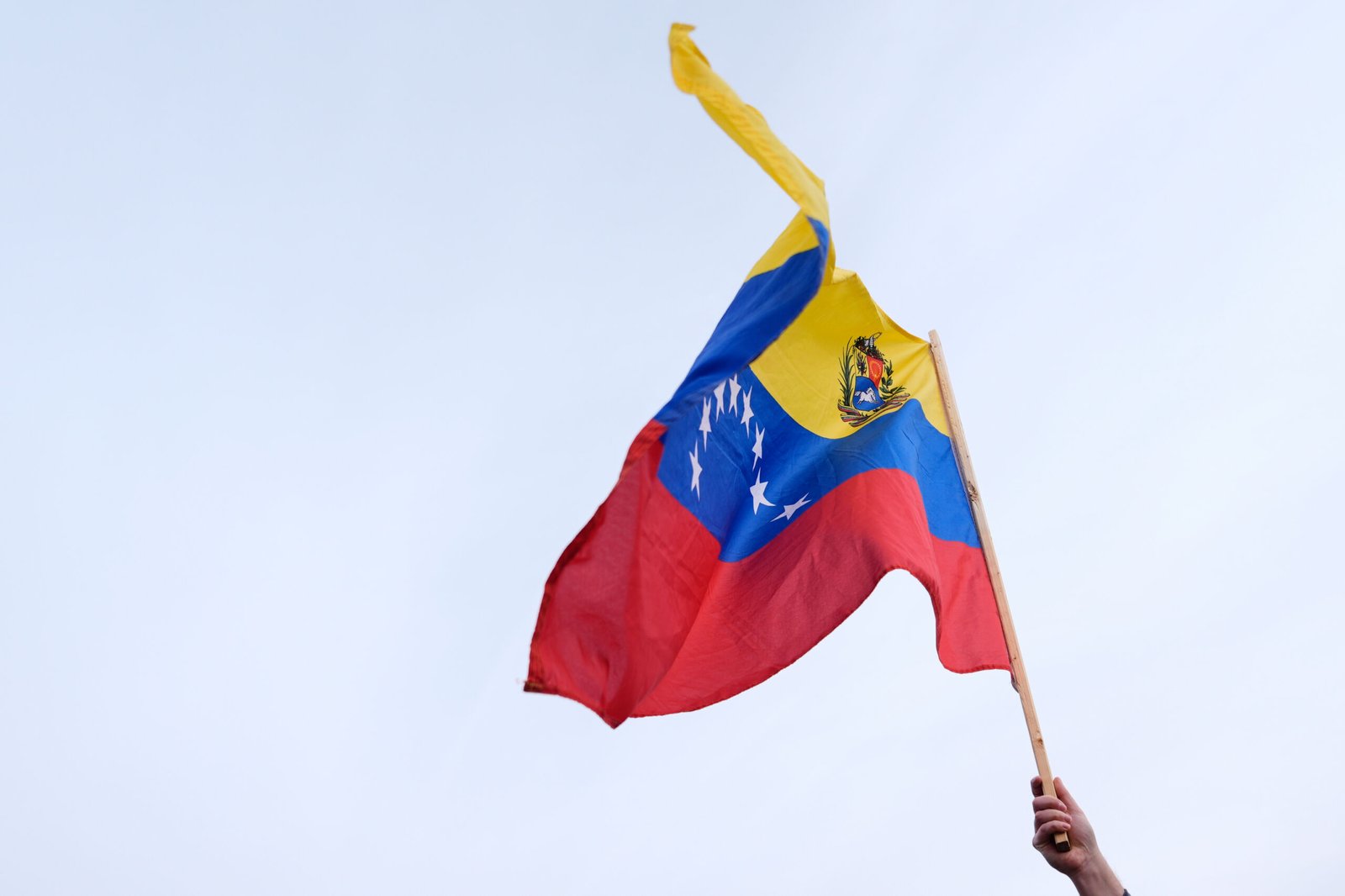
WASHINGTON — The U.S. military raid to seize Venezuelan president Nicolás Maduro, carried out the morning of Jan. 3 with thunder-clap speed, shocked members of Congress, which had not been briefed and had not authorized war with Venezuela.
In the weeks since, Democrats and a few Republicans in Congress have moved without success to check President Donald Trump’s war powers — and they were unsuccessful again Thursday.
The House deadlocked, 215-215, with backing from all of New Jersey’s Republicans on legislation to block the use of American “forces for hostilities within or against Venezuela” — an effort GOP lawmakers mocked during debate on the legislation, saying that there is no protracted conflict between the nations.
Republicans held the vote open for a Texas congressman, Wesley Hunt, who rushed from a flight to vote against the bill and cast the deciding 215th vote, sinking the legislation.
With a seesaw-like pattern, Congress has moved in recent months to check Trump’s legal authority to authorize military operations and begin wars since he returned last year to Washington, a town where the political shadow of wars in Iraq and Afghanistan looms large.
In a defense policy bill that recently became law, Congress included language to end two long-standing legal foundations for military action abroad — justifications called “authorizations for the use of military force,” or AUMFs.
Both were federal law for decades.
 Two efforts last year in the Senate, where Republicans hold a 53-47 majority, to block the U.S. from attacking Iran without specific approval fell short. New Jersey’s two Democratic senators, Cory Booker and Andy Kim, voted for those measures.
In interviews with NJ Spotlight News, Reps. Jeff Van Drew (R-2nd) and Chris Smith (R-4th) said they supported Trump’s decision to abduct Maduro, a move legal experts said violated international law.
“I think he had the legal authority to go and apprehend an indictee,” Smith said, adding that Maduro did not win the 2024 presidential election in Venezuela, the assessment of independent election officials.
The U.S. charges in New York federal court were sufficient foundation for Trump to green-light the operation, Smith said. “The legal foundation was the indictment.”
Under the charter of the United Nations, international law prohibits nations from using military force against each other with the exceptions of self defense and when the U.N. Security Council approves.
In 1945, the U.S. ratified the U.N. charter, a global treaty that set the world order for much of the 20th century. The agreement’s tenets are binding to the U.S. government.

A long-time member of the foreign affairs committee, Smith said seizing Maduro was justified because the leader was a drug kingpin “directly responsible for putting Americans in their graves.”
Asked about the legal foundation for the raid in Venezuela, Van Drew said of government leaders there: “I truly do believe they’ve been feeding drugs into our country.”
Van Drew compared the Venezuelan mission with the Navy SEALs operation in Pakistan in 2011 to kill Osama bin Laden, the leader of the terrorist group al-Qaeda.
“We did the same thing under Obama,” Van Drew said. “He took him out, which I thought was appropriate and did support.”
Republicans control both chambers of Congress, the House and Senate, and are largely loath to cross the president.
“There are no troops in Venezuela,” Brian Mast, a Florida Republican and chairman of the House Foreign Affairs Committee, said during the debate on the bill. “An operation that is over before breakfast, that is not a war.”
Gregory Meeks, the top-ranking Democrat on the committee, said Trump is running a shoot-from-the-hip style diplomatic agenda.
“We’re there to take Venezuela’s oil. That’s what this is about,” Meeks said. Venezuela has the largest proven oil reserves of any country in the world. “This administration is winging in it.”
The administration has provided thin legal justification for its moves in Venezuela, both the raid and missile strikes the Pentagon has executive against suspected drug traffickers on boats in the Caribbean and Eastern Pacific Ocean, Democrats said.
“It may have been more words, it may have been more narrative and propaganda, but it wasn’t more significant information that justified what they did,” Rep. Bonnie Watson Coleman (D-12th) in an interview.
Kim said he exited the classified briefing he received with “even more questions and deeper concerns” than he had before.
Before the vote Democratic members urged colleagues to restrain the president, who has threatened in recent months seizing or attacking Canada, Colombia, Cuba, Mexico, Panama and, in particular, Greenland, part of Denmark.
“Congress unfortunately has not stood up,” said Joaquin Castro, a Democrat from Texas. “Are we a Congress or are we cowards?”
Several votes the year, including one last week when two New Jersey Republicans helped torpedo a bill their party wanted, have exposed the thin majority Republicans hold.
As Republicans held the Thursday vote open while Hunt raced from the airport, Democrats clamored to the Republican presiding over the chamber to gavel the vote to a close.
Democrats in the chamber clapped and shouted for order. Rep. Rob Menendez (D-8th), arms crossed, looked up at the digital board in the chamber that displays how members voted. Menendez voted for the bill.
“Close the vote!” shouted Pat Ryan, a typically mild-mannered Democrat from New York, waving his arms up and down. “Pathetic.”
A few moments later, Hunt walked into the chamber, hugged his fellow Republicans and cast his vote by paper against the bill.