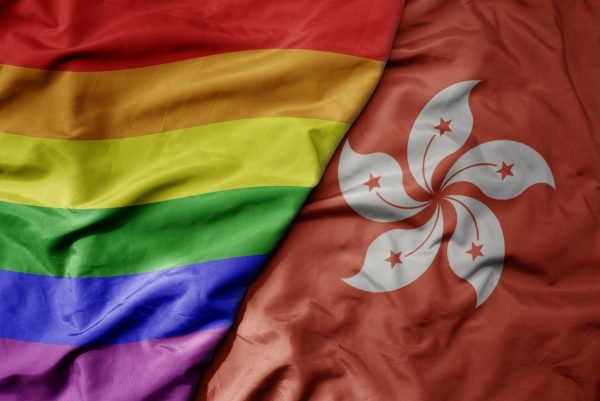
Hong Kong decriminalized homosexuality in 1991, yet it has made little progress in recognizing same-sex couples or granting them legal protections. Although the Court of Final Appeal (CFA) demanded action to legally recognize same-sex partnerships in 2023, the court-imposed deadline came and went without the Legislative Council (LegCo) passing any laws to that effect.
The episode has cast a shadow over the government’s ability to comply with the CFA’s ruling and the future of sexual minorities in the city. The deeper story is one of constitutional governance: what happens when a final judgment creates a legal duty, but the political system treats compliance as optional.
On September 5, 2023, the CFA issued a landmark ruling in Sham Tsz Kit v. Secretary for Justice, declaring that the government’s failure to provide a legal framework for conferring recognition and protection of core rights for same-sex partnerships violated citizens’ constitutional right to privacy. The court imposed an obligation on the government to implement such a framework within a two-year grace period ending on October 27, 2025.
Just three months before the deadline, the government introduced the Registration of Same-Sex Partnerships Bill to LegCo. The bill proposed to allow certain same-sex couples who had formed legally recognized unions overseas to register civil partnerships locally. The bill would grant these couples rights concerning medical decisions and posthumous matters.
On September 10, 2025, the bill was rejected, with 71 votes against, 14 in favor, and one abstention. No public hearings were held prior to the vote, although the government invited written submissions. It reported receiving 10,775 submissions, roughly 80 percent of which opposed the bill – a figure cited by the government but without constitutional significance.
Lawmaker Holden Chow from the Democratic Alliance for the Betterment and Progress of Hong Kong (DAB), Hong Kong’s largest pro-establishment party, warned that passing the bill would open “a Pandora’s box” and “subvert Hong Kong’s marriage system between one man and one woman.”
A Constitutional Crisis?
It is tempting to read this as a culture war episode, but the more important point is institutional. The Court of Final Appeal set a deadline. The executive attempted a narrow bill to comply. The legislature refused to cooperate. That sequence places Hong Kong on a path toward continued constitutional noncompliance, in which a judgment remains final on paper but becomes negotiable in practice.
Chief Executive John Lee said administrative measures were being considered for same-sex partners without LegCo approval. However, administrative measures alone are unlikely to satisfy the CFA’s requirement for a stable and coherent legal framework. The government’s proposal signals reluctance, rather than a genuine effort, to fulfill its constitutional duties. That will simply invite the next round of litigation.
This episode also reflects the constraints of Hong Kong’s “executive-led governance model” when judicial rulings require legislative action. In practice, it rewards delay, because no single actor pays the full cost of ignoring the court.
Here is the constitutional problem in plain terms. Under Hong Kong’s Basic Law, LegCo is empowered primarily to debate proposed laws and scrutinize executive actions. It cannot, through inaction, negate the effect of constitutional obligations affirmed by the CFA. Likewise, an executive-led governance model does not grant the chief executive unchecked authority over the legislature or judiciary.
Article 82 of the Basic Law establishes that the judgments of the CFA are final in interpreting the Basic Law, while Article 48(2) obliges the chief executive to implement the Basic Law. Together, these provisions mean that while the CFA cannot legislate, its constitutional interpretations bind the executive, who bears responsibility for ensuring compliance with the Sham Tsz Kit ruling.
Same-Sex Partnerships in Taiwan and Japan
Hong Kong’s stalemate on sexual minority rights seems to stand in contrast to developments elsewhere in East Asia. The comparison matters here not because Hong Kong must copy its neighbors, but because it highlights what is distinctive about this impasse: the barrier is follow-through, not the mere passage of time.
Taiwan became the first in Asia to legalize same-sex marriage in 2019, and the parallels to Hong Kong’s case are illuminating. In Taiwan, legislative action followed a 2017 ruling by the Constitutional Court that found the ban on same-sex marriage violated rights guaranteed in the constitution. As in Hong Kong, the legislature was given two years to amend the law. Unlike in Hong Kong, Taiwan’s legislature complied with the court, despite substantial public opposition.
Although not legally binding, Japan has implemented same-sex partnership programs that, as of May 2025, cover more than 530 municipalities, representing 92.5 percent of the population.
Since 2021, Japanese district and high courts have issued a series of rulings on the constitutionality of the country’s ban on same-sex marriage, with most finding the ban unconstitutional. However, the most recent Tokyo High Court ruling in November 2025 appeared to have interrupted this momentum, and a Supreme Court decision is expected in 2026.
Hong Kong’s New LegCo
On December 7, 2025, less than a month after the deadly Tai Po fire that claimed more than 160 lives, Hong Kong held a LegCo election. Despite strong government mobilization efforts, turnout reached only 31.9 percent, slightly above the record-low 30 percent in 2021 and far below the 71 percent turnout seen in 2019.
Of the 90 LegCo seats, only 20 were directly elected by the city’s residents, with the remaining chosen by the pro-Beijing Election Committee and special interest groups. All candidates were required to be “patriots,” allowing pro-Beijing candidates to dominate the legislature. In that setting, defying a court-imposed obligation carries limited political risk.
The inauguration of Hong Kong’s newly elected LegCo on January 1, 2026, marked a pivotal moment. Whether the CFA’s judgment is ultimately complied with will serve as a crucial test of Hong Kong’s constitutional governance. At stake is whether judicial authority remains binding – or becomes subordinate to political considerations.
Constitutional governance is cooperative rather than hierarchical. By design, the CFA cannot compel LegCo to legislate. Yet if LegCo indefinitely refuses to act in a manner that prevents the executive from complying, the CFA’s constitutional interpretation does not lose binding force. Instead, Hong Kong would enter a state of continuing constitutional noncompliance, in which judicial authority formally endures but is politically disregarded. Such prolonged noncompliance would also likely open the door to further litigation over sexual minority rights, shifting the debate from a question of implementation to one of constitutional legitimacy.