
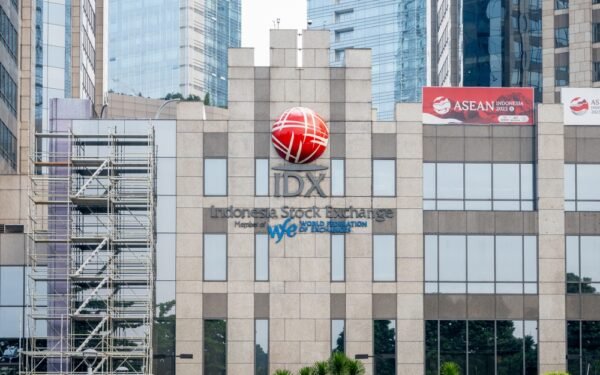
Although recent headlines about Indonesia’s economy have been rather pessimistic, one potential bright spot is the exponential growth in domestic retail investing. In December 2025, the number of individual investors in Indonesia’s capital market passed 20 million, a major surge from 2020 when the number stood at 3.88 million. This growth has been accompanied by gains in the Indonesian Stock Exchange (IDX), with the composite index setting a record high on January 8, 2026.
The retail investment boom has many socioeconomic causes, but it is also driven by a supportive government policy environment. Government-led financial literacy programs appear to have played a significant role in individual investor participation by improving public understanding of the core financial concepts and terminology needed for stock market investing. The Financial Services Authority’s (OJK) sustained education efforts are reflected in the results of the National Survey on Financial Literacy and Inclusion (SNLIK). This survey found that 65.43 percent of Indonesians were considered financially literate in 2024, compared to 29.7 percent in 2016. Various government programs have familiarized Indonesians with investment products, risk–return trade-offs, and digital financial tools, reducing confusion and intimidation around equity markets. By combining structured education, digital access, and targeted outreach to youth, MSMEs, and rural communities, these initiatives have increased financial confidence and encouraged more individuals to see stock investing as accessible and relevant rather than complex or exclusive.
Continue reading this article at The Investor, our new companion site covering business, economics and finance in the Asia-Pacific. Access is free.



