

Chinese New Year is the most important holiday in Chinese culture, centered around family, food, and starting the year with intention. Growing up, it marked a pause in everyday life, when relatives traveled home, kitchens stayed busy, and meals carried meaning beyond hunger. Each dish symbolized something we hoped to carry into the new year, from abundance to togetherness.
Chinese New Year traditions vary widely across different parts of China, and that diversity has always stayed with me. I see this most clearly through food; every time I talk with friends or read about how others celebrate Chinese New Year, I am struck by how differently families approach the same holiday, from what they cook to what those dishes represent.
I am sharing this roundup today to offer cooking inspiration based on my understanding of Chinese New Year. You may find some of the dishes unfamiliar or very different from the ones you know. I believe there is no right or wrong, only reflections of the different backgrounds, traditions, and habits of individual families. Those differences are what make Chinese New Year recipes so interesting.
Why I Love These Recipes
Meat means abundance: I grew up celebrating New Year meals where meat and fish were saved for this moment. These recipes are for home cooks who want to honor abundance and wealth by serving multiple proteins alongside rice, noodles, vegetables, and tofu.
Main dishes matters: I plan the menu by starting with the main dishes because they guide the whole Chinese New Year feast. This approach is for anyone hosting family and friends who wants savory, traditional food built around chicken, duck, fish, pork, and lamb, cooked by simmering, steaming, and braising.
Balance the whole table: I love how the table comes together with dumplings, stir fry vegetables, cabbage, mushroom, and glutinous rice as supporting dishes. The flavors come from ginger, garlic, scallion, soy sauce, and sesame, creating food that is hearty, aromatic, and comforting.
My menu this year: Once you have seen these classic Chinese New Year dishes, I would love for you to see my personal menu for this year at the end of this post. These are the dishes I am most looking forward to cooking and serving.
Main Dishes
The main dishes in this list come from what my grandma cooked on the first day of the New Year, with many braised meats that can be made ahead and reheated before serving. Since ovens were not part of the kitchen I grew up with, roasting was never common, though I now include a few oven friendly dishes that I enjoy cooking in the US. Fish and seafood always stay on the menu because they symbolize good fortune and add a sense of abundance to the table.
Chinese Lion’s Head Pork Meatballs (狮子头)

I love this Lion Head pork meatballs and it is a must for CNY because this dish reflects the style of home cooking I grew up with. It is a classic Northern dish where one main plate sits in the center and everyone serves themselves.
That shared format and its meaning around abundance made it a clear fit for a Chinese New Year menu. Ground pork creates the juicy and tender texture that defines these meatballs. Water chestnut adds a crispy texture, while breadcrumbs keep the meatballs extra airy.
I added this recipe to the collection because it was passed down from my grandma. She made a large batch every two weeks, kept a small portion ready for guests, and froze the rest to share with family. Making this at home shows care and preparation, and trust me, it is the kind of dish guests remember long after the meal.
Chinese Beef Stew with Potatoes (土豆炖牛肉)

I picked this Chinese beef stew because it is a classic comfort food that’s timeless. The slow braised beef and vegetables match the kind of food served during colder seasons and of course for Chinese New Year holiday gatherings.
Personally, I like how the beef becomes melt-in-your-mouth tender through braising and carries the deep savory flavor of the sauce. Potatoes absorb the broth and add substance to the dish and the carrots add light sweetness and balance.
This recipe takes me about 50 minutes to make if you use an Instant Pot, and it tastes better the next day. I like serving it with steamed rice or noodles so the broth does not go to waste. It earned a place in this collection because it can be prepared ahead and served family style.
Hong Shao Rou (Red Braised Pork, 红烧肉)

Hong Shao Rou was a must for me to add to this collection because this red braised pork is one of the dishes I make when I want a rich centerpiece for a Chinese New Year table that pleases my guests.
Pork belly simmered in soy sauce, sugar, star anise, and Shaoxing wine is the flavor profile I grew up with at celebratory meals. This recipe takes about 2 hours total time and honestly is quite easy to make when you follow my directions.
I like to serve this dish with steamed rice to keep it classic, so the sauce can be enjoyed with each portion. You can always pair this with other side dishes I have on my blog, feel free to search for them.
Braised Chestnut Chicken (板栗炖鸡)

Braised chestnut chicken earned its place in this collection because it is a farm-to-table dish that’s hearty and represent abundance.
I have always liked cooking chicken this way, letting it braise slowly in soy sauce, Shaoxing wine, and ginger until the flavor develops. When the chestnuts soften and mix in with the chicken, the dish starts to look and smell like the meals I grew up eating at home.
My recipe takes around 60 minutes to make, and I always recommend it when planning a Chinese New Year menu. Braised chestnut chicken is a classic Shanghai dish that is simple to prepare and deeply satisfying to serve. It works well as a centerpiece for a CNY dinner, and it is also practical to cook in a large batch for meals later in the week.
Chinese Steamed Fish (清蒸鱼)

I picked my Chinese steamed fish recipe because a whole fish is one of the most meaningful dishes at holiday meals in my family. The clean cooking method highlights the freshness of the fish with simple ingredients that enhance the natural flavor.
I keep this dish simple by steaming the whole fish with ginger and scallion so the aroma stays gentle and never covers the flavor of the fish. Once it is cooked, I pour soy sauce and hot oil over the top to finish it with a light savory layer. I add cilantro at the end for a fresh note before bringing it to the table.
In less than 30 minutes I can have this ready, and that is what I love the most about it, and which is why I always include either this dish or my newer braised whole fish recipe on my menu. Serving a whole fish represents unity and abundance for the New Year, so I recommend sharing it with the people you love.
Buddha’s Delight (Jai, Chinese Vegetarian Stew)

This Buddha’s Delight recipe is awesome because it is a vegetarian dish that provides balance and variety to my table full of rich meat and seafood. I first learned this recipe as a way to include light, savory vegetables alongside heavier main dishes at family gatherings.
It works fantastic for Chinese New Year when many people want a wider mix of textures and colors. Napa cabbage and bok choy are key vegetables that I use to add freshness and mild sweetness to the dish. Shiitake mushrooms contribute umami and depth that match the richer foods on my table.
This recipe takes my around an hour to have it ready and sits at an easy to medium difficulty level. I like serving it with rice so it can be part of the meal rather than a separate side. It earned a place in this collection because it balances the heavier dishes and offers a lighter option for my guests.
Walnut Shrimp

My walnut shrimp cannot be missed on the table because it adds a touch of sweetness and a nice contrast to the savory main dishes. I first made it for a family gathering when we wanted something different from the usual braised and steamed dishes. My friends love it for Chinese New Year because it adds variety and a great texture alongside the other classics.
I like how the shrimp stay crisp and juicy after frying and take on the light sweet sauce that defines this dish. The toasted walnuts add crunch that contrasts with the tender shrimp. I mix mayonnaise with a little sugar to create the creamy coating I love.
I really appreciate how quickly this comes together in about 20 minutes, which helps a lot during busy holiday weeks. It adds variety to the table without complicating the rest of the menu. Guests always notice when there is something like this alongside the classics.
Real-Deal Xinjiang Cumin Lamb (孜然羊肉)

I must include this Xinjiang cumin lamb because this dish adds strong savory depth and regional character to a Chinese New Year table. I first learned this style of lamb through Northern Chinese cooking and later adapted it for home meals shared with friends and family.
I cook the lamb with ground cumin, and that spice is what shapes the dish and gives it warmth and fragrance. Garlic and ginger build layers of savory flavor as the lamb cooks. I finish it with green onion for balance before serving.
This recipe takes about 30 minutes to make and serves four, which makes it easy to scale up for guests. I like the fact that it is also possible to prepare a cumin lamb shank ahead of time and reheat later for gatherings. Adding this to your Chinese New Year table shows range and confidence, and guests always notice the bold regional flavor.
Appetizers and Sides
Appetizers and sides matter less than the main dishes, but I always include them because they add texture and color to the table. I like classics like egg rolls and pancakes since they can be prepared ahead and reheated before serving. Cold dishes and vegetable stir fries help balance a meal that is heavy on meat and protein.
Cantonese Chicken Egg Roll (广式鸡肉春卷)

I added Cantonese chicken egg rolls because they are a classic starter that shows up on many celebration tables. The crisp wrapper and savory filling make it a crowd pleaser. Plus they are satisfying but not heavy, perfect for a meal starter.
In my opinion, they fit great into a Chinese New Year spread where finger foods help start the meal. I use ground chicken as the savory base of the filling, and it stays juicy after frying. Cabbage and scallion add texture and keep the mixture balanced.
When I make this, it is usually for a night when family is coming over and I want something that shows care without making the day complicated. I prepare it earlier, set it out with the rest of the dishes, and let everyone help themselves as we talk and catch up around the table. It is a dish that works whether you are hosting a holiday dinner or cooking for people you know well.
Chinese Scallion Pancakes (葱油饼)

I included Chinese scallion pancakes as a staple side that many people recognize and enjoy right away. The flaky layers and crisp surface make them a great contrast to braised and steamed dishes on a Chinese New Year table. They are great to add to a menu where texture and variety matter just as much as flavor.
I used an oil and flour paste to give the pancakes their structure and layers. Scallions add savory sharpness throughout each layer. Once fried, they are chewy, crispy and flakey, just like the ones you get from a Chinese restaurant.
This recipe might look complicated, but it is quite easy to make when you follow my directions. I like serving the pancakes warm with a simple dipping sauce alongside the main dishes. They earned a place in this collection because they are familiar, satisfying, and easy to share.
Bok Choy and Mushroom Stir Fry

I added bok choy and mushroom stir fry because it brings a simple, bright vegetable dish that complements heavier mains on a Chinese New Year table. This recipe cooks quickly while keeping the vegetables crisp and fragrant. It works well as a side when meat and starch dominate the menu.
I like how bok choy adds tender greens and a mild flavor that balances richer dishes. Mushrooms bring earthiness and an umami note that fits well with the rest of the meal. Garlic and ginger add fragrance and depth as everything cooks together.
This recipe takes about 23 minutes and is easy to make, which is why I like cooking it when my family comes over for dinner. I usually make it last while the rice finishes cooking, then set it on the table next to the heavier dishes so everything stays balanced. I highly recommend this whether you are cooking for the first time or hosting a full holiday table.
Chinese Broccoli with Oyster Sauce (蚝油芥蓝, Gai Lan)

I absolutely love this Chinese broccoli with oyster sauce since it is a simple vegetable dish that always has a place on my Chinese New Year table. When the menu includes braised meats and rich mains, this dish provides contrast through color and clean flavor.
I like how Chinese broccoli keeps its sturdy texture even with quick cooking. Oyster sauce adds savory depth that highlights the greens without overpowering them. I finish it with garlic and a small amount of soy to keep the seasoning simple and clean.
My recipe is ready in 15 minutes and is easy to prepare. I serve it alongside steamed rice and the main dishes so it fits seamlessly into the meal. It earned a place in this collection because it balances the table and keeps the menu grounded.
Pork and Chive Dumplings (猪肉韭菜水饺)

Pork and chive dumplings are my favorites and have always been central to our Chinese New Year meals. Making them was a group activity in my family, with everyone helping to wrap and cook while talking around the table. They belong on a holiday menu where shared dishes carry meaning.
I use ground pork to create a rich and juicy filling that stays tender after cooking. Chives add a fresh, aromatic contrast that keeps the filling balanced. Ginger and garlic support the pork with simple seasoning that stays familiar.
Even though it takes 1 hour 15 minutes and has a medium difficulty level, that part does not matter to me because making dumplings is something we enjoy doing together during the holiday. I love serving them for Chinese New Year because the process is part of the celebration.
Mom’s Best Lamb Dumplings

I added Mom’s Best Lamb Dumplings because this is one of the dishes my family always made for Chinese New Year. My mom would grind the lamb and mix it with scallion and ginger while I watched and learned how each ingredient adds its own flavor.
These dumplings belong on a celebration menu where tradition and family memory matter. I use ground lamb to make a savory, juicy filling that holds up well to boiling. Scallion adds a bright onion aroma that lifts the meat.
When I make these dumplings for friends, I prepare them ahead of time so I can enjoy the evening. I set them on the table with a simple dipping sauce as the gathering begins. Trust me, serving something handmade like this always leaves a strong impression on guests.
Longevity Noodles (Yi Mein, 伊面)

Longevity noodles are a must for Chinese new year! This amazing flavorful dish represents good health and long life at a celebration table. In my family, we made these noodles on Chinese New Year with the hope that the year ahead would stretch with strength and happiness.
Serving a long bowl of noodles is one of those traditions that sets the tone for the meal. The long noodles themselves are the core of the dish and stand for length and continuity.
This longevity noodles recipe takes me 35 minutes from start to finish, and it is easy to make when you follow my instructions and photos. I serve these noodles with other mains so everyone can enjoy the symbolism and texture together. They earned a place in this collection because they represent an important part of my holiday tradition.
Sticky Rice with Chinese Sausage

I included sticky rice stuffing as a rice based dish that looks great on a holiday table filled with meat and vegetables. Glutinous rice cooked with Chinese sausage and mushrooms creates a hearty side that works fantastic for gatherings where dishes are shared family style.
I like how this recipe shows that traditional flavors can travel and still belong at the table during different celebrations. I cook glutinous rice as the base, and its dense, sticky texture holds everything together. When I add Chinese sausage and shiitake mushrooms, the rice takes on savory richness that make the dish satisfying to serve and share.
This recipe is pretty easy to make in an hour and I like serving it alongside braised meats and vegetables so it rounds out the meal. I had to add it to this collection because it adds substance and familiarity to a Chinese New Year menu.
Desserts
Sweets and dessert play a smaller role in our Chinese New Year meals, with sliced fruit usually served at the end. That said, we always keep Chinese cookies around during the holiday, along with snacks like prosperity cake made at home. These are some of my favorite Chinese sweets to enjoy throughout the day.
Chinese Walnut Cookies (核桃酥)

New years is never complete without these Chinese walnut cookies as a dessert. These crumbly cookies are something I remember seeing in bakeries in Beijing and later learning to make at home during festive seasons.
They are a must to add on your Chinese New Year menu where desserts are simple, nostalgic, and shareable. I use walnuts as the base of the cookie with a nutty flavor that sets it apart from Western cookies. Butter and sugar create the crisp, crumbly texture I like with tea.
During the holiday season, I like serving these with tea or a light drink after the main meal. They carry festival tradition and remind me of simple moments shared during Chinese New Year. I also like packaging them in a small box, since they make a thoughtful edible gift to bring along when visiting friends or family.
Fa Gao (Chinese Prosperity Cake, 发糕)

I included Fa Gao because this prosperity cake has long been part of how many families mark Chinese New Year with intention. In Northern China, this steamed cake made with jujubes appears on holiday tables and as a snack during the celebration period.
I like that the name Fa Gao carries the meaning of growth and prosperity, which fits the start of a new year. I use all purpose flour, water and yeast to give the cake its soft structure after steaming, then add dried jujubes for sweetness and a familiar fruit note.
Making this cake is simple, and I walk through each step clearly in the recipe. I like serving it with tea or alongside the meal as a lightly sweet option. It earned a place in this collection because it looks impressive on the table, and I always make an additional one since friends tend to reach for another slice.
Eight Treasure Rice (八宝饭, Chinese Rice Pudding)
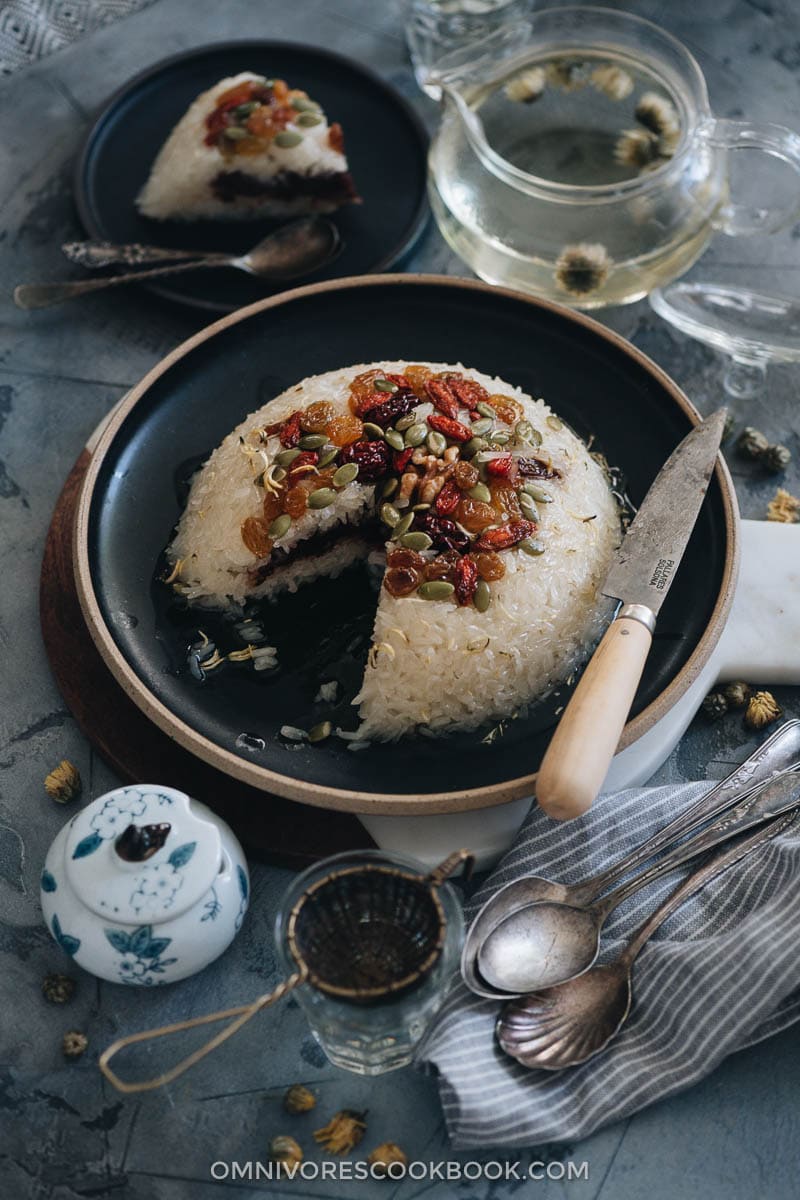
Eight treasure rice is one of my favorite desserts, and I will admit that openly. I know it is a favorite for many of you as well, since this dessert shows up at many Chinese New Year tables as a sweet finish that stays grounded in tradition.
When I first tasted a restaurant version with chrysanthemum syrup and dried fruits, I decided to adapt it in my own kitchen with fewer toppings I could find easily. This dish works well for a celebration menu where dessert is mild, comforting, and connected to festival food culture.
This recipe has a total time of 1 hour 5 minutes and has an easy to medium level of effort to make at home. I like serving this dessert warm or just above room temperature with tea. I highly recommend to add this to your menu because it represents prosperity and completes the menu with a light sweet option.
Chinese Almond Cookies

I had to share these Chinese almond cookies with you because they are a familiar treat I remember seeing in bakery boxes and on holiday tables during festival seasons. These crisp cookies have a light nutty flavor that pairs well with tea after a long meal.
My recipe is a little different though, and I explain more of that in the full post if you want to read further. I use almond flour to give the cookies their nutty aroma and tender texture, then add all purpose flour so they keep their shape while baking. A moderate amount of sugar balances the almond flavor without making the cookies too sweet.
Since I live in the US, friends ask me to bring Chinese almond cookies to gatherings from time to time. Around Chinese New Year, people especially like seeing those shiny, golden cookies on the table as a symbol of good fortune. I hope you give this one a try!

I added sesame balls as a dessert that many people recognize from Chinese bakeries and holiday tables. Rolling the dough, filling it with red bean paste, and coating it in sesame seeds is a hands on process that fits fantastic with festive cooking at home.
I enjoy how their round shape and golden color looks cute for Chinese New Year celebrations. I use glutinous rice flour to make the dough, which gives the sesame balls their mochi-like texture. Red bean paste adds gentle sweetness at the center, and sesame seeds coat the outside and toast as they fry.
I like serving these to friends and family after the main meal with tea so the table ends on a light sweet note. They earned a place in my collection because they are a familiar dessert that pairs nicely with traditional holiday foods, just like the ones I grew up with.

I highly recommend adding these black sesame sweet rice balls to your menu as a dessert that tastes great at the end of a Chinese New Year meal. Making the dough and shaping each rice ball takes patience, and that slower pace is part of what I enjoy during the holiday.
I like how the chewy rice dough and rich filling add variety to a table filled. I use glutinous rice flour to make the dough, which gives the rice balls their signature sticky and tender texture. Black sesame seeds mixed with sugar form a nutty filling at the center, and a small amount of oil keeps the filling runny and smooth once cooked.
Making these rice balls is one of my favorite activities to share with my family and my kid now. I serve them with tea after the main meal, the same way my mom served them to us. This is a dessert I always recommend making for guests, and I usually prepare extra so there is enough to share.
Here is the list of recipes I am planning to serve during the CNY holiday this year. It is a Northern Chinese New Year menu that stays very close to what my grandma would have cooked for our family celebrations.
Chinese New Year cooking does not need to be perfect or exhaustive. What matters is intention, care, and sharing. I hope this collection helps you build a table that is really meaningful to you, whether you are recreating family traditions or starting new ones in your own kitchen.



