
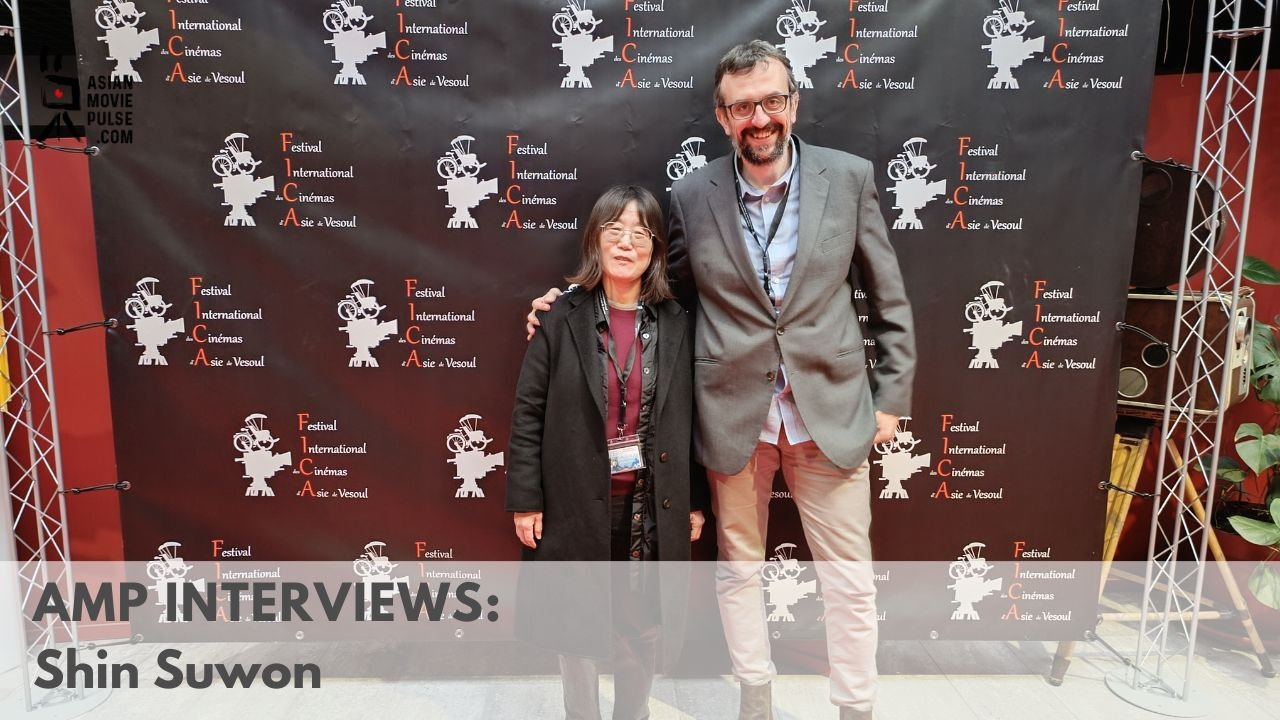
In conversation about her latest work “The Mutation”, South Korean director Shin Suwon discussed how a little known novel became the basis for a deeply personal film that tackles issues rarely addressed so directly in Korean cinema. While the original story was a heterosexual melodrama titled “Another Summer”, Shin chose to significantly alter its core in order to bring forward two marginalized characters, a mixed race young man and a woman marginalized because of her sexual orientation. For her, this shift was not simply narrative, but thematic, allowing the film to speak about discrimination in contemporary Korea.
Shin explained that Korea remains a largely homogeneous society, particularly outside major cities, where people of mixed race and those with different sexual orientations often face isolation, social rejection, and silence. She noted that many homosexual individuals do not come out to their families due to fear of rejection, and that discrimination against mixed race Koreans, especially in rural areas, remains a reality. These observations shaped the film’s direction and motivated her to foreground minorities rather than follow the original novel’s romantic plot.
The director also admitted uncertainty about how wider Korean audiences will react to the film upon its general release, particularly due to a same sex kissing scene involving well known actors. While festival audiences in Busan and Seoul responded positively, she acknowledged that general audiences, and especially conservative families, may respond differently. However, she emphasized that this concern did not influence her while shooting. “When I was shooting, I did not think about it at all,” she noted.
Stylistically, Shin described “The Mutation” as a quiet road movie built on moments rather than dialogue. She intentionally minimized spoken exchanges, focusing instead on body language, silence, and small gestures between the two protagonists. Even scenes where viewers might expect dramatic confrontations, such as the flea market episode involving racist behavior, are handled with restraint and realism rather than crowd pleasing reactions. Interestingly, she revealed that after festival screenings she re-edited this particular scene for the final version that will be shown in Korea and internationally.
Humor and irony also play a role in the narrative, something Shin considers essential even in serious stories. She believes that life itself contains moments of laughter amid sadness, and this sensibility naturally entered the film, particularly in scenes such as those on the train.
Casting presented a particular challenge. Finding a Korean speaking mixed race actor proved difficult until she met model Han Hyun-min, born in Korea to a Korean mother and Nigerian father. Despite his lack of acting experience and personal hesitations due to past discrimination, Shin felt his expressive face was perfect for the role. Extensive rehearsals helped prepare him for the performance. The female lead, also with a modeling background and limited acting experience, was selected for her natural physical expressiveness, which suited the film’s minimalist dialogue approach. The entire production was completed in just 21 shooting days under tight scheduling constraints.
Beyond the film itself, Shin offered a bleak assessment of the current state of Korean cinema. According to her, the industry has struggled significantly after the pandemic, with multiplex attendance dropping and commercial productions shrinking dramatically from around 200 per year to roughly 20. Independent productions continue, but she fears for the sustainability of the broader industry.
Looking ahead, Shin revealed that her next project is set in France, specifically in Normandy, and that she is currently seeking funding through French channels, including workshops with CNC, marking a new geographical and creative direction for her work.



