
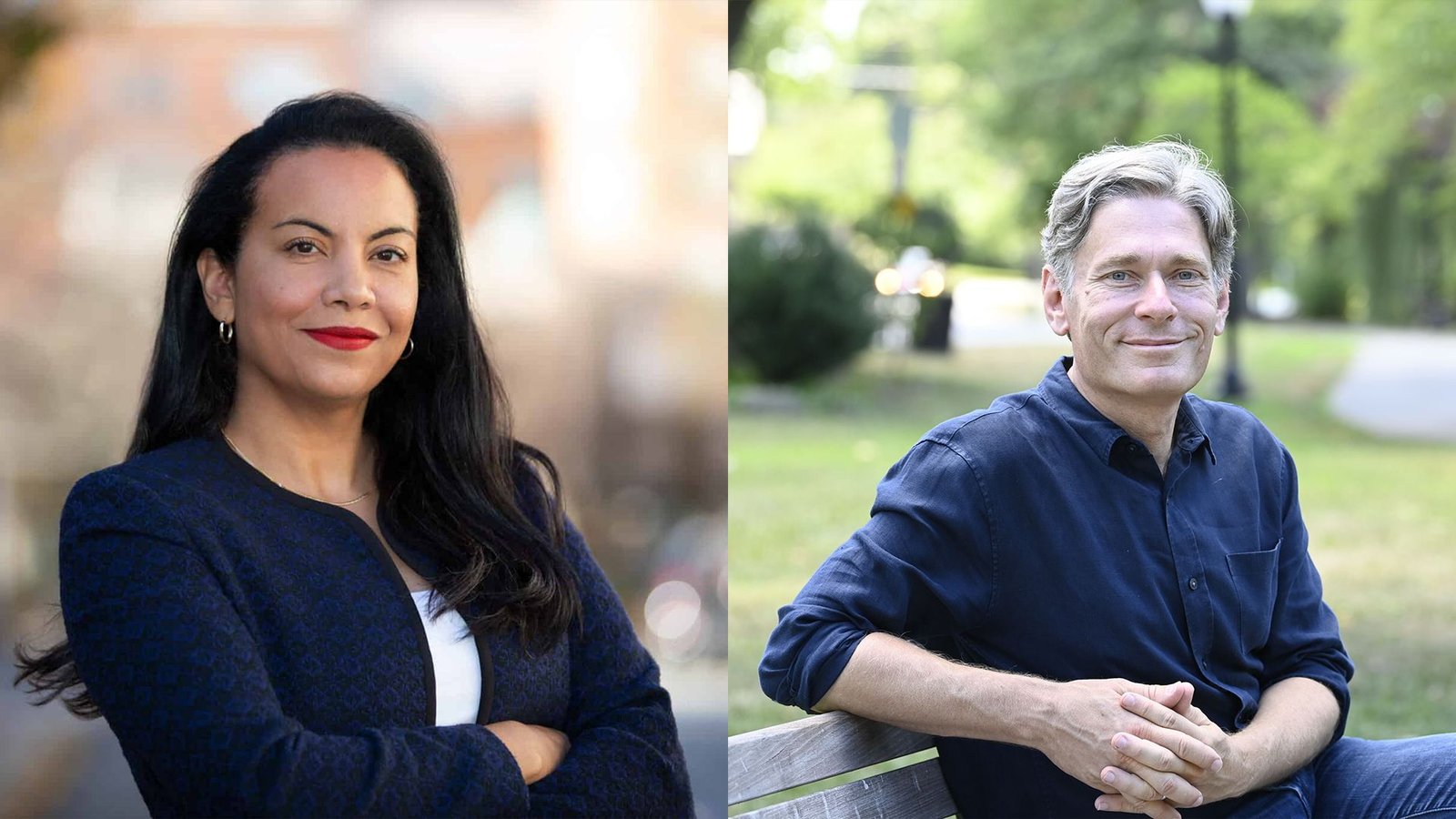
Primary night in the 11th Congressional District ended without a clear winner, as progressive activist Analilia Mejia led former Rep. Tom Malinowski by less than 1% of the vote.
Malinowski did not concede late Tuesday after leading for most of the night as votes were counted. A final result could be more than a week away as mail-in and provisional ballots are counted.
Mejia pulled ahead of Malinowski around 10 p.m. and led by 486 votes at 11 p.m. Kaylie Haberstroh, Malinowski’s campaign manager, sent the crowd gathered in South Orange home around 10:45 p.m., saying they would not have final results Thursday night and that Malinowski would not be speaking. The campaign, Haberstroh said, intended to see that all votes properly cast would be counted.
Whoever wins will face Republican Joe Hathaway, the mayor of Randolph, and one independent candidate in an April 16 special election. The winner of that special election will serve through Jan. 3, the remainder of the term Gov. Mikie Sherrill had been elected to hold.
This year’s regular primary and general elections will determine who gets a full two-year term starting in January, and it’s likely the winner of this special election will have the edge in those contests.

Despite the large number of candidates, pundits had termed this a four-person race and expected it to be close.
Mejia was the former political director for U.S. Sen. Bernie Sanders (I-VT), who endorsed her, and she saw strong support from state and national progressive groups. Other endorsements included New York Rep. Alexandra Ocasio-Cortez and Sen. Elizabeth Warren (D-Mass.)
She won Essex County decisively and finished strong in Morris County, which had been expected to put Malinowski over the top.
Mejia celebrated, but stopped short of declaring victory.
“Here’s the bottom line y’all: tonight we celebrate — tomorrow we continue to organize,” Mejia told jubilant supporters at a celebration in Montclair. “We must ensure that they count every single vote. But it sure looks hoppin to me!”
Malinowski faced a $2.3 million ad blitz attacking him funded by United Democracy Project, the dark money committee of the American Israel Public Affairs Committee, or AIPAC. But Mejia was the most progressive candidate in the race and was the only one of 11 Democrats who refused to say she supported the International Holocaust Remembrance Alliance definition of antisemitism, which the state Legislature had considered, but failed to adopt last year.
Another surprise was the fourth-place showing by Essex County Commissioner Brendan Gill, who was endorsed by former Gov. Phil Murphy and the Essex County Democratic machine. Essex Democrats are usually good at getting out the vote, but the lack of the county line on the ballot has somewhat blunted county parties’ power.
Gill told supporters in Montclair Thursday night that he was “proud” of the campaign and all their efforts and pledged to support the winner.
The truncated election campaign largely centered around opposition to President Donald Trump and his policies, primarily immigration, funding cuts to health care subsidies and other programs, and voter concerns over affordability.
While the final turnout will not be available for a few weeks, it was high for a Thursday primary in February. Close to 77,000 votes had been counted, about 20% of registered Democrats and Republicans in the district. Roughly 34,000 people had voted early, more than the total number who cast ballots in the 2024 July special primary in the neighboring 10th District, when Democrat LaMonica McIver ultimately won a full two-year term.
Election officials in Essex, Morris and Passaic counties did not report any significant problems at the polls.
Spending in the election will likely top $10 million. An NJ Spotlight News analysis of Federal Election Commission data found 14 independent organizations had spent about $6 million through mid-week. The candidates had spent $3.2 million through mid-January, the most recent reports available showed.
The biggest spender was United Democracy Project. Its ads targeted Malinowski, who does not support unconditional aid to Israel. Malinowski represented the 7th District for four years before losing in 2022 to Republican Tom Kean Jr. following redistricting. The ads sought to portray Malinowski as someone who supported increased funding for immigration enforcement and “cashed in on COVID” when he did not disclose stock trades in a timely manner in 2019 and 2020. Malinowski said the lack of disclosures was an oversight and he opposes Immigration and Customs Enforcement’s tactics.
Malinowski had spent the most money of all the candidates – about $757,000 through mid-January. The 218 Project, which backed him, spent $735,000 trying to debunk the negative ads. Also in his favor, Malinowski he had the greatest name recognition of the candidates because of his prior terms in Congress. Two of the towns that were in the 7th when he represented it are now in the 11th and ads that ran in the New York market during Malinowski’s last three campaigns were thought to have given him a boost. He also got the endorsement of the Morris County Democratic party.
Mejia’s voter outreach included cohosting a number of trainings on reporting and monitoring ICE sightings. She also called for abolishing the office. Her campaign was calling voters Thursday trying to get as many voters out as possible.
Finishing third was Tahesha Way, the former lieutenant governor to Murphy. She had the most independent spending backing her: $2.1 million from the Democratic Lieutenant Governors Association and three other groups. She entered the race relatively late and billed herself as the only candidate who had taken on and beaten Trump. She was referring to a 2020 lawsuit filed by Republicans and the Trump reelection campaign seeking to stop the state from sending mail-in ballots to all voters that year and count ballots that arrived after Election Day. Way, who was also secretary of state, was named in the suit, which Trump lost.
Thirteen Democrats filed in all and while two dropped out, their names still appeared on the ballot. The other candidates who actively campaigned were John Bartlett, a Passaic County commissioner; Zachary Beecher, a member of the Army Reserve from Morristown; J-L Cauvin, community advocate, lawyer and professional comedian from Bloomfield; Cammie Croft, who served in the Obama administration and worked for Amnesty International; Jeff Grayzel, a Morris Township committee member; Justin Strickland, a Chatham councilman and former Army captain; and Anna Lee Williams, a social justice advocate.
— John Mooney contributed reporting for this story.



