
Even before Korean culture gained global popularity, the South Korean government recognized the economic potential of the cultural industry. One of the earliest signs of this awareness appeared in a 1994 policy memo submitted to then-President Kim Young-sam.
Highlighting the strategic value of cultural industries, the memo drew a striking comparison between Steven Spielberg’s hit film “Jurassic Park” (1993) and South Korea’s automobile exports. It argued that the Hollywood blockbuster generated profits roughly equivalent to those from exporting 1.5 million Hyundai vehicles. At the time, South Korea exported fewer than 700,000 cars annually, meaning the revenue from that single film exceeded more than two years of the country’s auto exports.
Three decades later, that early insight appears increasingly prescient. South Korea’s cultural industry has steadily expanded and is now emerging as a meaningful engine of national economic growth.
Despite the global popularity of Korean culture and its spillover effects on sectors such as tourism, cultural industries themselves were not major export drivers until recently. For decades, South Korea’s export growth was anchored in manufacturing. From the 1980s through the 1990s, heavy and chemical industries formed the backbone of exports. In subsequent decades, high-tech manufacturing replaced them as the primary engines of growth.
Recent export data suggest that this long-standing pattern may be shifting. In 2025, South Korea’s total exports rose 3.8 percent to a record $709 billion. As expected, semiconductors remained the largest contributor, with exports climbing to $173.4 billion, while automobile exports, the second-largest sector, reached a record $72 billion.
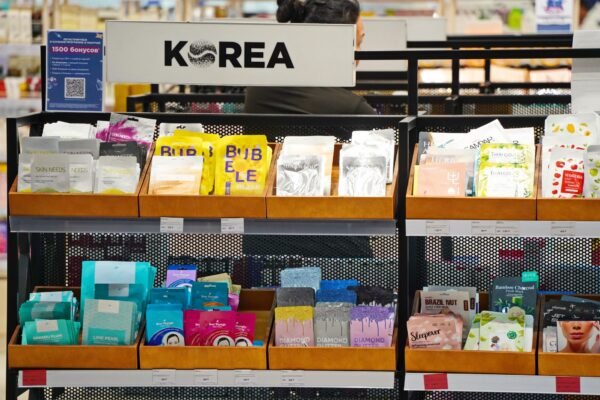
What stands out, however, is the scale of growth in cultural exports. K-Food exports reached a record $13.62 billion, marking a 5.1 percent increase from the previous year and the tenth consecutive year of growth. K-Beauty exports expanded even faster, rising 12.3 percent to $11.4 billion. For the first time, both sectors ranked among South Korea’s top ten export categories, placing ninth and tenth, respectively. When combined with exports of games, music, and other cultural content, total K-culture exports reached $37.94 billion, making culture the country’s fourth-largest export sector in 2025.
This shift comes at a critical moment. Despite record export figures, South Korea’s manufacturing sectors now face a far more volatile and fragmented global trade environment. U.S. trade policy under President Donald Trump is expected to negatively affect nine of South Korea’s 15 major export items, accounting for roughly 60 percent of total exports. The export-oriented growth model that powered South Korea’s rise is becoming less reliable in a world shaped by tariffs, industrial subsidies, and intensifying geopolitical rivalry.
At the same time, the economy’s long-standing reliance on a narrow set of industries continues to undermine resilience. As global consulting firm McKinsey observed, the number of newly emerging export products has declined over time, and South Korea’s export portfolio has remained largely unchanged for the past two decades. This lack of diversification has slowed growth and increased vulnerability to external shocks, a weakness now intensified by trade uncertainty and geopolitical tensions. Against this backdrop, the rise of cultural exports stands out as a rare sign of structural diversification.
Yet the promise of the cultural economy should not be overstated. Cultural industries have only recently entered South Korea’s roster of major export sectors, and their growth remains closely tied to the Korean Wave itself. The rapid expansion of K-Food and K-Beauty exports has been driven largely by global enthusiasm for Korean culture, making it too early to assume that recent performance reflects a self-sustaining trend. A downturn in global interest could quickly translate into weaker exports.
Market concentration presents another vulnerability. The United States, China, and Japan – the three largest importers of K-Food and K-Beauty products – together account for more than 40 percent of exports in both sectors. Moreover, more than 80 percent of exporters in these industries are small and medium-sized enterprises or mid-sized firms, which are especially exposed to tariff hikes, regulatory changes, and supply chain disruptions. Without targeted policy support and broader market diversification, cultural exports could prove as fragile as they are promising.
South Korea’s transformation from one of the world’s poorest countries into a global economic powerhouse is widely recognized, and the global popularity of Korean culture is no longer novel. What is new is the growing economic weight of the cultural industry itself. As the global economy becomes more fragmented and uncertain, the Korean Wave is no longer just a soft power asset or a branding success. It is emerging as a potential pillar of future growth. Whether cultural industries can sustain their recent success remains uncertain, but their rising importance gives South Korea strong reason to treat the Korean Wave as a serious long-term economic strategy.



