
A new villain has emerged in right-wing discourse: the Affluent White Female Urban Liberal, or AWFUL.
Talking heads on Fox News and right-wing YouTubers describe AWFULs as smug, entitled, and even “a cancer on the nation.” AWFULs, their argument goes, are the reason that ICE activities in Minnesota have become so violent. These women are driven by their sexual frustration, their lack of real problems, their empty, childless lives. ICE Watch is full of them. Renée Good was one, which is why her death, while tragic, is ultimately not the fault of the man who shot her.
The acronym appears to have emerged around the end of the Biden years. In 2024, the Washington Examiner was bemoaning the influence of AWFLs (no U) on the mayor of Alexandria, Virginia, and musing over whether this demographic was “so annoying and repulsive that they’re driving centrist voters, particularly men, away from the Democratic Party.”
The idea appeared to be that rich white liberal women had gotten too preachy, too virtue-signaling. They wanted people to wear masks and get vaccinated during the Covid pandemic. They marched and protested over the death of George Floyd. They kept talking about the climate crisis. How annoying!
Liberal men did that too, but that wasn’t the point: The point was that all of this behavior felt feminine; it reminded people of their moms, who, by their nature, are not cool. The Washington Examiner cited the Democratic strategist James Carville, who theorized that Democrats were dominated by “too many preachy females.” The party’s talking points, Carville told the New York Times in 2024, were all, “‘Don’t drink beer. Don’t watch football. Don’t eat hamburgers. This is not good for you.’ The message is too feminine: ‘Everything you’re doing is destroying the planet. You’ve got to eat your peas.’”
The AWFUL label emerged into the mainstream in January, after the shooting of Renée Good. Conservatives rushed to position not just Good, but also her entire demographic, as the villain of the encounter. There was, right-wingers agreed, something about how smug these women were; they needed to be taken down a peg.
Fox News’s David Marcus described Good and other liberal white women as “organized gangs of wine moms,” adding, “The video of Good and her partner heckling and, let’s be honest, goading ICE officers with an obnoxious smugness that makes most people’s skin crawl, is just one of many. We see these self-important white women doing it in video after video after video, taunting cops, insulting journalists or even bystanders, often with a weird and disturbing glee.”
That there’s no equivalent term for the white liberal men resisting ICE points to the fact that misogyny is at the core of the right’s problem with AWFULs. But it’s also worth noting that they got this playbook from the left. The AWFUL script is a direct copy of the progressive disdain for white women in the past decade.
The right is going after white women because the left showed them how to do it. Here’s how they got here from there.
2017: The first Women’s March makes headlines.
2018: The second Women’s March is plagued by stories of the misbehavior of white feminists. Meanwhile, social media posters start making fun of Karens.
2020: The Karen meme goes mainstream.
2024: Prominent Democrats start arguing that liberal women are making the party look bad. Meanwhile, conservatives start talking about what a problem AWFULs are.
2026: Renée Good is killed, and the AWFUL meme breaks containment.
How Karen got deradicalized
The AWFUL’s immediate antecedent is the Karen: similarly white, female, and entitled. A meme that emerged around 2018, before exploding in 2020, showed a parody of the kind of woman who is rude to service workers, racist to people of color, and always wants to speak to the manager.
The Karen meme was, in part, used by people of color to describe a real problem with white women using the cover of their race to be abusive toward Black people, an evolution of the Miss Ann and Becky tropes. It was used to refer to women like Amy Cooper, who called the cops on a Black bird watcher, and Lisa Alexander, who called the police about a Black man writing “Black Lives Matter” in chalk on his own house: inarguably racist incidents that deserved to be called out and named.
But there’s another layer to the Karen meme that is rooted in a disdain for women in general.
As Aja Romano laid out for Vox in 2020, part of the reason Karen is called Karen is because of a Reddit user who became internet-niche-famous for posting long, bitter rants about his ex-wife, Karen. Other Redditors compiled the Karen lore into the subreddit r/FuckYouKaren, which then overlapped with the independently developing Karen meme to become a place where people posted stories about women they deemed to be Karens misbehaving in public. At the root of the meme, then, is one man’s invective toward his ex-wife: not exactly someone punching up.
As the Karen meme grew to be more popular, it began to lose its edge. Many of those who spread it did so not because they cared about racial politics, but because they were excited to have a new word they could use to insult any woman they found annoying, no matter her race or politics or whether she ever tried to talk to the manager.
In the Guardian in 2020, Hadley Freeman described posting on what was then Twitter that she thought there were sexist, ageist, and classist undertones to the Karen meme. Soon, she said, her replies were filled with “men gleefully calling me a Karen (‘OK, Karen’) and telling me to make them a sandwich.” Freeman added, “Do I really need to spell out the sexism of a meme about a woman’s name that took off from a man griping about his ex-wife and has become a way of telling women to shut up?”
Progressives turn on the feminist in the pussy hat
As Karen rose in prominence, so too did her close cousin: the white feminist.
Criticism of white feminism, like criticisms of Karen, originated in communities of color. But while Karen was openly awful to Black people, the white feminist was more prone to microaggressions.
The central critique was that mainstream feminism prioritized the experiences and needs of white women. White feminists, in particular, had a history of ignoring the ways in which multiple axes of oppression intersect and exacerbate each other.
“White Feminism exists to promote the comfort and safety of middle-class and affluent White women,” wrote Black feminist academic Monnica T. Williams in 2019. “At its core, it is a racist ideology that claims to speak for all women while ignoring the needs of women of color and suppressing our voices when our agendas and priorities don’t align.” Among other things, Williams called out the failure of mainstream feminism to fight for better health care for Black women, who die in childbirth at three times the rate of white American women, or acknowledge the way the criminal justice system disproportionately impacts women of color.
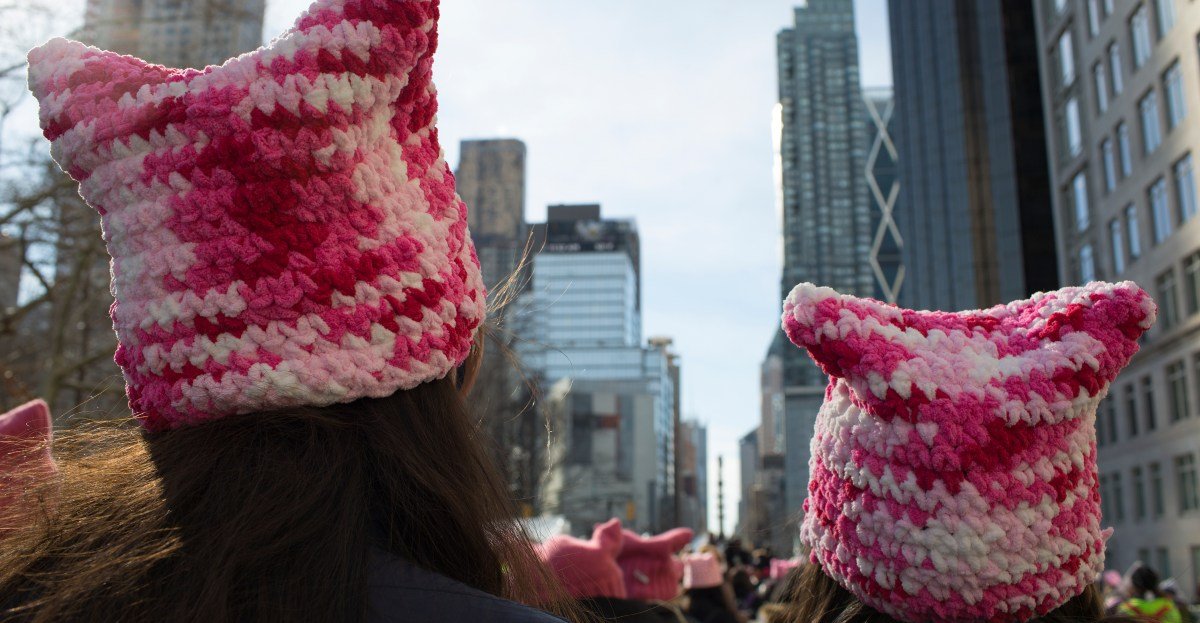
Williams argued that the 2017 Women’s March was particularly guilty of ignoring the concerns of women of color, and she was not alone in that analysis. While some described it as “the most diverse march for women’s rights ever,” many women of color said they didn’t feel welcome. Even the pink pussy hat — the march’s most enduring icon — became a symbol of division (because not all pussies are pink, and not all women have pussies).
As the criticisms of white feminism entered the larger conversation, they — much like the idea of the Karen — lost their political edge. If anyone wanted to communicate that they thought the ladies in pink pussy hats protesting against Trump were kind of annoying, the phrase “white feminist” was right there.
“Let’s talk white women, shall we?” comedian Bill Burr said in his Saturday Night Live monologue in 2020. “The way white women somehow hijacked the woke movement, generals around the world should be analyzing this. Just to refresh your memory, the woke movement was supposed to be about people of color not getting opportunities, the advance that they deserved, finally making that happen. And it was about that, for about eight seconds. And then somehow, white women swung their Gucci-booted feet over the fence of oppression and stuck themselves at the front of the line. I don’t know how they did it. I have never in my life heard so much complaining from white women!” Burr burst into faux sobs. “‘My life is so hard with my SUV and my heated seats. You have no idea what it’s like to be me.’”
The initial criticism of white feminism was intended to draw attention to the way both misogyny and racism affect women of color. But it also gave cover to plenty of people who were delighted to use it to dismiss any woman concerned about her own oppression as oblivious and annoying.
As Democrats headed into the 2024 election with a woman of color as their candidate, they found themselves in an odd position: Feminism, which had seemed such a political win circa 2017, was now a liability. It was too blinkered and tame for the progressive left, and too radical and threatening for the right. Who wanted to be like those awful women with the pink hats? Everyone knew they were cringey and unfashionable, complaining over nothing.
The Karen-AWFUL switcheroo
The AWFUL meme pulls off one of conservatism’s favorite tricks, what you might call the “reverse racism” maneuver: It takes critiques used by the left to describe a structural power dynamic, and then reverses the power dynamics to claim that, in fact, it is the right who is being oppressed by those snobby elitists on the left.
The Karen meme is rooted in an unkind stereotype of a conservative white woman: suburban, unfashionable, anti-vax, rude to service workers, with lots of annoying kids. The AWFUL meme, in turn, is rooted in an unkind stereotype of a liberal white woman, pulling from both the white feminist and the earlier era of anti-feminist critique: shrill, angry, virtue-signaling, either childless or just a bad mother.
In each case, the meme’s leftist roots offer cover to the people who are using it. It was fine to make fun of the Karen because she was rude to working-class people and abusive to people of color. Ostensibly, you weren’t mocking her for being a woman; you were mocking her for her racism and classism. When progressives take jabs at white feminists, they’re ostensibly not mad because these are women complaining about their problems, but because they are oblivious to the struggles of people of color.
In turn, the people now deriding AWFULs are not explicitly bothered that they’re women protesting in public. They’re simply making fun of these women for being liberal scolds who lord their wealth and social capital over the brave blue-collar ICE workers they are protesting against. It’s the same type of social cover that the Karen meme offered, appropriated and rejiggered to support a conservative worldview.
In each case, we’re meant to believe that it’s just a coincidence that the annoying, clueless, and bigoted people being mocked just happen to be women. But it’s notable that Karen’s male counterpart, Ken, never got as much attention as Karen did. And while conservative commenters don’t seem thrilled about white liberal male protestors, they have yet to give that demographic a catchy little acronym. They smeared Alex Pretti as a violent radical, but they showed perhaps even more disdain in their smearing of Renée Good as an annoying radical.
The overlap in all of these memes about white women is entitlement. If used sincerely by people who genuinely care about racial justice, the memes could be taken as a meaningful critique of white female complacency. When used in bad faith, they start to look a lot more like discomfort with seeing women have opinions in public.
None of this is to say that white women are beyond reproach, or that they can never be complicit in classism and racism. But it is notable how frequently legitimate criticism of white women coming from communities of color turns into an excuse for left-leaning white men (or other white women) to tell women to shut up and stop complaining — all of which gives cover to conservatives when they want to tell women to go back to the kitchen without sounding like chauvinists. That doesn’t actually help the people of color, whom everyone claims to be so outraged on behalf of.
What might be most helpful here is to turn back to Kimberlé Crenshaw’s concept of intersectionality, or the idea that people from different identity groups experience oppression in different and sometimes overlapping ways. Crenshaw originally developed intersectionality as a legal theory, to push courts to understand that women of color experience discrimination both on the basis of their sex and on the basis of their race, rather than just one or the other. In other words, intersectionality was meant to give us a language for talking about more forms of oppression, not to tell some oppressed people to be quiet.
So the next time a fun new word about how annoying a certain kind of woman enters the zeitgeist, perhaps consider: Is your goal in using this word to make a critique of structural racism in the US? Is using this word the only way you show up for people of color? Or are you more interested in telling a woman you don’t like to shut up?



