
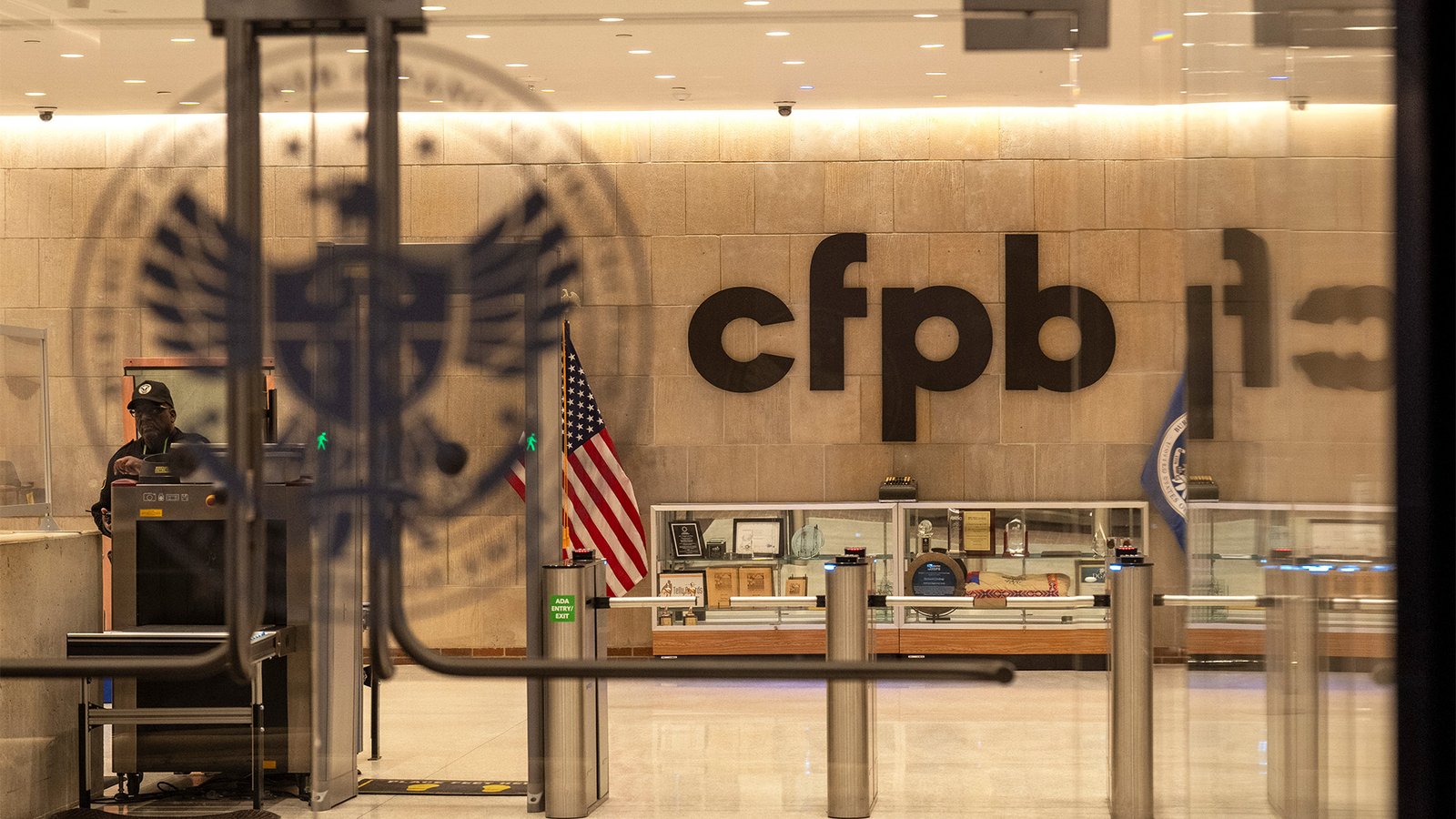
 WASHINGTON —After Citibank used two debt-collection firms to falsify New Jersey court documents, the Consumer Financial Protection Bureau stepped in to keep roughly 7,000 New Jerseyans from losing millions of dollars.
In other actions, the bureau secured penalties against Cherry Hill-based TD Bank, for damaging credit scores, and against Trident Mortgage, for redlining in the Philadelphia region, which includes parts of southern New Jersey.
Under the second Trump administration, the bureau has pulled back sharply from pursuing cases like these and retreated from its enforcement and regulatory efforts, withdrawing dozens of regulations, rules and policy statements that had been pending between the outgoing Biden administration and the incoming executive branch.
“The CFPB may still be standing, but it’s essentially on life support,” Chuck Bell, advocacy program director at Consumer Reports, a nonpartisan group, said in a statement.
Through a series of attempted layoffs last year, the Trump administration has sought to terminate 88% of the agency staff, according to investigators at the nonpartisan Government Accountability Office, the investigative arm of Congress.
Leadership at the bureau released a new set of priorities in April 2025, which included a goal to “shift resources away from enforcement and supervision that can be done by states or other regulators,” GAO found in a report it published Monday after months of work.
‘Expressed concerns’
The consumer bureau disputed the report but did not specify what was wrong about it.
The GAO included a note at the bottom of its report: “CFPB expressed concerns with the accuracy of this report. GAO stands by the accuracy of the facts presented, as discussed in the report.”
Courts have blocked the administration’s attempts to gut the bureau’s staff from an estimated 1689 to 207.
Separately, the Republican-majority Congress cut the bureau’s budget roughly in half through a sweeping policy bill that cut taxes and public services.
The GAO report was published after Sen. Andy Kim (D-NJ) and Elizabeth Warren of Massachusetts, who helped establish the bureau in the wake of the 2008 financial crisis, requested an investigation in April. Both are members of the Senate banking committee.
Kim and Warren wrote three letters in April 2025 to the inspector general of the bureau and the head of the GAO, requesting investigations to determine if the Trump administration had broken federal law in its moves to shrink the agency.
“Specifically, we ask that GAO examine the impact of recent stop work orders, firings and reductions in force, contract cancellations, decisions to drop major lawsuits, and other related actions on the CFPB’s efforts to enforce consumer protection laws,” they wrote in one letter.
Out $19 billion
In their own report this week, Democrats on the committee said the bureau’s overall enforcement retreat has cost the American public an estimated $19 billion.

Out of that sum, about $10 billion came from credit card late fees, $4 billion from dismissed lawsuits and $5 billion from ending a bureau program to cap overdraft fees.
Congress voted last year to end that overdraft fee proposal — it would have limited most overdraft banking fees at $5 — largely on party lines.
New Jersey Republicans voted for it, while all but two Democrats who represent the state, Josh Gottheimer and Donald Norcross, voted to retain the rule. Neither man voted. Norcross was recovering from a medical issue at the time.
Spokeswomen for the consumer bureau did not respond to requests for comment about the GAO investigation or the Democrats’ report.
Under the second Trump presidency, focus at the bureau has shifted.
The bureau has “abandoned” more than 22 enforcement actions against banks and other financial firms it has accused of “unfair and abusive practices,” according to Consumer Reports. The bureau has also dropped or weakened punishments in 20 other cases, according to a tally the Consumer Federation of America maintains.
One such case stems from a legal order the consumer bureau and the Department of Justice obtained in 2022 against Trident Mortgage, a lender accused of redlining “majority-minority neighborhoods in and around Philadelphia.
Federal officials accused Trident of breaking federal law between 2015 and 2019 by discriminating against loan applicants. Loan officers used racist slurs and shared offensive photos over email, according to court records.
‘In the ghetto’
“This one is in the ghetto. pass [sic] it along to ian. HAHAHAHAHHA kidding,” wrote a Trident mortgage loan staffer to a colleague about a property.
Federal officials argued in court that “Trident’s lending demonstrated a pattern of disproportionately serving those areas” of the greater Philadelphia region that “majority-white.”
The bureau terminated the order against Trident on June 2, 2025. In 2022, the bureau had helped secure a $4 million penalty against Trident.
In a 2016 case, after Citibank used two debt-collection firms to falsify court documents in New Jersey legal cases, the bureau ordered the bank refund $11 million and halt collection on about $34 million from roughly 7,000 customers.
And in September 2024, the bureau ordered the U.S.-based subsidiary of TD Bank, headquartered in Cherry Hill, to pay $7.76 million to tens of thousands of people whose credit scores the bank damaged repeatedly and $20 million in a separate penalty.
“Dismantling the CFPB sends the message that it’s open season on consumers because the financial cop that was created by Congress to protect our wallets from unscrupulous financial firms has been taken off the beat,” said Bell of Consumer Reports.
The agency estimates that it has returned about $20 billion to the U.S. public since it was created in 2011.



