
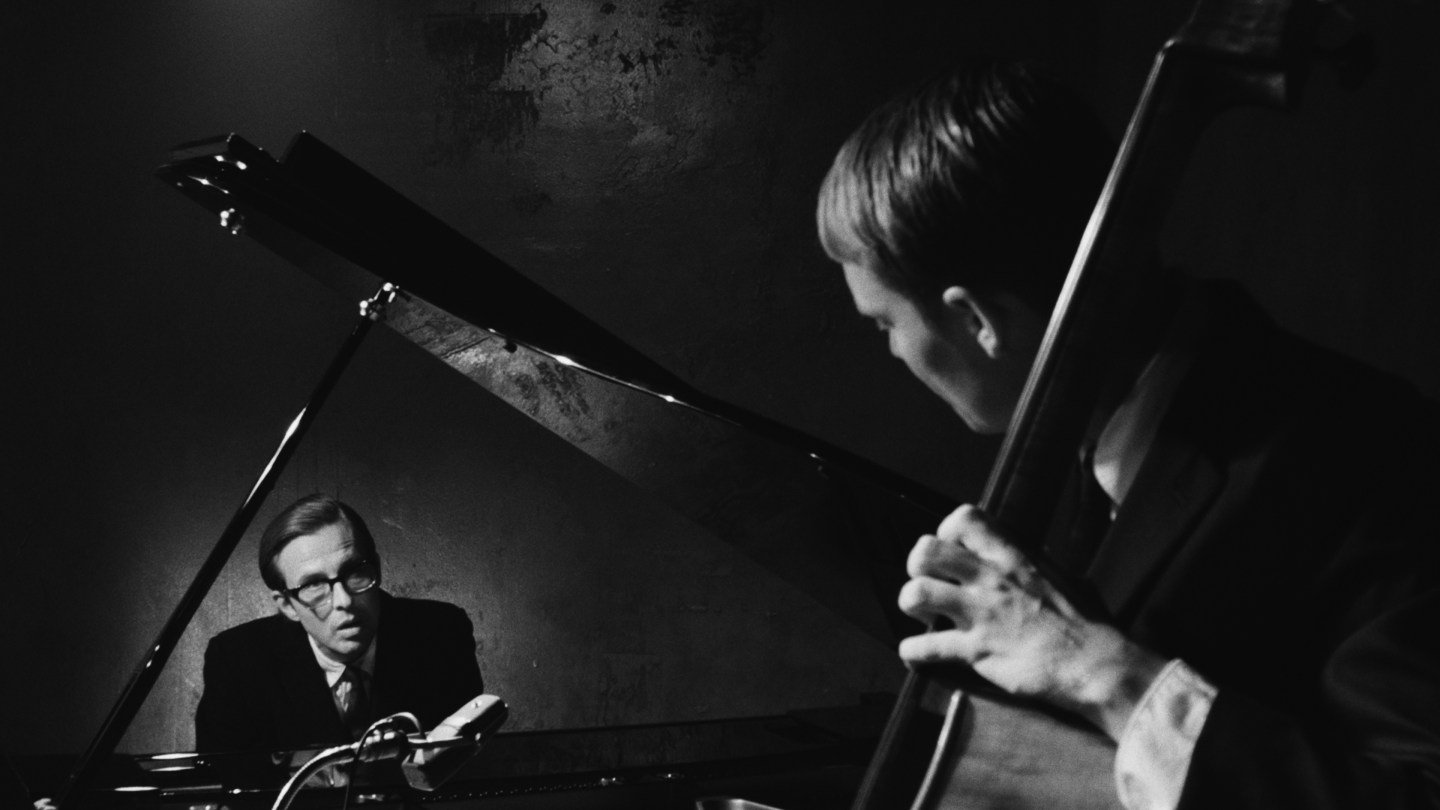
At the height of his career, legendary jazz pianist Bill Evans’ bassist and musical soulmate Scott LaFaro died in a tragic car crash in 1961. British documentary director Grant Gee’s (The Gold Machine, Joy Division) fiction feature debut Everybody Digs Bill Evans, starring Norwegian actor and Joachim Trier regular Anders Danielsen Lie (Sentimental Value, The Worst Person in the World), Laurie Metcalf, and Bill Pullman, tells the story of what came next.
Premiering in the Berlin International Film Festival‘s competition lineup on Friday, the movie, based on a Mark O’Halloran (Adam & Paul, Viva) screenplay, also features Barry Ward and Valene Kane. The cinematographer is Piers McGrail, the editor is Adam Biskupski.
“Numb with grief, Evans stops playing for the first time since childhood,” reads a synopsis for the film. “Cutting between Bill’s present and future, his sobriety and intoxication, and his relationships with his family and on-again/off-again girlfriend, who shares his taste in music and hard drugs, Everybody Digs Bill Evans portrays the inner life and personal impact of a troubled musical genius as he struggles to learn that sometimes an intermission is part of the music.”
Mister Smith Entertainment is handling world sales on the movie produced by Dublin-based Cowtown Pictures and London’s Hot Property.
THR can now premiere an exclusive clip from Everybody Digs Bill Evans. Set in black-and-white, it takes us back in time to a star-studded family scene. Watch – and listen – as the needle is put on the record.
THR asked Gee about how he came across Evans’ story, how his past experience played into his fiction debut, and the collaboration with his Norwegian star.
What drew you to Bill Evans‘ story, and what research or archive material was key to bringing the 1961 jazz scene in New York to life?
I first came across Bill Evans in a photograph by Lee Friedlander. It was taken in 1962, right after the period covered in our film. It’s a very strange image: Bill is seated at a piano in the foreground, looking very Ivy-league cool, but also looking like he’s seen a ghost. His two bandmates – from the first trio after Scott LaFaro’s death – are in the background, laughing like they can’t believe their luck. I’d never heard any of Bill’s music. He just looked so intense, so cool and so – haunted. I just wanted to know: “Who is that?” In a way, Everybody Digs Bill Evans is a creative response to that original question.
You have a background in documentaries and music videos as a director and cinematographer. How did that influence how you approached this story?
I started out as a director making music videos and that led, many years ago, to feature documentaries on Radiohead and Joy Division. The most direct link back to that early work was filming the scene, which is the first 4 minutes of Everybody Digs Bill Evans: the band performing a track in its entirety in our version of New York’s Village Vanguard club. It was very much like shooting a music video, and I was able to switch back to that mode much more easily than expected! As far as the experience with documentaries, with those, you have very little control over the world that you’re filming, and so maybe that work helped me to be flexible on set and adapt to quickly changing situations without stressing too much.
Can you talk a bit about the process of working with Anders Danielsen Lie on his portrayal of Bill Evans? I heard he has a music background.
From the moment I met Anders – on Zoom – when he told me that he was a fan of Bill Evans to the extent that he’d previously spent a lot of time transcribing Bill’s piano solos so he could better understand him – I knew he was going to be great. Once he was attached to the project, we had many wonderful conversations about the man and his work and the script that we’d be working with. Anders, early on, seemed to have decided he trusted my direction, and by the time we got on set, we were so prepared that there was surprisingly little additional direction needed beyond blocking and occasional suggestions about pace and tone.
One particular highlight for me was recording the “live” version of the track “Jade Visions,” which starts the film. Anders on piano with two professional jazz musicians, Will Sach on bass and Boz Martin-Jones on drums, in a music studio in West Cork, Ireland and … they just immediately gelled and played the wonderful version you hear in the film. It was just a great experience working with Anders, and I’m so grateful to him.
The film deals with themes of grief and creativity. What do you hope audiences take away from their interaction or connection and from the film?
In the film – as in his life – Bill’s grief over the death of the bass player Scott LaFaro is a block to his creativity. He stops performing and leaves town. Apparently, in the summer of 1961, there was a rumor in New York jazz circles that he was dead.
Our film proposes that, once the grief had lessened, Bill had to make a big decision: whether or not to return to New York and to playing and recording. Bill did keep playing and had an extraordinary career for another two decades, making music of beauty and grace, but one of his closest friends – the writer Gene Lees – said that Bill never really got over LaFaro’s death.



