
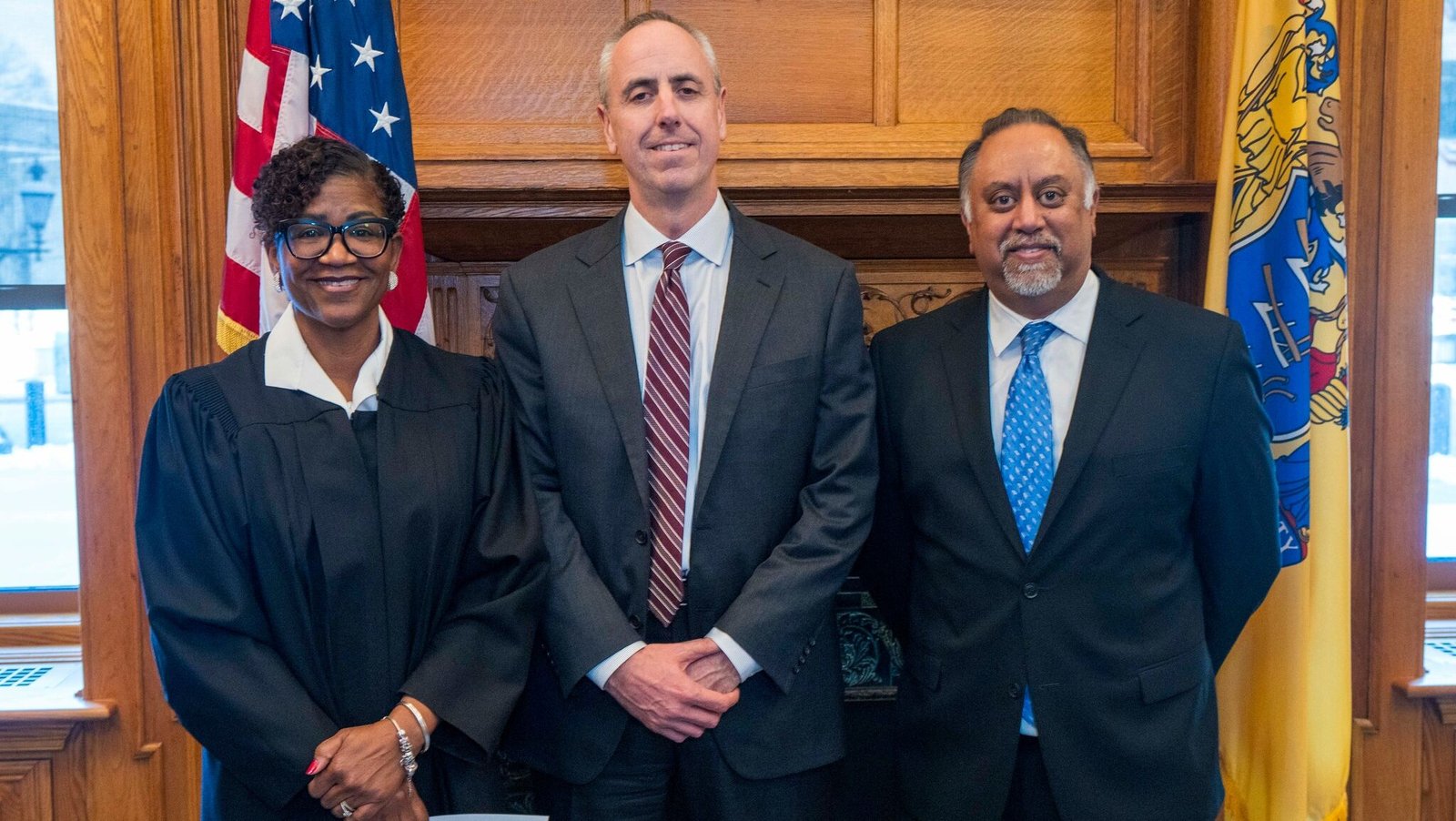
 As Gov. Mikie Sherrill crafts her first state budget, she’ll have to manage an uncertain economic outlook and fallout from deep federal spending cuts, among other potential challenges.
One Sherrill advantage, though, is a state treasurer who won’t need on-the-job training. Her pick, Aaron Binder, served as deputy treasurer during the second half of former Gov. Phil Murphy’s tenure. Before then, he was a longtime budget staffer for the state Assembly.
“Part of the advantage is being able to jump in and get off the ground running on day one,” Binder said in an interview with NJ Spotlight News. “We have an experienced team in Treasury — and that’s not just me in the treasurer’s office, it’s across the board.’
Sherrill, a Democrat, is a state government newcomer who welcomed numerous Murphy veterans to her cabinet. Binder sailed through a preliminary Senate Judiciary Committee hearing, winning unanimous bipartisan support, and he’s expected to win Senate confirmation by month’s end.

During the NJ Spotlight News interview, Binder declined to detail the numbers that Sherrill intends to show lawmakers in early March. The budget itself, he noted, is being compiled.
Speaking broadly about state finances, Binder indicated that the Sherrill administration doesn’t plan to enact policy that would erode the state’s improved general fiscal conditions made during Murphy’s tenure.
Murphy, a two-term Democrat and a retired senior director of Goldman Sachs Group Inc., championed reducing New Jersey’s bonded debt and returning to full annual funding of the state’s public-worker pension obligations. He also prioritized bolstering budget reserves relative to historical levels.
Those efforts led to a string of credit upgrades by several Wall Street rating companies during Murphy’s latter years.
“Leaving the state in better shape every year is ultimately where Governor Sherrill’s priorities are and certainly aligns with what my vision is for Treasury as well,” Binder said.
Still, Binder faces a period of potential turbulence. Atop the list of major concerns is the shift of federal costs to the state, which is the fallout of spending policies enacted by Republican President Donald Trump and the GOP-led Congress over the last year.
“Treasury is a front-facing entity that, for a lot of the public, we are going to be where they are going to experience state government. How that experience goes is really important to me, it’s really important to the governor,” — Aaron Binder, Gov. Mikie Sherrill’s pick to lead the Department of the Treasury
The nearly $60 billion spending plan for the current fiscal year is also operating with a projected gap of more than $1 billion between spending and revenues, according to budget documents.
Murphy and lawmakers tapped budget reserves and other one-time revenue sources to cover that structural gap in recent years. Just as those types of options are becoming more limited, the state’s budget imbalance is expected to grow in the fiscal year that begins July 1.
When asked about the inherited structural gap during his Senate committee hearing, Binder said Sherrill is seriously considering spending cuts as she crafts her first budget.
He also emphasized the need to resolve the budget imbalance during the interview with NJ Spotlight News. Sherrill “wants to address that early on, which I think is important,” Binder said. “If you don’t address that early, the problem just compounds, and you’re stuck with really, really hard decisions later on.”
Beyond advising on the budget, Binder is leading one of state government’s biggest and most important departments. Treasury, with 3,000 employees, administers state taxes and the pension system, among other key functions.
As for his own goals, Binder says he wants to improve customer service, particularly as the department distributes more than $4 billion annually in direct property tax relief.
“Treasury is a front-facing entity that, for a lot of the public, we are going to be where they are going to experience state government,” Binder said. “How that experience goes is really important to me. It’s really important to the governor.”
Carrying on important technology upgrades is also a priority, he said.
“We have a lot of projects at Treasury, and across the administration, those kinds of projects — if you don’t really support them, if you don’t give them resources — they fail,” Binder said.
This story is made possible in part by the Corporation for Public Broadcasting, a private corporation funded by the American people.



