
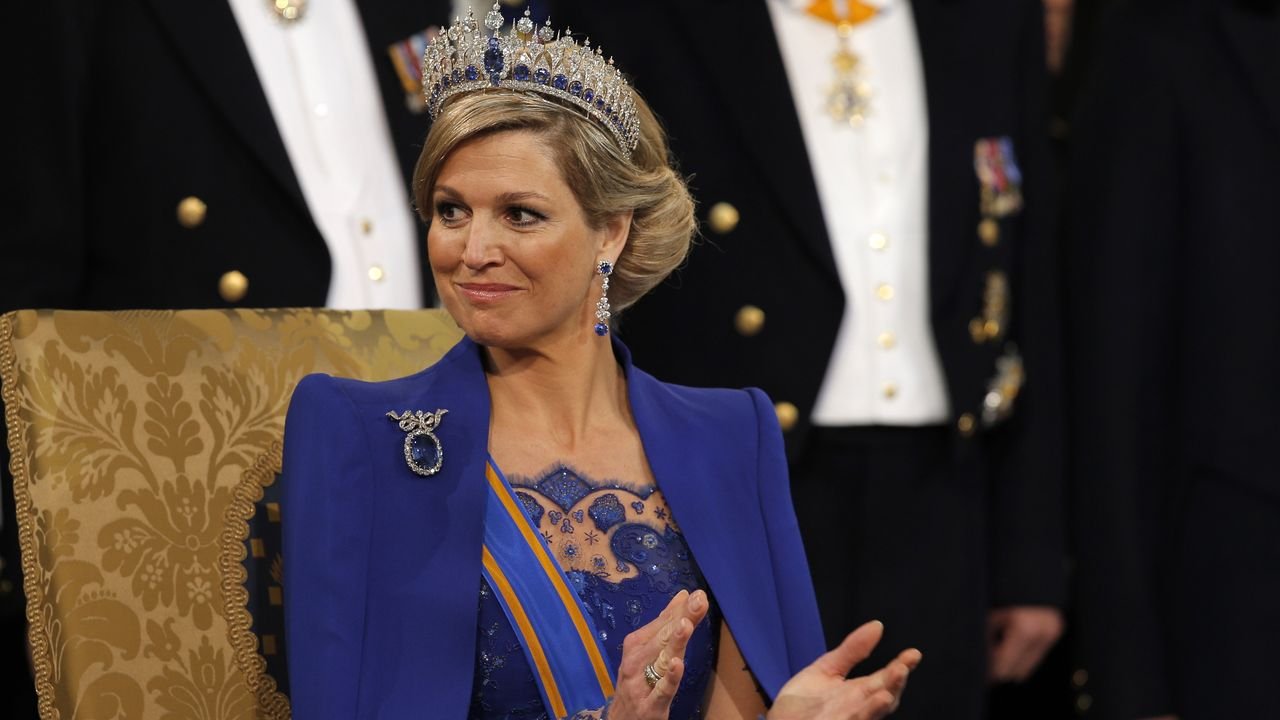
The tiara is composed of 33 sapphires from Ceylon (today Sri Lanka), of an intense blue, accompanied by more than 600 diamonds and presided over by a large central stone: a sapphire of more than forty carats, which would have been part of a previous jewel of the royal family. The result was a tiara of great height and presence, with floral motifs and mobile elements that allow the stones to vibrate slightly with movement, multiplying their brilliance. It was not a comfortable or discreet piece of jewelry, but neither was it intended to be.
Like many royal jewels of the period, the ensemble was conceived to have versatility: some pieces could be disassembled and reused, adapting to different contexts and the needs of each queen. Throughout the 20th century, the tiara underwent a key technical modification. In 1928, it was revised by Van Kempen & Vos. It is believed that the original gold mount was replaced by platinum, a change that made it possible to lighten the weight of the piece without altering its design and adapt it to modern tastes.
From Emma to Máxima: a jewel that never disappeared
Queen Emma was the first to wear the sapphire tiara in official portraits and solemn ceremonies, setting a precedent that her successors respected. After her death, the jewel passed to her daughter, Queen Wilhelmina, and later to Queen Juliana, who wore it on particularly significant occasions, such as state visits and international celebrations. Beatrix, first as crown princess and later as queen, continued to use the tiara, although with a more restrained use, often combining it with other pieces of the ensemble or reserving it for very specific diplomatic appointments. In all cases, the jewel remained associated with the image of the queen in representative functions.
Máxima and the recovery of an icon
Queen Máxima of the Netherlands during the coronation of Willem-Alexander.getty images
With the arrival of Queen Máxima to the throne, the sapphire tiara regained a prominence that seemed reserved for other eras. The queen chose it for one of the most important moments of her institutional life: the coronation of King Willem-Alexander in 2013. That day, combined with an indigo blue dress, Máxima perfectly understood the symbolic weight of the royal jewelry box. Since then, she has worn it at some of the great state dinners of her reign, always in contexts of maximum visibility. Unlike other European queens, who tend to limit the use of this type of piece, Máxima has opted to vindicate it, integrating it into a contemporary image that does not renounce tradition.
Blue as a language of power

Queen Máxima wears one of her go-to tiaras for a royal event.Patrick van Katwijk



