
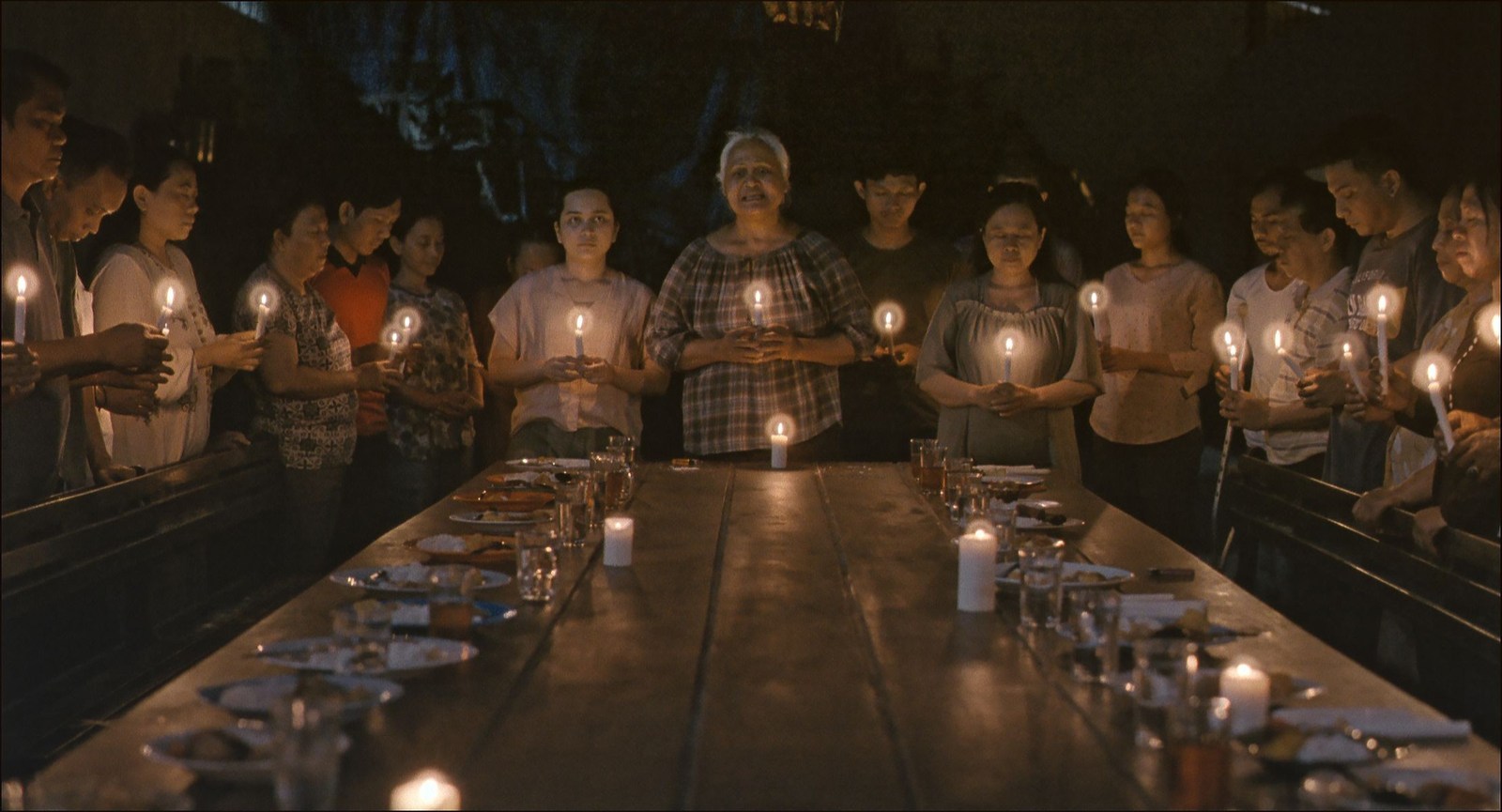
The current glut of quality genre fare from Indonesia has been largely confined to localized productions, keeping production and funding centralized as the country expands its genre footprint through these expressive titles. A common occurrence in most of the rest of the world involving films being co-productions between various international countries is handled quite rarely, with only a few exceptions made for a scant few titles. Director Edwin dips his toes into the genre for the first time on this massive international offering, with five countries helping to bring his latest film, “Sleep No More,” to life for its world premiere at Berlinale.
Factory owner Maryati (Didik Nini Thowok) exploits her employees with excessively long shifts, luring them with incentives to make them prioritize productivity and greed over sleep. Putri (Rachel Amanda) is convinced that, because of this, her mother, who worked in the factory, committed suicide. Her sister, Ida (Lutesha), however, believes that their mother died from being possessed. She thinks that whenever the workers grow weak from exhaustion, a dark and evil figure emerges and takes possession of their bodies. To prove her theory, Ida decides to work day and night in the factory so that she, too, will become possessed and can see for herself the being that she believes seized their mother’s body.
Their younger brother, Bona (Iqbaal Ramadhan), was born with a special gift that enables his wounds to heal quickly whenever he is injured. As the sisters investigate their mother’s death, a ghostly figure searching for an ideal body seeks to take advantage of Bona’s gift, putting him in danger. The three siblings now must bravely confront their own weaknesses and find strength in their faith in each other to overcome the terror that threatens their family.
“Sleep No More” succeeds by blending genre thrills with biting social commentary. The premise is immediate and gripping: sisters Putri and Ida are forced to work at a factory to settle the debts of their mother, who supposedly died by suicide. From the moment they arrive, the film masterfully builds an oppressive atmosphere. The cold indifference of the management, paired with the weary resignation of the staff, creates a palpable sense of dread.
The movie’s greatest strength is its metaphor for labor exploitation. By forcing low-level employees to continue working amidst supernatural carnage and demonic possession, the story highlights a grim reality: to the bosses, meeting production quotas is more important than human life. The dismissive claim that these horrors are merely “hallucinations from sleep deprivation” adds a grounded, cynical layer that makes the supernatural elements feel eerily realistic.
Check the interview with the director
The horror sequences are diverse and well-executed. Early on, the film relies on atmospheric tension—machines starting on their own, molds shifting in the shadows, and objects flying across the room. However, the film truly shines in its graphic possession sequences. The practical effects used for the self-mutilation scenes—such as workers slamming their heads into machinery or tearing at their own eyes—are exceptionally visceral and high-quality. While the CGI for the demonic entities is occasionally obvious, the overall imagery remains creepy enough to keep the audience engaged.
Despite its strengths, “Sleep No More” suffers from a confusing tonal shift. At times, the film abandons its atmosphere of dread for a “cheesy” or lighthearted approach to the violence. By treating horrific mutilations as mere occupational hazards rather than existential threats, it saps the stakes from the story. This lack of urgency makes the characters appear foolish; it’s hard to stay invested in their survival when they seem indifferent to the carnage surrounding them. Additionally, the underwhelming CGI used for the spirits occasionally breaks the immersion, preventing the film from reaching its full potential.
A solid entry into the social-horror subgenre that manages to be both a bloody slasher and a bleak look at modern labor, even if its “silly” moments occasionally trip it up, “Sleep No More” is a great time for those with an appreciation for this style of supernatural genre fare, are a huge fan of modern Indonesian or other Asian genre cinema, or who are curious about it.



