
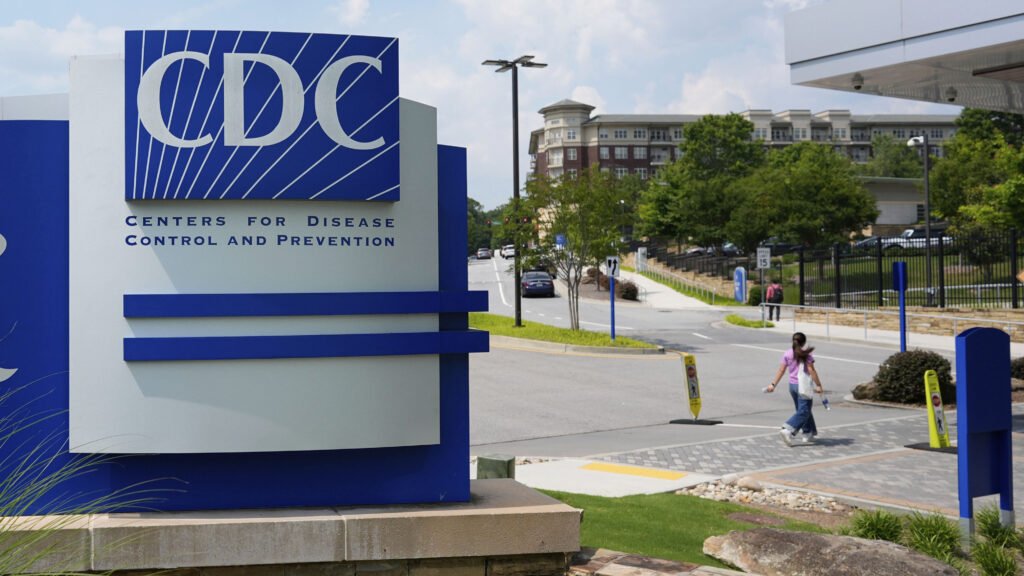
Last May, the White House released a budget request for FY2026 that proposed eliminating the CDC’s National Center for Injury Prevention and Control.
Nine months later, President Trump signed into law an appropriations bill that fully funds it for the rest of the fiscal year.
What happened in between is a roadmap for public health as it navigates an administration that continues to target its mission, work, and personnel.
The Injury Center is the leading agency working to prevent overdose, suicide, and other injuries in all 50 states. For more than 30 years, it has supported injury and violence prevention efforts to keep people and communities safe. About 80% of its funding goes directly to states and localities, including for frontline services that protect families, veterans, and first responders. The organization I lead, the Safe States Alliance, partners with the Injury Center every day.
Injury Center funding keeps children safe in their car seats and protects them from drowning at the pool. It helps coaches identify and respond to concussions and other brain injuries in young athletes. It saves people of all ages from suicide and drug overdoses. It’s a big reason why overdose deaths in the U.S. declined by 27% in 2024.
No other federal agency has this kind of reach and impact with respect to injury prevention.
Yet that didn’t stop the administration from trying to do away with it. So after decades of helping public health save lives, it was time for public health to save the Injury Center.
Here’s how we did it — and how other organizations under threat can, too.
Advocates from across the country launched the Keep America Safe Coalition. More than 50 national organizations — philanthropies, universities, health agencies, and research centers — came together to fight for the Injury Center’s survival.
We knew that fight needed to go well beyond Washington, D.C. The Injury Center’s impact comes from ordinary people across America doing extraordinary things. So we’ve spent the past several months highlighting communities that have benefitted from its work:
- The founding of the Peer Initiative in Lake Charles, La., an innovative suicide prevention program created by high school students.
- The launch of the Claire Bear Foundation in Tacoma, Wash., which works to reduce infant mortality by advocating for safe sleep practices for babies and toddlers.
- The work of the Brain Injury Center in Lincoln, Neb., which provides brain injury training to health care providers who work with domestic violence survivors and people experiencing homelessness.
- The efforts of the American Association for the Surgery of Trauma, in Chicago, which helps medical professionals determine where to build and how to staff trauma centers to maximize their effectiveness.
We’ve shared these stories with members of Congress, allowing lawmakers to see how federal funding is impacting their constituents’ lives and health. We’ve distributed them extensively on social media platforms and to local and national press outlets, expanding their reach and explaining why full funding for the Injury Center matters so much.
In many cases, the people at the center of these stories have experienced significant personal trauma. Yet they’ve worked through that pain to make a real difference in their community. That, ultimately, is what public health is all about.
These and many other remarkable organizations in every corner of the country rely on Injury Center funding and/or data collection to inform their work. Reducing Injury Center funding, or eliminating it altogether, would mean taking away vital support for these critically important efforts in local communities.
Finally, we worked hand-in-hand with Congressional champions. The Injury Center’s work and the organizations it supports are as nonpartisan as you can get, which is why Republicans and Democrats alike in Congress have worked so hard to protect it. Appropriations leaders from both parties in both the House and Senate — particularly Reps. Tom Cole (R-Okla.) and Rosa DeLauro (D-Conn.), and Sens. Shelley Moore Capito (R-W. Va.) and Tammy Baldwin (D-Wis.) — have been instrumental in blocking any effort to eliminate the Injury Center.
This is probably not the last time the Injury Center will need advocates and legislators to step up. The administration’s unilateral budget and staffing cuts to the Injury Center last year dealt a heavy blow to its work. Fortunately, in addition to full funding, the appropriations bill also includes additional regulatory protections to ensure CDC grants are not unnecessarily delayed and that any further CDC “reorganization” efforts are subjected to independent review. These provisions will help provide peace of mind for those who rely on its support.
In an otherwise exceptionally difficult year for public health, the saving of the Injury Center stands out as a rare bright spot — and offers important lessons for all public health advocates as we navigate difficult terrain.
When vital programs are suddenly on the chopping block, speaking out publicly is essential. Focus your messages not on budgets and spreadsheets, but on real people and places. Don’t just engage with the usual suspects; broaden your partnerships so lawmakers hear a wide range of voices. And be prepared to fight multiple rounds. The days of public health being invisible are over.
In the end, our success is a testament to the dedication of Injury Center staff; the leadership of members of Congress from both sides of the aisle; and, perhaps most importantly, the perseverance of people who wake up each day committed to saving lives.
Sharon Gilmartin is the executive director of the Safe States Alliance.



