
Updated February 17, 2026 05:58AM
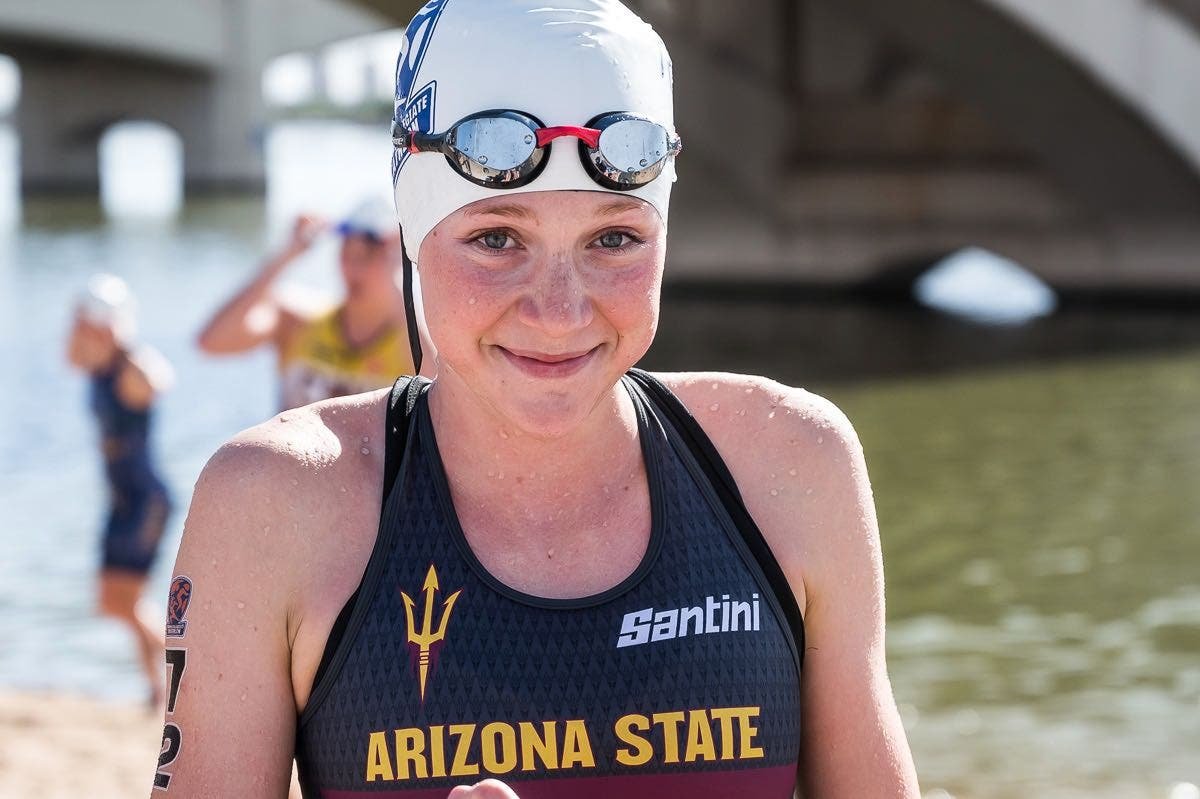
Two-time NCAA triathlon champion Hannah Henry was on a training ride in Phoenix, Arizona, on February 8 when she was struck and killed by a driver under the influence of fentanyl. According to Phoenix police, 26-year-old Henry was riding in a designated bike lane when 46-year-old Eric Dustin Hodge hit her with his van.
Reports say that Henry, a Victoria, B.C. native and alum of Arizona State University (ASU), where she was an accomplished triathlete, succumbed to her injuries at the scene. Hodge, who fled the accident, has since been arrested.
Police say video from the scene shows Hodge swerved into the bike lane and rear-ended Henry, running her over with the van and then driving away. Video also enabled police to identify the make and model of the van, which they found parked outside an apartment in Phoenix. According to reports, police knocked on the apartment’s front door, while Hodge allegedly attempted to escape out the back door before he was apprehended.
Hodge told police that right before getting behind the wheel, he had smoked fentanyl, which causes him to pass out and wake up in different places. He also told police that he thought he collided with a fire hydrant on the sidewalk and continued driving on his way to buy more fentanyl.
The accused appeared in court on February 9, and court paperwork states that Hodge recalled passing a girl on “a 10-speed bicycle.” Arizona prosecutors have charged Hodge with crimes of reckless manslaughter, leaving the scene of a deadly crash, possession of drug paraphernalia, and possession of narcotic drugs. Hodge previously pled guilty to a drug paraphernalia violation in Maricopa County back in 2014 to dismiss a related dangerous drug violation charge.
A life cut short
Henry completed her first triathlon at just nine years old and went on to find collegiate success at ASU in the early years of NCAA triathlon. At ASU, Henry won the individual 2017 and 2018 USA Triathlon Collegiate National Championships while helping the Arizona State Sun Devils secure the team titles – the only person to win that championship twice. In 2017, she represented British Columbia at the Canada Games, earning two gold medals and one silver.
Henry was also named the 2017 to 2018 USA Triathlon Division I Freshman of the Year and an All-American. At the 2019 Pan American Games in Lima, Peru, she represented Team Canada and finished second in the mixed relay, helping her team win the silver medal. Henry made her marathon debut at the BMO Vancouver Marathon in May 2025, placing 15th overall for the women with a time of 2:56:36. She was training for the 2026 Boston Marathon and died two months before race day.
A trend of tragedy
This fatal accident raises mounting concerns about the vulnerability of road users like cyclists and triathletes in urban areas. In 2011, former college runner Sally Meyerhoff, the winner of the 2010 XTERRA half-marathon trail running world championship in Hawaii, was struck and killed by a pickup truck while on a training ride in Maricopa, Arizona.
In 2022, accomplished triathlete and Kona-bound competitor Jessica Koelsch Bibza was killed in Tampa, Florida, during her final training ride before the Ironman World Championship. No arrests were ever made in connection with her death.
Even recently, in December 2025, Andre Kocher and Scott Mages, two members of the Frisco Triathlon Club in Texas, were hit and killed by a driver while cycling. The driver involved allegedly refused alcohol and drug tests.
A 2025 study by the Bicycle Accident Lawyers Group ranked Florida as the most dangerous for cyclists; Arizona, where both Meyerhoff and Henry were killed, is ranked sixth. The same study reports a slight but nevertheless alarming increase in cyclist deaths. Between 2022 and 2023, a 4% rise in fatalities was recorded. What’s more, 22% of fatal bicycle accidents were shown to involve alcohol impairment – though the study doesn’t address non-alcohol impairment.
Crime and punishment
Depending on the state, punishment for drivers who cause cyclist fatalities while under the influence of alcohol or drugs (DUI) can include felony charges resulting in heavy fines, prison time, and long-term license revocation. While some cases may result in 20 years to life in prison or other maximum sentences, others result in lower sentences attributed to lack of criminal history, plea deals, or mitigating factors.
In Arizona, being proven guilty of killing a cyclist while driving impaired can result in severe penalties charged as second-degree murder, a Class 1 felony, or as a Class 2 felony for manslaughter. Offenders face 10 to 25 years in prison, fines up to $150,000, long-term license revocation, and civil liability (the deceased’s family can file civil lawsuits for wrongful death, which may result in punitive damages).
In the case of Henry’s death, Hodge remains in the Maricopa County Jail with a $750,000 cash-only bond. His next court appearance was scheduled for February 13, but specific outcomes from that hearing have not yet been released to the public. Family attorneys say they’ll push prosecution for the maximum penalty and are expecting a grand jury indictment for Hodge within the next 10 days. Hodge is scheduled to appear in Maricopa County Court for a preliminary hearing on February 18.
On Sunday, February 15, Henry’s friends and family gathered at ASU for a ceremony to honor the triathlete with a ghost bike that will be placed at the site of the collision as a memorial. In response to a USA Triathlon post on Instagram stating that “Her passing is a tremendous loss to the NCAA triathlon family and to our entire multisport community,” those who knew Henry described her as “extremely kind and intelligent,” “an amazing teammate, friend, and human being,” “a beautiful soul,” and “undeserving of this tragedy.”



