
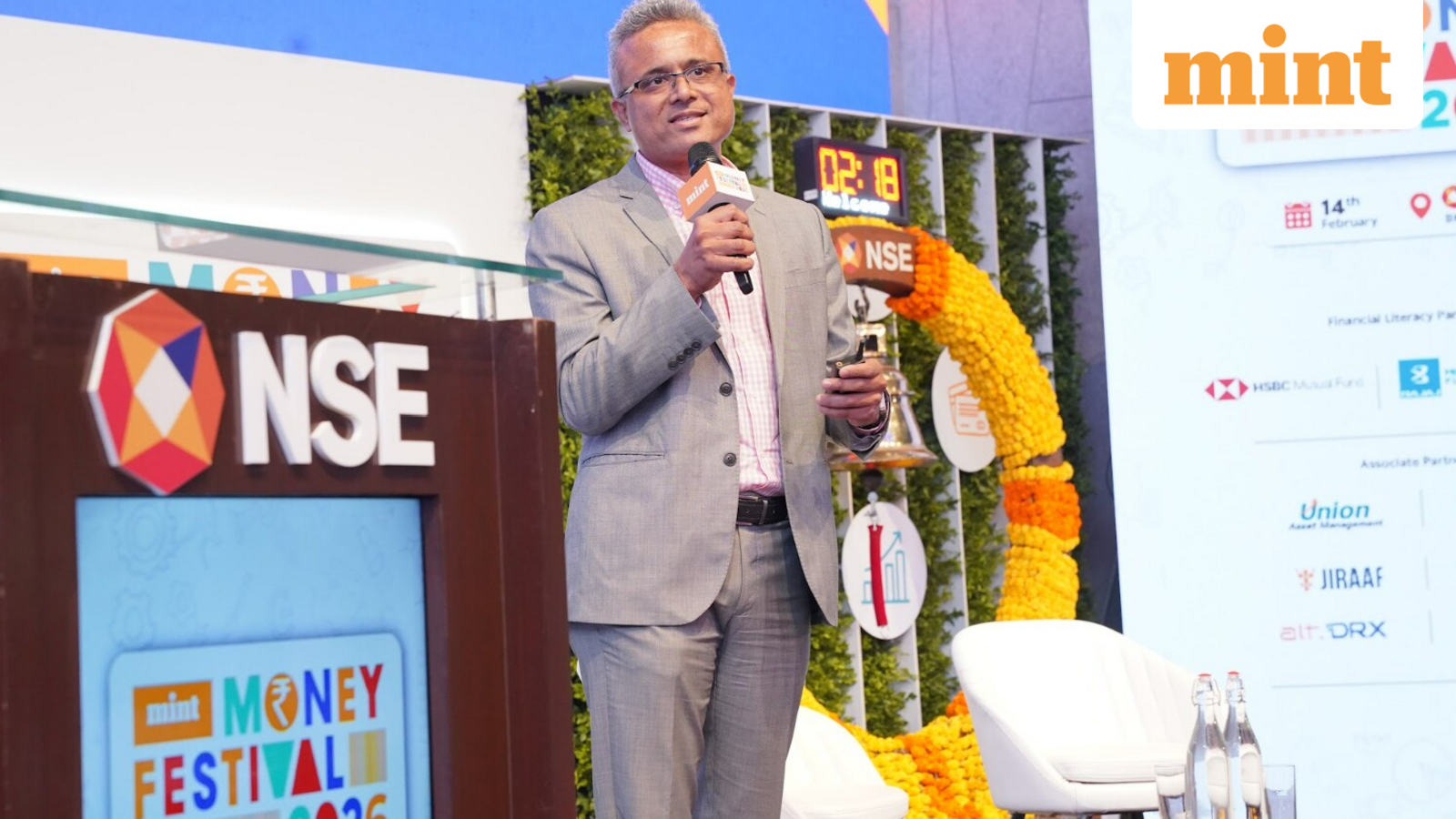
Imagine owning a piece of a luxury apartment in Mumbai or a high-yield property in Pune with the same ease as buying a sachet of shampoo or a plate of dosa. This vision of “miniaturizing” wealth was in the spotlight at the Mint Money Festival 2026, held on 14 February in Mumbai.
Avinash Rao, founder of Alt DRX, a Bangalore-based, blockchain-powered digital real estate marketplace, said the future of the Indian dream isn’t just about owning a home, but about “tokenizing” it. “I come from the land of the Benne dosa,” Rao said, citing Bangalore’s lightning-fast quick service restaurant culture as a metaphor for the digital future.
Just as Darshani’s (renowned Bangalore cafe) tokenized the dining experience for efficiency and access, Rao believes real estate is next. “The shampoo market would not have been what it is today had it not been for the sachet. Tokenization is nothing but that, the moment you miniaturize something of value, you expand the market.”
For most Indians, real estate is a “tough” asset class, often considered illiquid, hyper-local, and buried in tedious paperwork. Rao noted that by 2030, real-world asset tokenization will be a $16 billion opportunity, moving property from a “locked” physical asset to a fluid digital one.
“You can sit where you are right now, use that mobile phone, and own a square foot anywhere in the country,” he said, citing global examples like Arrived in the US and Get Stake in Dubai.
Rao sought to decouple the technology from the hype. “The moment I say tokenization, 50% of people say, ‘Ah, crypto.’ This is not gambling; it is the fractionalization of a known asset. It is the democratization of ownership.” By digitizing the asset into “tokens,” investors can bypass the traditional headaches of property management like chasing tenants for rent or navigating local laws and get straight to the capital appreciation.
Why does this have to be residential? While commercial spaces are often cited as the gold standard, Rao argued that India’s residential market, particularly the ₹75 lakh to ₹1 crore segment, offers far greater capital appreciation.
An investor based in Bangalore may not invest in Pune without thinking three times. But if real estate is available at ₹10,000 or one square foot, they would be willing to invest in 20 cities, he explained.
As India builds a digital ecosystem of 18 crore demat accounts and 60 crore UPI users, the pitch is perfectly set. Through tokenization, the high walls of the real estate market are finally being replaced by a digital door that can open with a single tap.



