
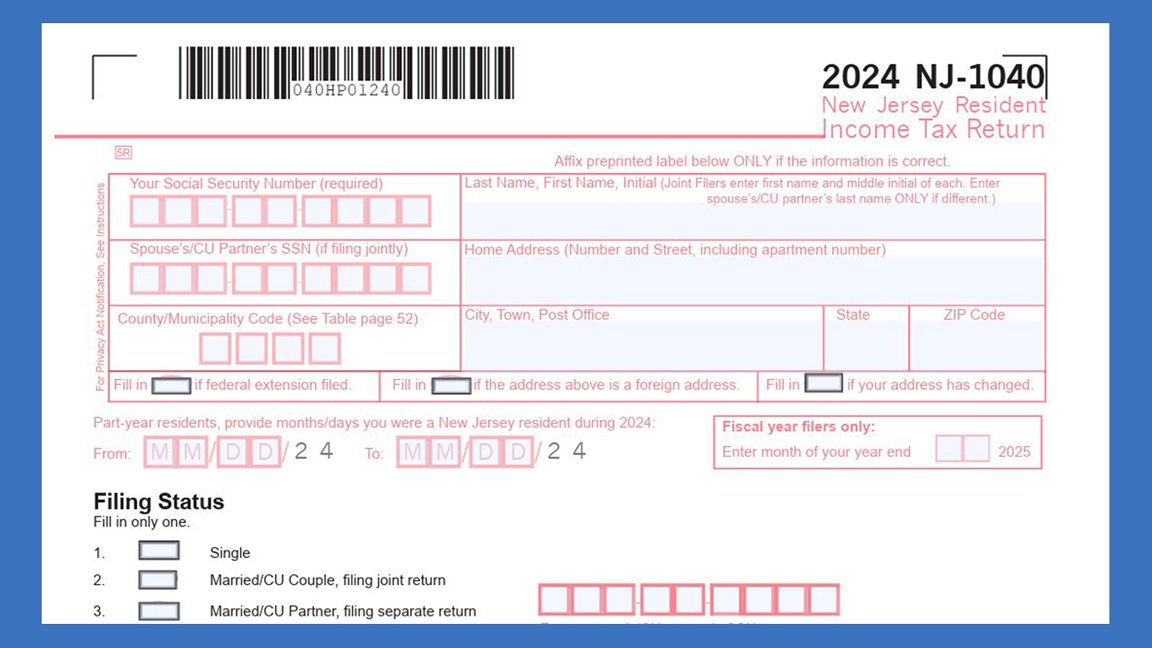
A free online income tax filing option for New Jersey residents and non-residents is available through a state-run site after President Donald Trump ended a similar program for filing federal returns.
It was just two years ago that the Internal Revenue Service established Direct File as a way for potentially millions of taxpayers nationally to avoid paying for commercial services. Direct File gave taxpayers the free option of submittingfairly routine returns to the federal government.

After New Jersey signed on as a Direct File partner, more than 8,700 state taxpayers used the service last year, saving them an estimated $1.4 million in tax-prep fees, according to the New Jersey Innovation Authority. Those filers received almost $4 million in refunds.
Trump, a Republican, ended Direct File late last year amid a series of cost-cutting measures and tax-industry lobbying. Almost 400,000 individuals used the service nationally in 2025.
Ahead of the April 15 filing deadline, the New Jersey Division of Taxation posted a notice to inform residents and non-residents about Direct File’s demise and urge them to use the state-based filing service.
The decision to end Direct File is a “disappointment,” said Aaron Binder, New Jersey’s acting treasurer, in a recent interview with NJ Spotlight News.
“That partnership had worked really well,” Binder said. “It was just kind of getting off the ground. It was really in its infancy of success.”
Most New Jersey taxpayers are eligible to use the state’s online service.
“It’s something we wish more people would take advantage of,” Binder said.
Direct File was funded through the Inflation Reduction Act signed by then-President Joe Biden in 2022. It was an IRS pilot program in 2024, initially saving taxpayers an estimated $5.6 million in commercial preparation fees.
Direct File expanded in 2025. More than 1 million New Jersey residents were estimated to be eligible to participate. “Direct File is easier, cheaper and more efficient than traditional tax filing,” then-Gov. Phil Murphy said at the time.
Once fully implemented, Direct File was expected save U.S. taxpayers an estimated $19 billion annually. That included $534 million for New Jersey residents.
However, a report on the program compiled by the Trump administration last year questioned the cost of operating Direct File and called for its suspension. The report recommended increasing awareness of another IRS program called Free File that links residents with adjusted gross income of $89,000 or less with free commercial tax-preparation services.
‘A mistake’
“In contrast to the high cost of operating a government-run Direct E-File system, the (costs) of maintaining a successful public-private partnership like Free File are minimal,” the report said. “Since its launch, tens of millions of federal returns have been filed through Free File without significant expenditure of IRS funds or resources.”
Free File, though, has drawn criticism from the Washington,D.C.-based Center on Budget and Policy Priorities, a nonpartisan research and advocacy group. In a report last year, it noted that filers are often misled by commercial filers and many ultimately pay to process returns despite their eligibility for free services. The end of Direct File, the group said, was “a mistake.”
“There is good reason to be skeptical of the Administration’s plan to rely on commercial tax preparation companies to provide free filing options, as it is likely, and not surprising, that these firms’ for-profit motives will overshadow their commitment to helping taxpayers file for free,” the report said.



