
WASHINGTON — Hours after being sworn in as America’s 47th president, Donald Trump talked about how much he loves tariffs.
“I always say ‘tariffs’ is the most beautiful word to me in the dictionary,” Trump said at a January 2025 rally, before signing a series of deregulatory executive orders. “Because tariffs are going to make us rich as hell. It’s going to bring our country’s businesses back that left us.”
Tariffs are taxes placed on goods or services imported from one country to another. Companies facing these higher costs generally pass on the expenses to customers, meaning more expensive products for the public.
More than a year after Trump’s remarks, U.S. consumers are bearing the economic brunt of his tariffs, which he has, often in a helter-skelter manner, placed on foreign allies, like Canada and the European Union, and rival powers alike.
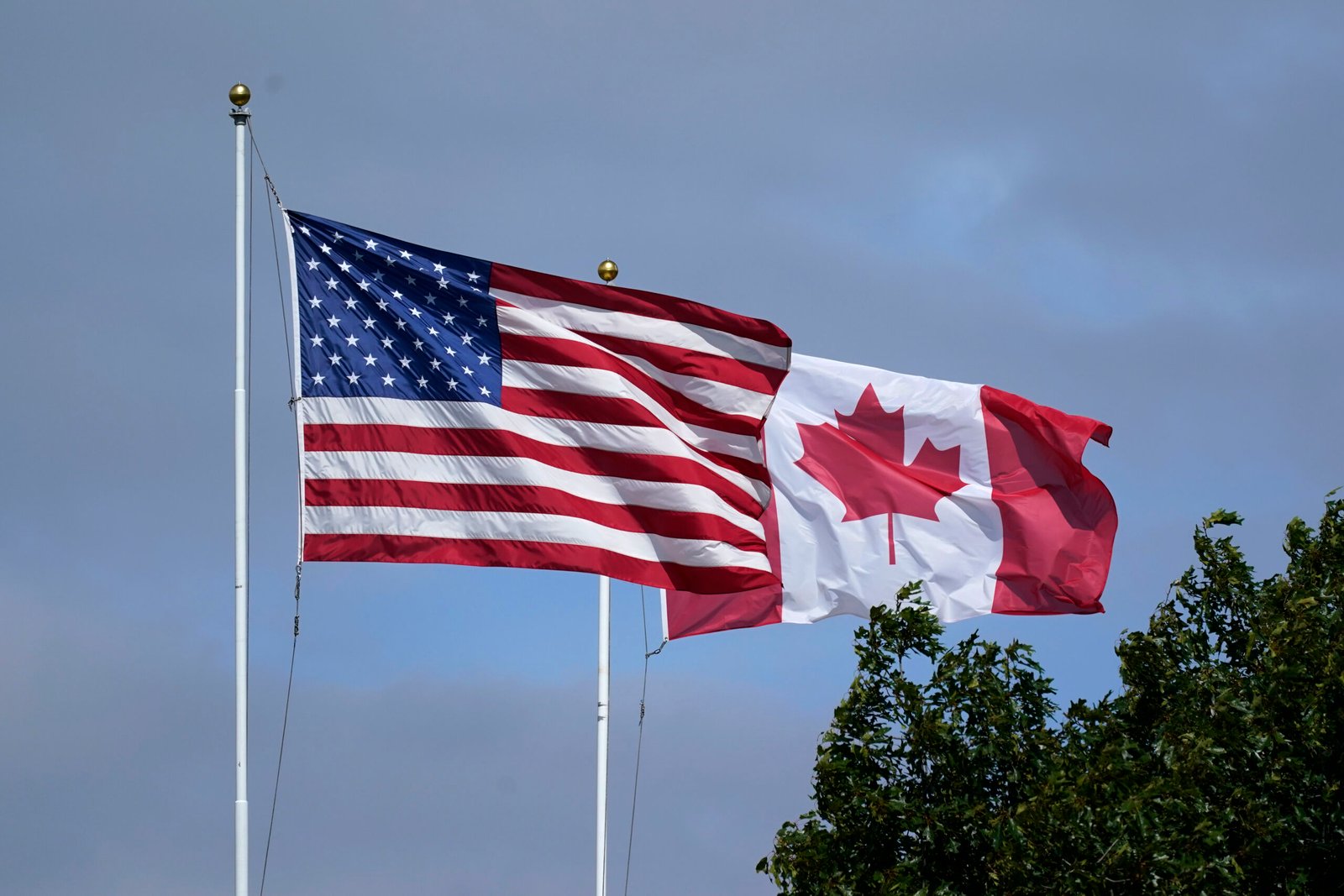
While legislation before Congress would end the Trump administration’s 35% tariffs against Canada — long one of the nation’s closest allies and trading partners — it would have to overcome a Republican-majority Senate and Trump’s likely veto.
That bill (H.J.Res.72) cleared the House last week, on a 219-211 vote, after a group of moderate Republicans and Trump critics voted with all but one Democrat to end the president’s tariffs against Canada.
Six Republicans voted to terminate the tariffs. Reps. Jeff Van Drew (R-2nd), Chris Smith (R-4th) and Tom Kean Jr. (R-7th) were not among them. They each voted to maintain the tariffs.
Spokespeople for the three did not respond to requests for comment from NJ Spotlight News about their votes.
Every New Jersey Democrat in the House voted to end the tariffs.
After the vote, Trump thundered in an online post that there will be political payback for those who vote against him on the topic. “Any Republican, in the House or the Senate, that votes against TARIFFS will seriously suffer the consequences come Election time, and that includes Primaries!” the president said.
Like other nations, Canada has responded to the U.S. tariffs with tariffs of its own.
Canada is the largest export market for New Jersey, according to the Office of the United State Trade Representative. The state sold $8.4 billion worth of goods to Canada in 2024, according to federal data, comprising 20% of New Jersey’s total exports.

Mexico ($3.5 billion), Japan ($2.3 billion), China ($2.2 billion) and Germany ($2.0 billion) followed Canada in 2024, trade data show.
“These tariffs have jacked up prices on everyday goods and have punished our small businesses and their customers,” Rep. Josh Gottheimer (D-5th), who has been particularly critical of the tariffs, said in a statement after the vote.
Speaker Mike Johnson, a Republican and constitutional lawyer from Louisiana who controls what bills hit the House floor, tried to orchestrate a complex rule change to prevent the bill from reaching the chamber for a vote. Johnson told reporters the vote was a “fruitless exercise and a pointless one” since there is a pending case before the Supreme Court challenging the legal foundation of Trump’s tariff strategy.
“It could come out any day,” Johnson said of the pending court ruling.
“We’re disappointed,” Kevin Hassett, an economic advisor to Trump, told reporters last week about the House vote. “The president will make sure they don’t repeal his tariffs.”
Democrats in the Senate have forced full-chamber votes on their own bills to hem in Trump’s tariffs — passing separate measures to end U.S. tariffs against Brazil and Canada. Those measures have fizzled in the House, a reality of total Republican-control of Congress.
Overall, Trump-era tariffs cost American households an average of $1,000 last year and will cost roughly $1,300 this year, according to researchers at the Tax Foundation, a non-profit think tank.
About half of businesses questioned in a recent New Jersey Business & Industry Association poll said tariffs had affected their supply chains.
Though Trump and economic advisers of his maintain tariffs will reinvigorate domestic manufacturing, the public has shouldered the costs so far.
Research the Federal Reserve Bank of New York published last week found “nearly 90% of the tariffs’ economic burden fell on U.S. firms and consumers.”
In its latest anecdotal survey, the bank found tariffs had pushed up costs, citing a Long Island car-parts dealer who said increased costs from tariffs on Indian-made goods “have mostly been passed on to customers.”
Published in January, the bank’s survey found customers were holding back in leisure and hospitality services. In other words, non-essentials. “A residential services contractor in Northern New Jersey noted that customers are holding back on purchases they do not have to make,” bank researchers wrote.



