
Regretfully, state Rep. Kelly Skidmore’s opinion essay (“A deal done in the dark is not health care reform,” Feb. 3) contains many inaccuracies that render her opinion a public disservice.
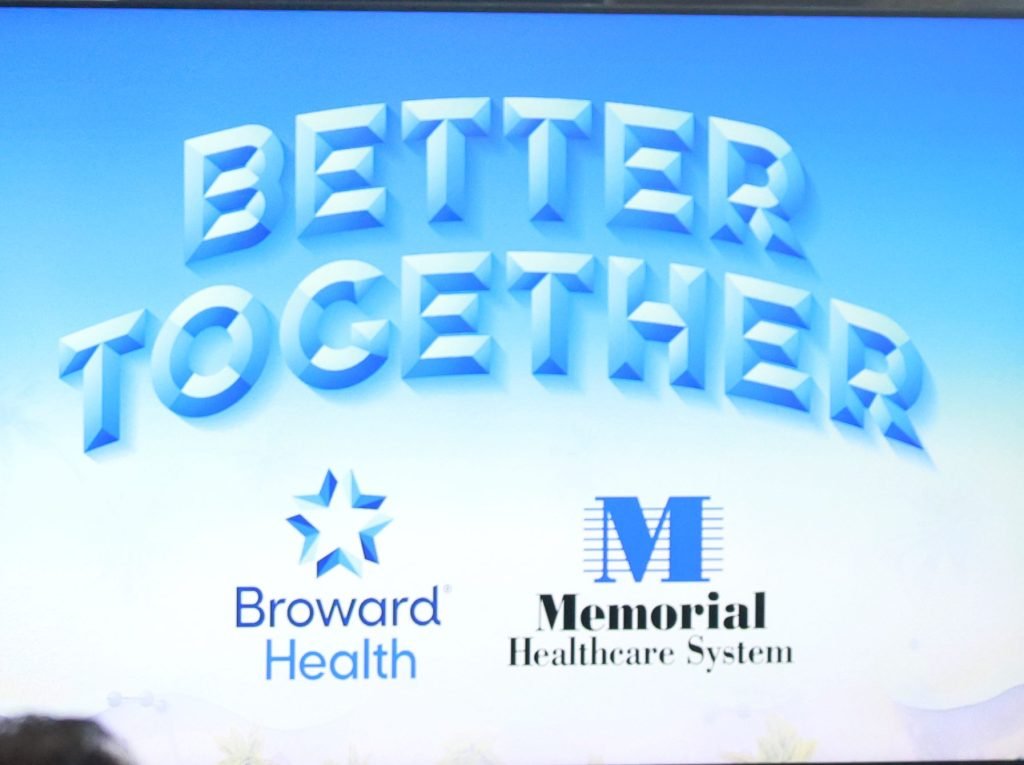
To begin, House Bill 1047 and Senate Bill 1122 do not constitute a “merger” between the North Broward and South Broward hospital districts. A merger would require an act of the Legislature as well as voter approval. Instead, the legislation would allow greater collaboration between the two entities for the purpose of benefiting the patients they serve. Broward County is the only county in the state with two public health care systems. Combining the two has been considered desirable for over 20 years.
Since both entities are safety-net hospital systems and not-for-profit, this limited proposal would allow both organizations to negotiate favorable contracts with insurers and pharmaceutical companies. Increased efficiency and reducing duplication of services would improve care and save taxpayers money. Memorial Healthcare System reduced its millage rate for 2026 to 0.0805 mills, the lowest in history. Its budget means South Broward taxpayers only contribute $7.9 million to support their hospitals, with a total budget of more than $3 billion. In both districts, a significant expense is hundreds of millions of dollars in uncompensated care.
Collaboration would save taxpayers money since uncompensated care can be additionally funded through operating income.
Regretfully, the health care landscape is changing with an expected increase in the number of uninsured patients. Florida never participated in the Affordable Care Act’s Medicaid expansion program, and hospitals never received increased Medicaid reimbursement. Hospitals are still required to cover statutory obligations such as the Medicaid Match program and community redevelopment. Moreover, Florida has the highest number of people (4.2 million) enrolled in Obamacare, and 260,000 patients could not afford to renew this year. The two safety net systems can expect a deluge of patient who have put off seeking care for fear of incurring huge debt.
Our fractured and fragmented health care system needs stability. Dedicated to public service, the two Broward health care systems provide just that.
Beyond that, good medicine cannot be franchised. There are only so many well-trained specialists and surgeons to go around. Florida faces a projected shortage of 22,000 doctors by 2030. This fact suggests that new entities will be staffed mainly by nurses or part-time physicians. New clinics in Broward County will be superfluous, costly and ultimately paid for by patients. For-profit and Miami-Dade County health care systems come to Broward not to achieve excellence in medical care, but in a desire to expand their footprint and enjoy profits. They offer no unmet or superior services.
Recently, I became aware of one case in which a 10-year-old girl sustained multiple, serious arm fractures and was transported by ambulance to a local for-profit hospital that lacked pediatric orthopedic specialists. People at the for-profit entity told the family not to take the girl to close-by Joe DiMaggio Children’s Hospital (where they have an excellent pediatric orthopedic department) because they would not accept their insurance. Instead, the child was taken by ambulance to a facility in Miami owned by the same company and was operated on four agonizing days later.
In reality, the child was an emergency; federal law requires safety-net hospitals to treat such cases under the Emergency Medical Treatment and Active Labor Act, and any stabilizing treatment would have been covered. When profitability becomes paramount to care, patients suffer.
Skidmore is correct in that the need for the two systems to collaborate has yet to be sold to the public. Broward is the only county in the state with two public health care systems. The patients in Broward need to be educated to the reality that this partnership will decrease costs, decrease their tax burden, and improve both services and quality of care. The patients will be the ultimate beneficiaries.
Dr. Arthur E. Palamara has practiced vascular surgery in Hollywood for 46 years. He is a former officer and current delegate to county, state and national medical associations. The opinions contained in this op-ed are exclusively the opinion of the author.



