
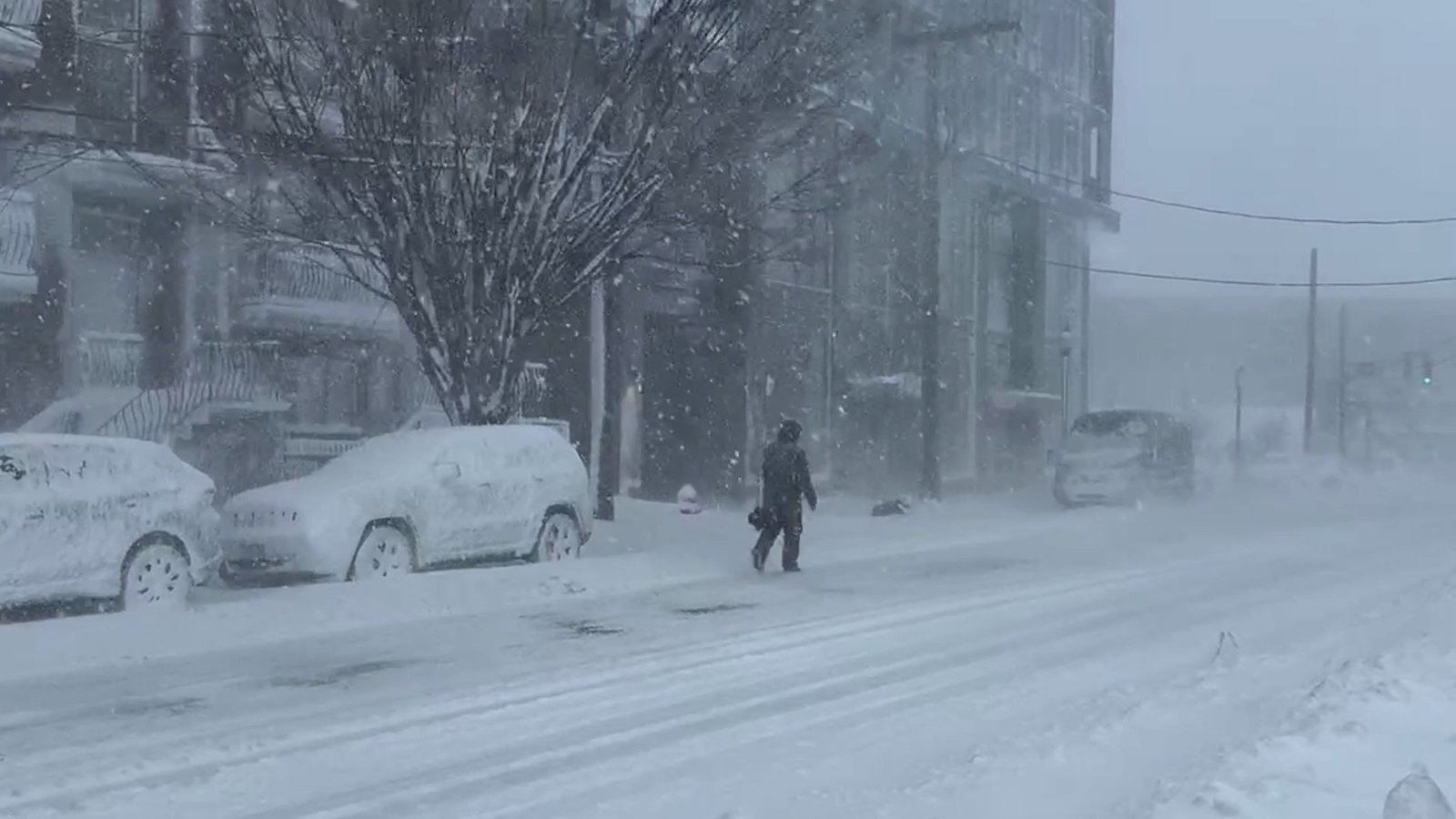
The blizzard that socked parts of New Jersey with 30 inches of snow this week marks a return to a more active winter, weather experts say.
New Jersey had a notably snowy period from 2009-16, according to Joe Martucci, president and meteorology chief of the Jersey Shore-based forecasting service Cup A Joe Weather and Drone. That was followed by a lull, then the start of a more typical seasonal trend.
“Since 2022, we’ve seen several significant storms return,” Martucci said. “They’re not always statewide, but they’re affecting large portions of New Jersey again.”
A late January storm brought a mess of snow and frozen precipitation that persisted for weeks amid temperatures in the single digits and teens. The system this week transitioned to snow from rain as colder air surged, leading to rapid accumulation.
Record totals
New Jersey State Climatologist Dave Robinson said this storm, combined with January’s event and several smaller systems, has pushed seasonal snowfall totals above 40 inches in some areas.
Despite long-term warming trends, Robinson emphasized that major snowstorms remain a defining feature of the region’s climate.
“January and February are typically the snowiest months,” he said. “But March can still bring significant storms, so this is likely not the last snowfall of the season.”
The blizzard, from Sunday to Monday, prompted Gov. Mikie Sherrill to declare a state of emergency.
Several locations recorded over 12 inches of snow in roughly 12 hours, with winds exceeding 60 miles per hour at Atlantic City International Airport. Snowfall varied greatly by region, according to National Weather Service data. In Bergen County, Lyndhurst saw 30.7 inches and Carlstadt, 30.2 inches, each a record. Point Pleasant Beach, in Ocean County, reported 11.5 inches. In Morris County, Long Valley had 5.5 inches and Chatham, 20 inches.
At peak, about 200,000 customers were without power.
We’re in this together.
For a better-informed future.
Support our nonprofit newsroom.



