
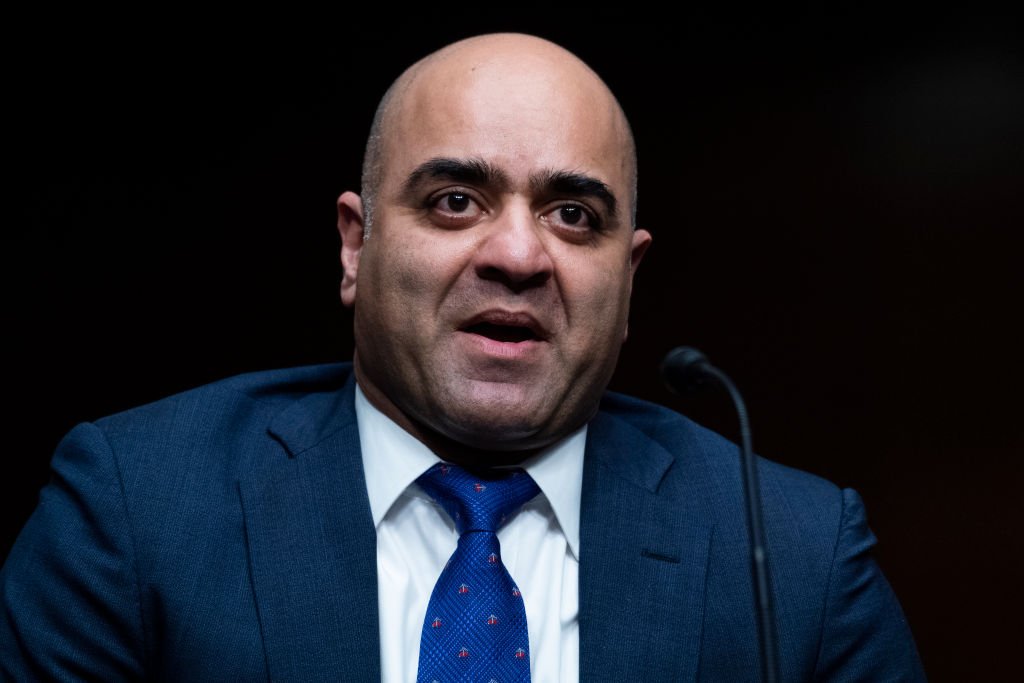
A federal judge in New Jersey warned he would order federal prosecutors to answer questions under oath if they continued to seek arrests and detentions under a portion of the federal code already rejected in hundreds of cases.
In a brief opinion issued Thursday that ordered the release of an El Salvadorian immigrant detained by federal authorities, U.S. District Judge Zahid Quraishi said federal authorities’ continued reliance on the statute bespeaks intentional disregard for the law and courts.
“The Government’s continued actions after being called to task can now only be deemed intentional. The undersigned will not stand idly by and allow this intentional misconduct to go on,” Quraishi wrote, referring to himself. “It ends today.”
Feds sue over NJ order barring ICE from some state property
Federal prosecutors earlier in February told the court they had violated 72 court orders since early December in cases where immigrants challenged the legality of their detention.
Quraishi said at least one judge had indicated that number is an undercount. The government’s pursuit of illegal detentions had become a regularity for the Trump administration, he said.
“The Government’s handling of Petitioner’s detention is emblematic of its approach to immigration enforcement in this state. On the merits, its detentions are illegal,” he wrote. “The Government knows this.”
Quraishi’s order was delivered in the immigration case of Diana Elizabeth Cartagena Hueso, an El Salvadorian immigrant with no criminal record who has lived in the United States since 2016 and has a child the court presumes was born in the United States.
Hueso entered the United States through its southern border in 2016 and, after being detained for months, was released by immigration authorities that October after officials found she had a credible fear of returning to her home country.
The Trump administration attempted to deport her using a federal statute that allows for the expedited removal of “arriving” noncitizens.
The statute can only be used to deport individuals who remain in federal custody for the duration of their time in the United States or who are paroled by federal authorities, and is meant to be applied at border crossings. It cannot be used to deport people released from federal detention without qualification, Quraishi wrote.
“An individual like Petitioner who has been released into the United States without parole is no longer considered to be standing at the border,” he wrote. “Her status must be considered in light of the decade during which the Government permitted her to be at liberty within the United States.”
The government’s continued reliance on the statute, violations of dozens of court orders, and its repeated transfers of immigration detainees in violation of those orders had also harmed credibility of the U.S. Attorney’s Office, he said.
U.S. District Court Judge Christine O’Hearn issued an order earlier this month that says statements from the U.S. Attorney’s Office for the District of New Jersey could only be trusted if given under oath. Quraishi quoted from that order in his Thursday opinion.
“Sadly, the well-deserved credibility once attached to that distinguished Office is now a presumption that ‘has been undeniably eroded,’ he wrote.
GET THE MORNING HEADLINES.



