
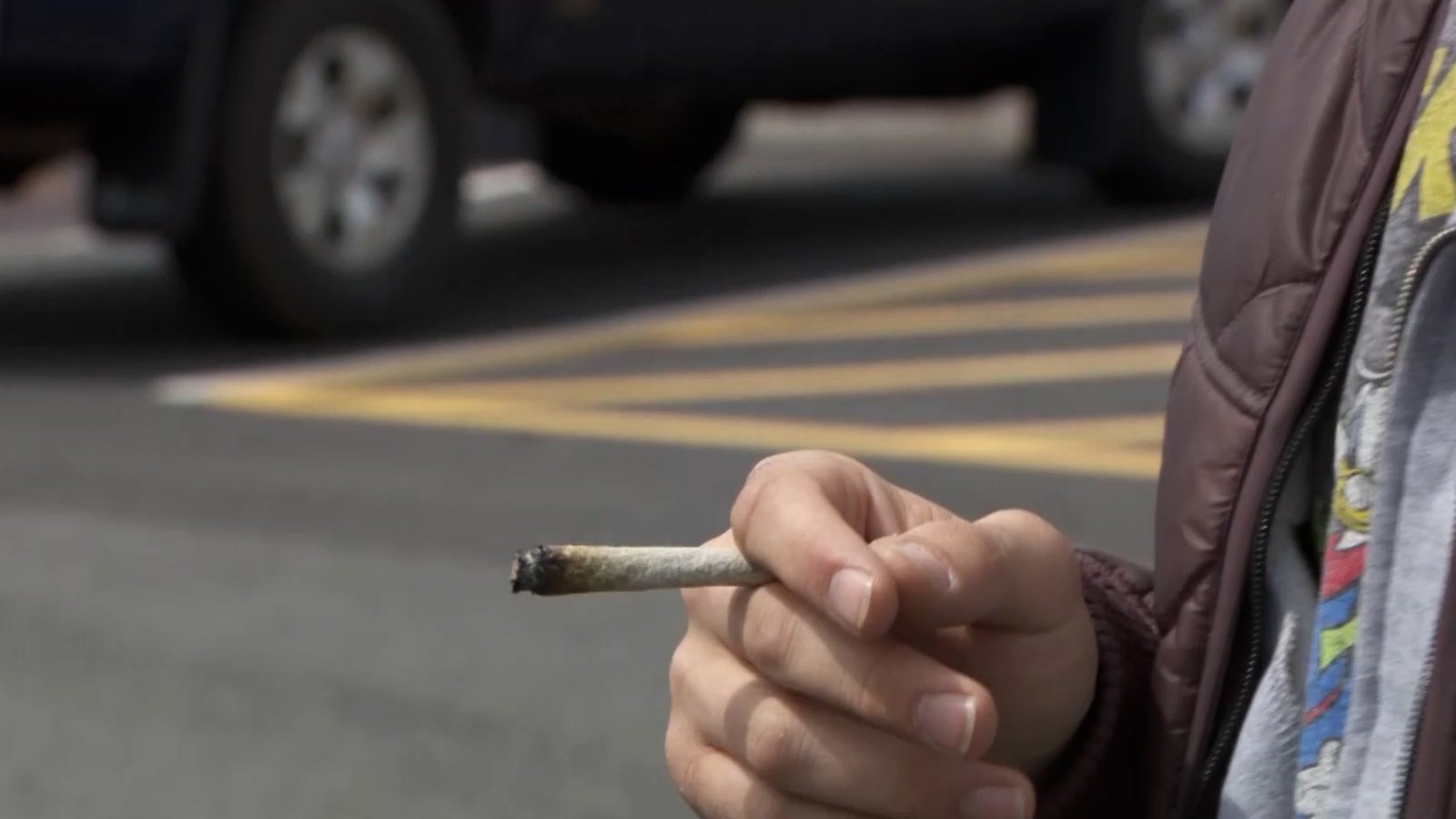

New Jersey is about to take millions of dollars in legal cannabis tax revenue and invest it in free summer programs in places like Newark and Trenton, many of them run by Black churches.
These aren’t typical summer camps. Known as freedom schools, they’re an effort to heal the wounds of the War on Drugs in neighborhoods dealing with not only the fallout of generations of over-policing, but also pandemic learning loss and the Trump administration’s threats to stop teaching Black history.
Community-based nonprofits apply for the funding via competitive grants, and awardees use curriculum developed by the Children’s Defense Fund to lead six-week sessions. The idea is to catch kids up in reading and use education as a tool for social change.
One freedom school is run by the community development arm of Greater Mount Zion AME Church in Trenton. In an interview, the policy director for Salvation and Social Justice, an advocacy group affiliated with the church, explained to NJ Spotlight the Civil Rights-era history of freedom schools and why they’re being revived. Here’s the edited conversation with Racquel Romans-Henry.
NJ Spotlight News: Why use weed money to fund these camps?
 Credit: Racquel Romans-Henry
Racquel Romans-Henry: For decades, Black young people were targeted, over-policed and punished wildly disproportionately for possession and distribution, even though the data showed usage rates were similar across races. That’s not coincidence. It was the result of intentional state policies that treated Black neighborhoods, schools and families as sites of surveillance rather than supporting those communities.
So for Black children in particular, the War on Drugs showed up early as police in schools, as being arrested for low-level offenses, as missed class time, suspensions, expulsions, records that followed our children long after their childhood was over. It disrupted education and destabilized families. It cut off opportunities before our babies even had a real chance to access them.
Those harms don’t stop with one generation. They were stacked on top of each other, and it created inequities that here in 2026 we’re still trying to undo. The history is exactly why we’re using cannabis funds. We couldn’t just end the criminalization of cannabis; we were going to have to fix that damage. One way is using that revenue to begin to repair the harm that was done.
Black children lost learning opportunities, and we are now investing in bridging that gap and making sure our young people have access to culturally congruent care and education that sees them as whole human beings. That’s why freedom schools matter so much — because they represent a fundamentally different approach when educating our children.
Lessons from John Lewis
NJSN: What do you mean by culturally congruent care?
RRH: Black students perform better when they have teachers who look like them, but that’s only one ingredient. The curriculum and teaching methods honor the cultural beliefs, practices and values of our young people. For instance, at a Trenton site, the reading list might include the autobiography of the late John Lewis, a giant of the Civil Rights Movement. They’ve gone on trips to places like the Stoutsburg Sourland African American Museum and even one of the few Black-owned horse ranches in the state, Lites Horse Ranch.
NJSN: Why are these programs called freedom schools?

RRH: It’s a long, rich history. It originally refers to community-run schools created during the Civil Rights Movement, particularly the 1964 Mississippi Freedom Summer project. It established schools to provide educational opportunities for Black children who were being denied that. It was never just about academics. It was also about supporting a broader civic organizing. It stood up in Black churches because historically, they have always been pillars of social justice in this country. In recent years, we’re seeing a reemergence of freedom schools nationally, and here in New Jersey, Salvation and Social Justice has been working closely with faith leaders to see how we can support increased state investments in this.
NJSN: I read that in Florida, freedom schools are stepping in to teach Black history at a time when lawmakers are seeking to limit topics like racism in public schools. What’s the focus in New Jersey?
RRH: NJ currently has 22 freedom schools with about 30 to 75 students per site, including in Newark, Paterson, Trenton and Camden. The primary focus is literacy and leadership, but it’s also about STEM and preserving the arts like music, drawing and theater, to center student voices. Unfortunately, a lot of our schools are seeing cuts in those areas.
Then there’s this real strong civic arm, making our kids understand how government works, and how to make government work for you. We are not really teaching civics in schools anymore. This is trying to reactivate that. We’re trying to take the exclusivity out of policies and politics and remind young people that this is very much a space for them, and they have a responsibility to engage in a way that is informed.
Given the threat of this federal administration, there is a new urgent need to really build these muscles starting with our young people around civics, and to preserve Black history in particular.
Reading circles
NJSN: How do freedom schools combat “summer slide”? Researchers found that low-income kids fall nearly three grade levels behind by the end of elementary school, mostly because of this. By 9th grade, summer slide can be blamed for as much as two-thirds of the achievement gap between income groups.
RRH: What the national data shows is that about 50% of our students improve their reading skills during the six-week summer program and about 31% maintain their skills. So 81% either maintain or improve over the summer. I think there’s room to investigate how we can incorporate what works in the freedom schools into a normal academic school year so children are not losing the progress that they’ve made.
NJSN: Tell me about the Trenton site. How does it teach literacy?
RRH: It’s really about building the confidence of young people, getting them to read aloud and to lead those reading circles. Oftentimes the kids tend to shrink or want to hide, but it’s making room for everybody to participate and feel free to make mistakes. There is a safety net that comes with being in this space. Kids are allowed to be vulnerable and admit what they don’t know. We’re meeting every kid where they’re at and trying to get them all up to speed.
Up two grade levels
NJSN: One of your colleagues testified that last summer, a rising 8th grader came into the freedom school reading at an elementary school level but increased her reading level by two grades during the six-week program. What does that demonstrate to you?
RRH: That the programs work. The work starts before you open the books. It’s connecting with young people on a human level. The people who are volunteering and working in our freedom schools understand that. They’re able to reach our young people in a way that other teachers or professionals are not because there may be that cultural congruence that’s missing. This emphasis on cultural sensitivity and understanding — I think that’s the secret sauce.
NJSN: The bill that just passed the Assembly would appropriate $3 million annually to freedom schools. Ideally, advocates say, it would be $10 million. Why?
RRH: A lot of the supports we’re getting are donations — people donating their time, food for the children. We would love to have full-time teachers, expand the trips we can take and the resources, transportation, facilities. All those things are limited right now because unfortunately, the money is not meeting the demand. In addition to expanding the sites – I think there’s appetite in high-need cities like Elizabeth and Atlantic City – we want to make sure the locations that currently exist can do so with as little strain as possible and get maximum results.



