
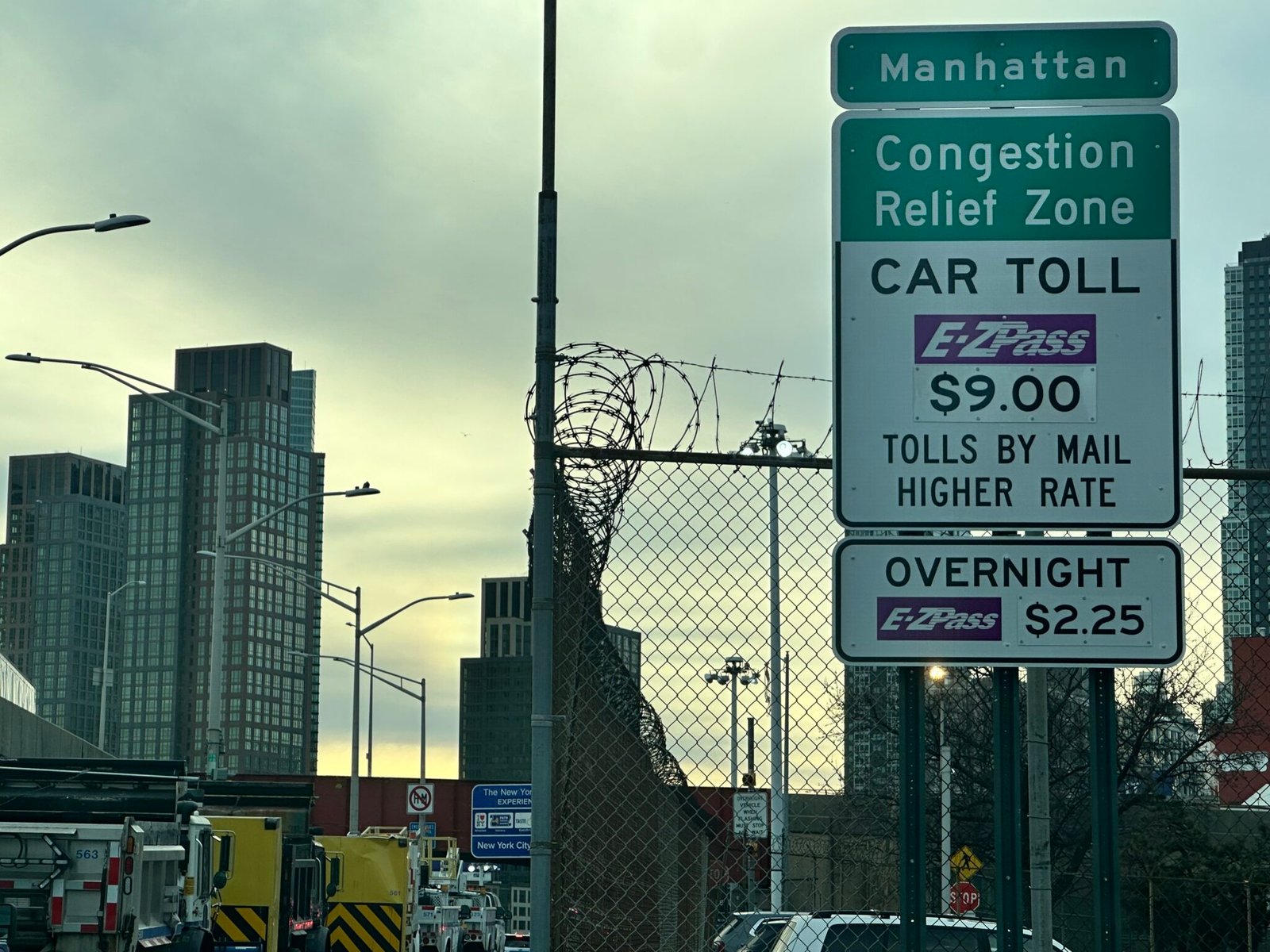
A federal judge on Tuesday ruled the Trump administration’s efforts to unilaterally end New York’s congestion pricing program were illegal, saving a tolling program meant to cut traffic in the heart of New York City that has enflamed some New Jersey officials.
The 149-page decision by U.S. District Court Judge Lewis Liman marks a victory for New York Gov. Kathy Hochul, the Metropolitan Transportation Authority, and other New York transportation agencies that rely on the revenue generated by congestion tolls to back their capital programs.
“We’ve said it all along, and Judge Liman’s clear, detailed ruling leaves no doubt: Congestion pricing is legal. It’s here to stay, and it works,” said MTA CEO Janno Lieber.
The federal government moved to end congestion pricing last year, alleging the state’s tolling plan had exceeded the bounds of the Value Pricing Pilot Program, the federal program under which the tolls were authorized.
Congestion pricing imposes a $9 toll on cars entering Manhattan south of 60th Street, with far steeper rates for heavier vehicles. Congestion tolls for cars are set to rise to $12 in 2028 and $15 in 2031. Those tolls are levied on top of those charged by the Port Authority of New York and New Jersey for motorists using Port Authority bridges and tunnels.
The MTA immediately sued the Trump administration, arguing the federal government violated constitutional due process rights, acted arbitrarily and capriciously, and failed to cite any authority that would allow it to rescind federal approvals that had been issued only three months earlier.
They also argued U.S. Secretary of Transportation Sean Duffy lacks the authority to unilaterally terminate congestion tolls and that the federal government failed to undertake a mandatory environmental review after moving to cancel the program.
The federal government had argued its decision to order an end to congestion pricing could not be challenged because that decision was not final, but Liman found that version of events was a “revisionist history unsupported by the record.”
“No less an authority than the President of the United States announced on February 19 that ‘CONGESTION PRICING IS DEAD,’” the judge wrote, quoting from a social media post Trump made.
Letters from federal officials to those overseeing congestion tolling also purported to end the program, the judge found. Even letters that provided New York officials with two 30-day extensions to wind down congestion pricing were unambiguous about their intent to kill the program, he said.
The Trump administration’s attempt to permanently bar congestion tolling and its threat to withhold federal funding for other transportation projects in Manhattan gave New York and its transportation agencies the ability to sue, Tuesday’s ruling says.
“Plaintiffs were not required to wait until the guillotine fell before seeking judicial review” of Duffy’s termination of congestion pricing, Liman wrote.
The judge also rejected the federal government’s claims that the case should have proceeded in the U.S. Court of Federal Claims, a venue reserved for contract disputes with the federal government, because New York’s claims were not based on any contract and the state did not seek a monetary award.
The claims were based on a “cooperative agreement,” and either way, the MTA and others had not sued to enforce the agreement, the judge said. They sued to invalidate Duffy’s move to withdraw federal approvals for congestion pricing and block him from withholding other funding to coerce New York to end its tolling program.
“In the end, under Defendants’ argument, Plaintiffs can seek no relief anywhere for agency action they contend is unlawful. That proposition is, ‘to say the least, troublesome,’” Liman wrote.
New Jersey’s elected officials have broadly opposed congestion pricing, arguing it taxes their residents to make up for years of financial mismanagement at the MTA.
New Jersey, under former Gov. Phil Murphy’s administration, sued New York over the tolling plan, but a federal judge last year ruled its claims that the program could not continue because of a faulty environmental assessment were unavailing.
The state amended its claims, and New Jersey’s lawsuit over congestion pricing remains ongoing. Murphy’s successor, Gov. Mikie Sherrill, on the campaign trail last year opposed the program and suggested New Jersey could impose its own toll on New Yorkers entering the Garden State.
GET THE MORNING HEADLINES.



