
New Jersey is facing a $3 billion structural budget gap, Gov. Mikie Sherrill said last week, and the state is on track to exhaust its $7 billion surplus in the next two fiscal years.
It’s a new challenge for Sherrill, a Democrat who took office in January, as she prepares to deliver her first proposed spending plan on March 10. Republicans, though — the minority in the Legislature — warned about impending budget shortfalls during the two terms of Sherrill’s predecessor, Phil Murphy.
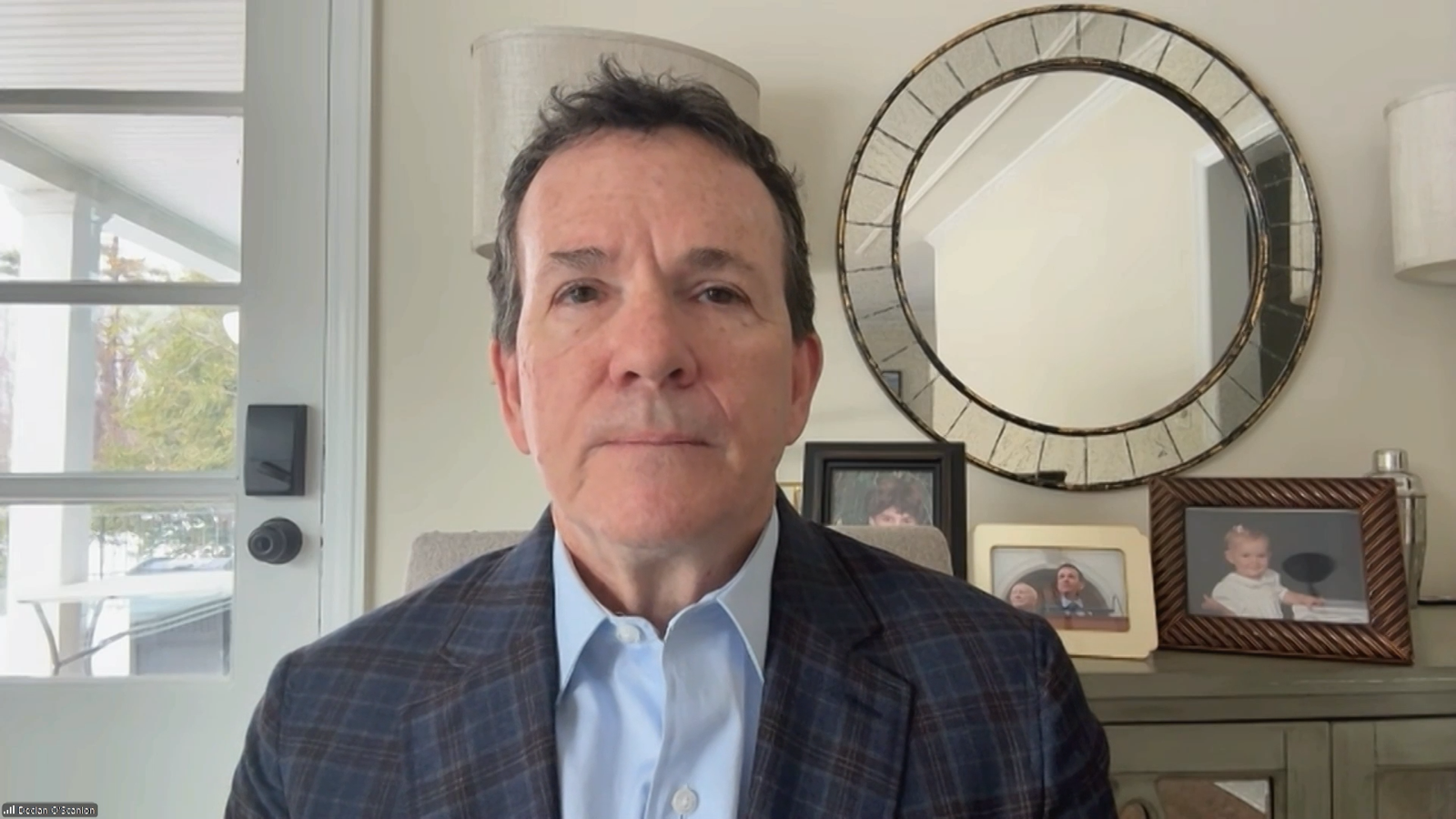
Sen. Declan O’Scanlon (R-Monmouth), a longtime member of the Senate Budget and Appropriations Committee, talks about potential fixes. This NJ Spotlight News interview has been lightly edited.
Joanna Gagis, anchor: You and I have spoken about this structural deficit for a long time. What was your reaction hearing the governor come out and announce it last week?

Declan O’Scanlon: It was a complete vindication of everything I and my fellow Republicans have been saying. It’s sad, because it didn’t have to be this way. Had our warnings been heeded years ago, we could have been in great shape right now with relatively little pain, actually. We could have redone the school funding formula — saving more than $1 billion a year — and given a lot more money to districts that arguably deserve more money, just not an obscene amount of money to the point where they’re setting it on fire. It’s a shame that those opportunities were squandered because we won’t have them again.
We could have done a relatively easy, relatively painless prospective pension and health benefit reforms. Had we done it, our budget should be close to balance right now, probably, because of the compounded savings that would have accrued over those years. So none of that happened and we warned, every year, our colleagues on the other side of the aisle. And as much as this was vindication for Republican budget prescriptions, it was a complete indictment of the Democrats’ handling of the budget over this past seven, eight years.
JG: Senator, where do we go from here? Let’s just take the first two expenses that are the largest for the state. You mentioned both the pension fund and health benefits. But let’s look at the pension fund first. Should that be fully funded?
DO: You absolutely have to fully fund. That’s a commitment to the workers. We did reform it back in 2011 and one of the things we did, in exchange for that, was promise we’d fully fund. We ramped up, as per that agreement, and we have to maintain that funding. So you can’t go back to where we’re underfunding, because it will only compound our problem going forward.
JG: Second — which is also a compounded problem and where the bill has come due — is the school funding formula. It’s a problem without a clear solution. What would be your plan to really restructure the funding formula so that it feels fair?
DO: Well, had you done it a few years ago it would have been much easier. There were plenty of districts that were underfunded that legitimately were owed additional money from a moral standpoint and from previous agreements standpoint.
JG: So, Senator, how do you reform it?
DO: You go back into the formula and you claw back what you can from these districts that now are getting way more money than they need and way more money than we can afford.
JG: Respectfully, I haven’t heard a single district say that they’re getting more than they need. In fact, most districts, even who have been on the “gaining” side, say that they’re still operating in very tight budgets.
DO: Well, I can demonstrate. Certainly, Newark. Newark has $1 million travel budget every year for its board members and staff. There is no other district in the entire state that has a fraction of that. There are plenty of districts, a number of districts that are getting more money than they need. And look, no district is ever going to admit they’re getting more than they need. That’s where leadership comes in. You go in, you dig into their budgets and you say, “Look, we can’t afford certain things. We can’t afford your million dollars of your travel budget. We can’t afford your hundreds of thousands of dollars in entertainment and balloons.” It’s garbage. And by the way, the kids are still getting a crappy education in Newark and in other places.
“The state of New Jersey shouldn’t be bailing these places out.”
So you just need executive leadership. We did not have that with the Murphy administration, and we haven’t had the leadership in the Legislature. The Democrats around the Legislature have been loathe to go in and do the real hard work that it’s going to take to fix the school funding formula. It can be done.
JG: You and a number of your colleagues — Senators Testa, Steinhardt and Amato — put forward a number of reforms that you’d like to see. I want to just go through a couple of them. The first is you’d like to eliminate unjustified special grants to counties and schools. Where would you start there?
DO: Well, I’d start by turning down Jersey City’s request to have the state taxpayers come in and bail them out from years of what was Democrat leadership there. The consequences of poor leadership, of kicking the can down the road, have to fall on the people that voted these people into office. They should not fall onto the taxpayers throughout the state of New Jersey. And we have now Newark on the precipice of major budget issues. The state of New Jersey shouldn’t be bailing these places out. They need to run their budgets and run their operations more efficiently. It’s really that simple.
‘Big chunk of salaries’
JG: You mentioned the health benefits plan. You’d like to see caps on those payments made. How would the state negotiate that?
DO: Well, you’ve got to go back to ideas that came from the Department of Labor, actually, that were ignored by the Murphy administration. Look, our state health benefits plan right now, because of a lack of attention by the Murphy administration, is likely in a death spiral. And I don’t think anybody has a solution for how to fix that.
Regardless of what happens, we need to work with labor because they pay a big chunk of their salaries too, for these high cost practices. We can negotiate caps on procedures that line up with what the feds pay on prescription drugs. There’s a batch of low-hanging fruit that we could hammer out with labor that will save our New Jersey-employed workers money and the taxpayers money at the same time.
This story is made possible in part by the Corporation for Public Broadcasting, a private corporation funded by the American people.



