
WASHINGTON — Classified national security briefings have “absolutely” declined in quality and frequency during the second Trump administration, according to New Jersey congressman Donald Norcross, a senior member of the House Armed Services Committee.
In an interview last week before President Trump ordered the attacks on Iran, Norcross, the No. 4 Democrat on the committee that has jurisdiction over the Pentagon, said he and other members of Congress lack full details of the military operation.
“We have not gotten that briefing, and we have asked, ‘What has changed that is forcing [the U.S.] to the table now?’” Norcross told NJ Spotlight News. On Saturday, the U.S. and Israel started a bombing campaign against Iran that have killed the nation’s leader and hundreds of civilians, prompted counterattacks against the U.S. and its allies in the region.
Congressional briefings have “absolutely” become less common and are not as detailed, Norcross said. “They resemble nothing in the 12 years I’ve been here,” Norcross said.
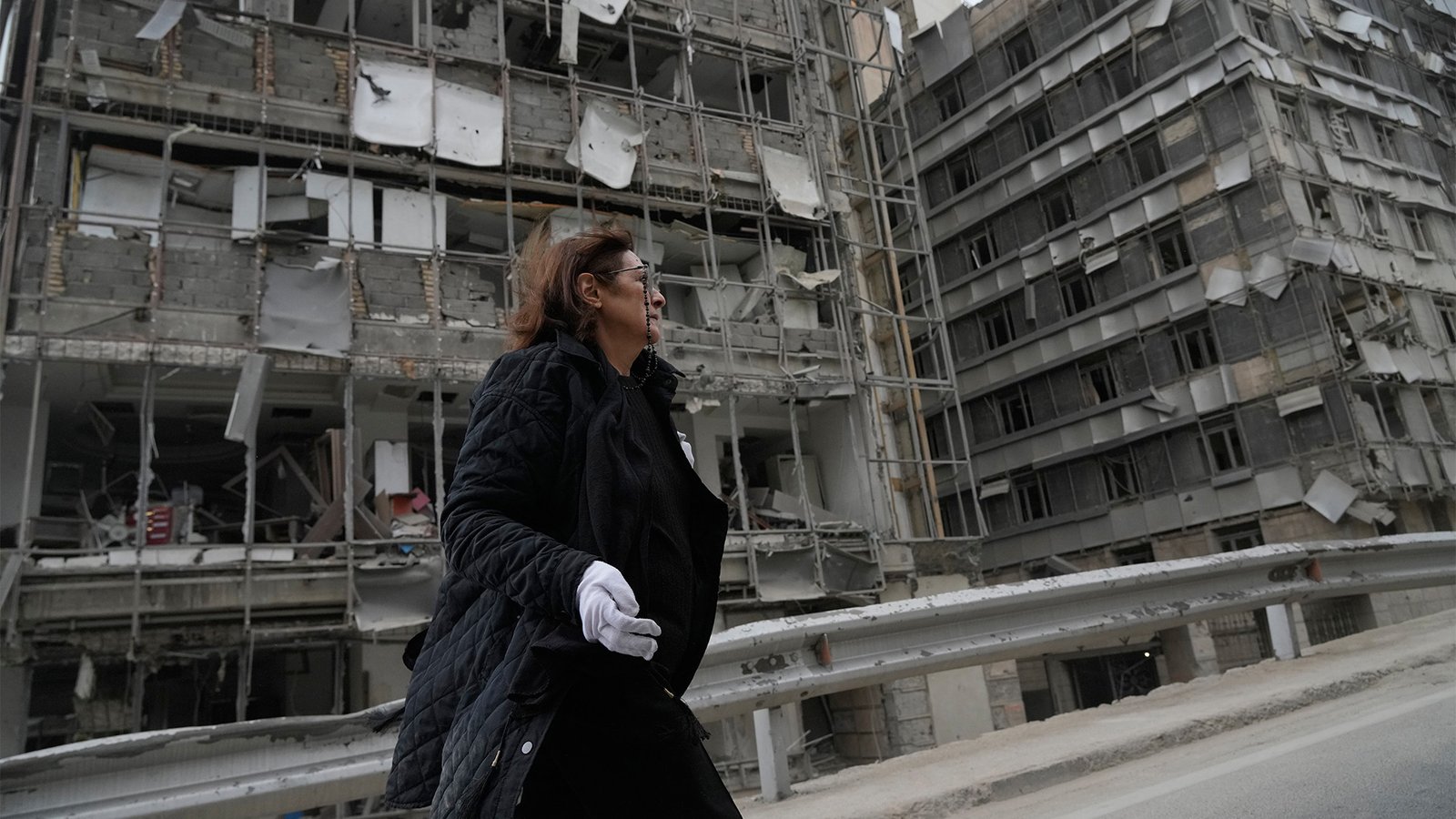
 Credit: (AP Photo/Vahid Salemi)
In his second term, Donald Trump has unilaterally directed air bombings of targets in seven nations — while threatening others with military action, including longtime allies, such as Canada, Denmark and Mexico — while skirting approval from Congress, which is the sole wing of the U.S. government that can declare war.
Administration officials at times have briefed members of Congress after military campaigns began, as they did following U.S. airstrikes against nuclear sites in Iran in June 2025. Briefings are scheduled for the Senate and House on Tuesday.
The Capitol complex contains secure rooms known as Sensitive Compartmented Information Facilities, or SCIFs (pronounced “skiffs”), where members and staff with high-level security clearances can view and discuss classified information. Electronics are not allowed inside the rooms, where military officials stand guard.
When the U.S. is about to attack a foreign target, standard procedure is to brief a group of people known as the Gang of Eight – the top leaders of both parties in the Senate and House, plus the highest-ranking Republicans and Democrats on both congressional intelligence committees.
“How many times do the American people need to wake up in the morning and see this president dragging us into another conflict?” Sen. Andy Kim said on CNN on Saturday, shortly after U.S. planes struck Iran. “I have zero confidence in this president who has so flagrantly violated our constitution.”
President’s war powers
Under the U.S. Constitution, the president must go to Congress for a formal declaration of war. Using the War Powers Act of 1973, though, the president can authorize military operations independently if Congress is informed within 48 hours. The law also caps any overseas deployment to 90 days without a formal war declaration. Bipartisan resolutions to bar the Trump administration from continuing its war with Iran could receive votes in both chambers of Congress as soon as this week.
“The American people deserve to understand why this latest strike was undertaken, why it was initiated at this time, and what clear strategy exists to bring this situation to a responsible conclusion,” Norcross said in a statement Saturday.
Pentagon and White House representatives did not respond to requests for comment about briefing patterns under the Trump administration.
Republicans largely backed Trump’s attack against Iran.
“President Trump is a man of his word,” said Rep. Chris Smith (R-4th), a member of the House Foreign Affairs Committee. “He pledged U.S. military action if Iran did not immediately halt its nuclear weapons program and cease its bloody crackdown on pro-democracy protests.”
Conducted with the Israeli military, the U.S. attack killed Iranian Supreme Leader Ali Khamenei and security officials.
Trump, who ran as an anti-war candidate, said 10 Iranian naval ships are at “the bottom of the sea” and that U.S. air attacks would last “four to five weeks.”
 Credit: (AP Photo/Alex Brandon)
Congress has moved haltingly to check Trump’s legal authority to trigger wars, including by rescinding two authorizations for military operations that had been in place for decades.
But on specific foreign conflicts, in particular Venezuela and Iran, the Republican-majority Congress has stopped well short of blocking Trump. In a recent vote, the House deadlocked, 215-215, on a measure to require Trump to cease hostilities against the South American nation without congressional approval.
The operation “violates the Constitution and our nation’s founding principles. The president acted unilaterally and lawlessly — without congressional authorization and absent any imminent threat to the United States,” said Katherine Yon Ebright, an analyst at the Brennan Center, who called the weekend strikes unconstitutional. “Unaccountable war-making was one of the chief dangers the Constitution’s framers sought to prevent.”
After the joint U.S.-Israeli attacks, Kuwait forces shot down three U.S. fighter jets — F-15E Strike Eagles — on Monday in a friendly fire incident, according to U.S. Central Command, which has responsibility over the Middle East.
“All six aircrew ejected safely, have been safely recovered, and are in stable condition,” Central Command said.
As of Monday, at least four U.S. service members had died during Operation Epic Fury, the conflict’s official name.
The Iranian Red Crescent Society said that the U.S.-Israeli operation has killed at least 555 people, including children at an elementary school.
Airstrikes during second term
In the first calendar year of his second term, Trump has ordered airstrikes against seven nations, and 658 air and drone strikes, according to a tally by Armed Conflict Location and Event, a U.S.-based military-tracking group.
That number is close to the sum of air- and drone strikes the U.S. conducted during the Biden administration: 694.
Nations bombed under Trump’s leadership include Iraq, Nigeria, Somalia, Yemen, Syria, Iran and Venezuela, where U.S. forces seized the nation’s leader, Nicholas Maduro, in January, likely breaking international law.
Trump said without evidence during his State of the Union speech last week that he had “ended eight wars.”
Norcross said last week he and fellow committee members have requested closed-door briefings about a potential war with Iran, in particular how geopolitical circumstances have changed since the U.S. bombed Iranian military targets in June 2025.
“The idea that one person is going to decide to go to war without consulting is quite frankly unheard of,” Norcross said.
The situation would be different if it were more urgent, he said. “If there were a reason they had to do it quickly and not bring us in, that is a different story,” he said of the administration.
Norcross and Rep. Herb Conaway (D-3rd) are New Jersey’s only members of Congress with seats on military committees.
“Without a clear strategy, without a full understanding of the risks to our service members, and without assessing the danger of regional escalation, these strikes are reckless and risk yet another endless war in the Middle East,” Conaway said in a statement.
Briefings help members determine how to cast perhaps the most important vote of their career — about declaring war.
“It’s a big deal,” said Norcross, adding that it’s “important to every individual who has to make that decision of whether or not we’re going to send our sons and daughters to war.”



