
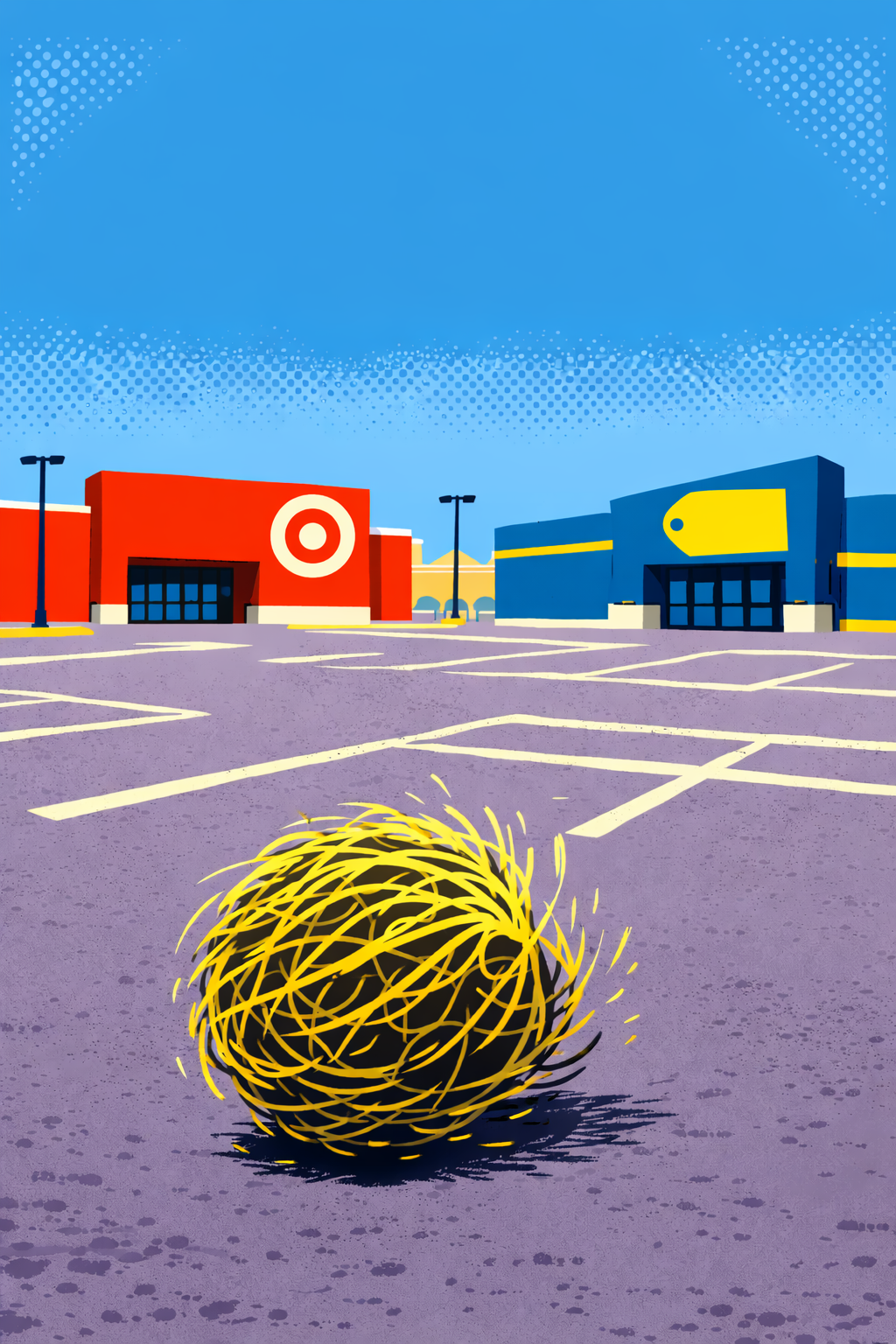
American retail’s two most reliably humbling cautionary tales reported earnings Tuesday, and if you squint at them together long enough, they start to look less like a recovery story and more like the first act of a movie where the protagonist hasn’t figured out they’re the problem yet.
Here is a thing that happens in retail. A store spends years trying to be everything to everyone, which works great until it doesn’t, and then the new CEO has to stand in front of investors and explain that the old strategy was, in retrospect, not quite right. The trick is to say this while also making it sound like a plan.
Target did this Tuesday, more or less successfully. Michael Fiddelke, who took over last year and has the unenviable job of rehabilitating a brand that managed to alienate basically everyone between 2021 and 2024, told investors that “Target is not an everything store.” This is either visionary repositioning or a description of what was always true, depending on how generous you feel. Comparable store sales fell 2.5% in Q4. Annual revenue dropped 1.7% to $104.8 billion, the third consecutive year of declines. The stock rose 7%. Markets are pricing the future Fiddelke is selling, which involves better staffing, curated merchandise, a new Beauty Studio, and generally the radical proposition that customers should be able to find things on the shelves.
Our analysts just identified a stock with the potential to be the next Nvidia. Tell us how you invest and we’ll show you why it’s our #1 pick. Tap here.
Best Buy’s version of this story is quieter and considerably harder to read. Revenue missed at $13.81 billion, earnings beat at $2.61. Full-year comparable sales guidance landed somewhere between down 1% and up 1%, a range so noncommittal it’s essentially a shrug wearing a suit. CEO Corie Barry called price increases a “last resort” on tariff costs, which is the kind of thing you say when you’re hoping the problem resolves itself before anyone asks for a follow-up.
What both companies are navigating is a consumer who hasn’t stopped spending so much as started spending more deliberately. That’s a subtle distinction with very non-subtle margin implications, and neither of these two has fully figured out how to sell to someone who’s finally started reading the price tag.
One stock. Nvidia-level potential. 30M+ investors trust Moby to find it first. Get the pick. Tap here.



