
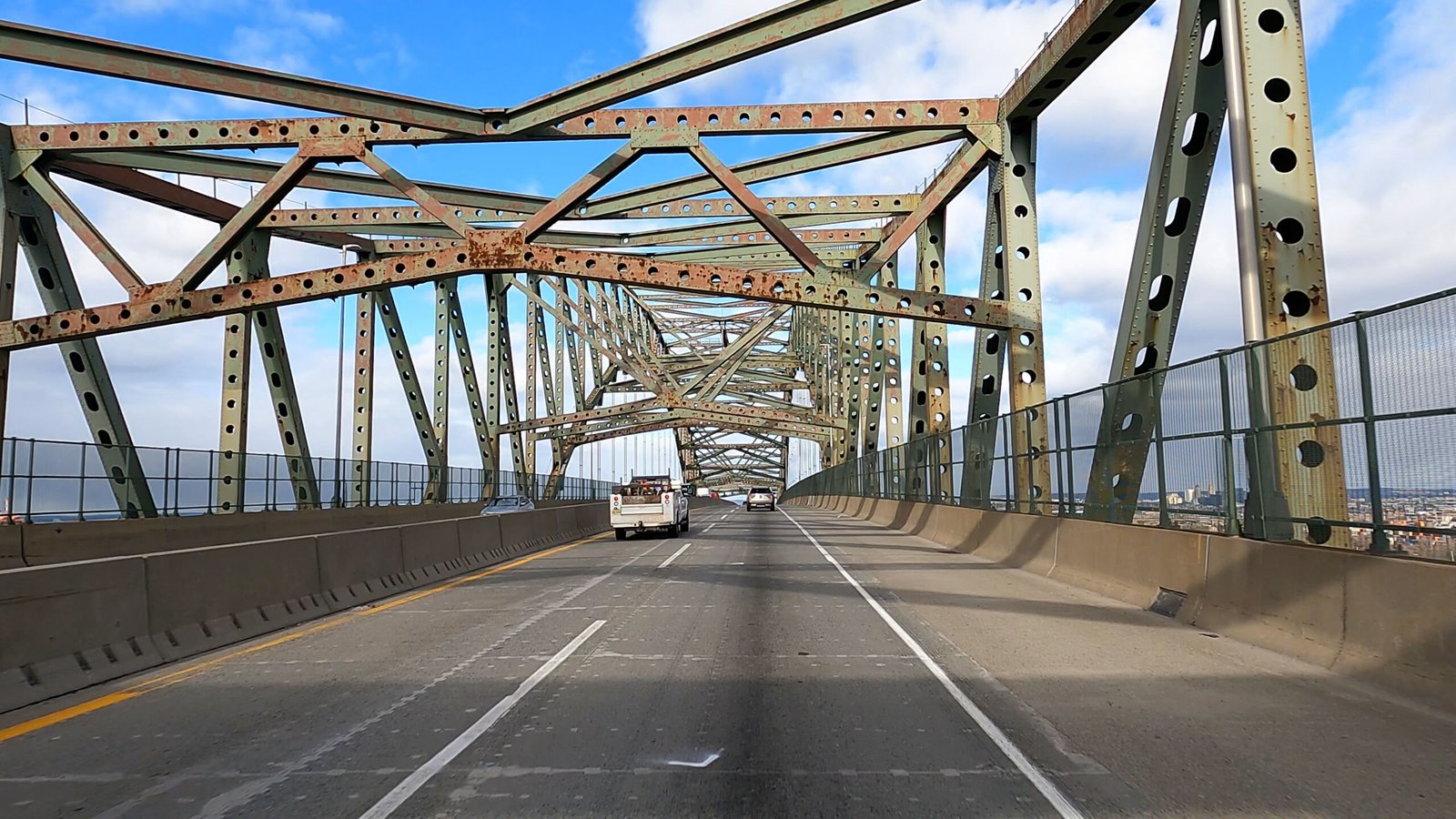
The New Jersey Turnpike Authority will replace the Newark Bay Bridge without a major widening that was feared by environmentalists, civic groups and mass-transit advocates.
Gov. Mikie Sherrill, who announced the $6.7 billion project on Tuesday, said the Vincent R. Casciano Bridge will be demolished and rebuilt with four lanes, rather than the eight included in original plans. The National Transportation Safety Board last year had included the link, also known as the Newark Bay Bridge and the Turnpike Extension Bridge, among 68 spans nationwide with a potentially higher than acceptable collapse risk.
“This project will support approximately 19,000 jobs, including thousands of union construction jobs,” Sherrill said in a statement. “The project will also allow traffic to shift off the aging existing bridge by 2031, consistent with NTSB concerns.” It will be the costliest construction in Turnpike Authority history, she said.
Hudson County lawmakers called Sherrill’s decision a win for Hoboken and Jersey City, which had feared increased traffic and pollution.
“After six years of community opposition, this fight is over,” Assemblyman Ravi Bhalla, a former Hoboken mayor, wrote on X.com. “Thank you to every neighbor, advocate, and organization that showed up to public hearings, organized their blocks, and refused to let this happen. This is proof that advocacy works — this victory belongs to you.”
The bridge, opened in 1956, connects Bayonne and Newark in the area of Interchanges 14 and 14A. It channels vehicular traffic to the Holland Tunnel and is crucial to the Port Newark-Elizabeth Marine Terminal, the third-largest U.S. container facility.
The Turnpike Authority, in an earlier $10.7 billion Hudson County widening plan to ease Hudson Tunnel traffic, had included two four-lane bridges to replace the Casciano. Then-Gov. Phil Murphy blocked the highway widening proposal in December, though not the new spans. Opponents to the widening, while pleased with Murphy’s decision, continued to press the Sherrill administration for what they called the “one-bridge alternative.”
In a joint statement, Mayors Ras Baraka of Newark and James Solomon of Jersey City, the state’s two largest cities by population, said prior proposals “would’ve opened the floodgates” of road congestion and even worse air quality in communities burdened by high rates of asthma and other illnesses.
“The governor’s announcement is a major step in the direction of smart transportation policy that upgrades aging infrastructure while addressing the needs of impacted communities,” they wrote.
In the wake of the Francis Scott Key Bridge collapse in Baltimore in 2024, the National Transportation Safety Board flagged 68 bridges nationally to conduct risk assessments and to recommend fixes to any deficiencies. The New Jersey Turnpike Authority noted that a Newark Bay Bridge replacement was in the works, a response deemed acceptable by the safety board.



