
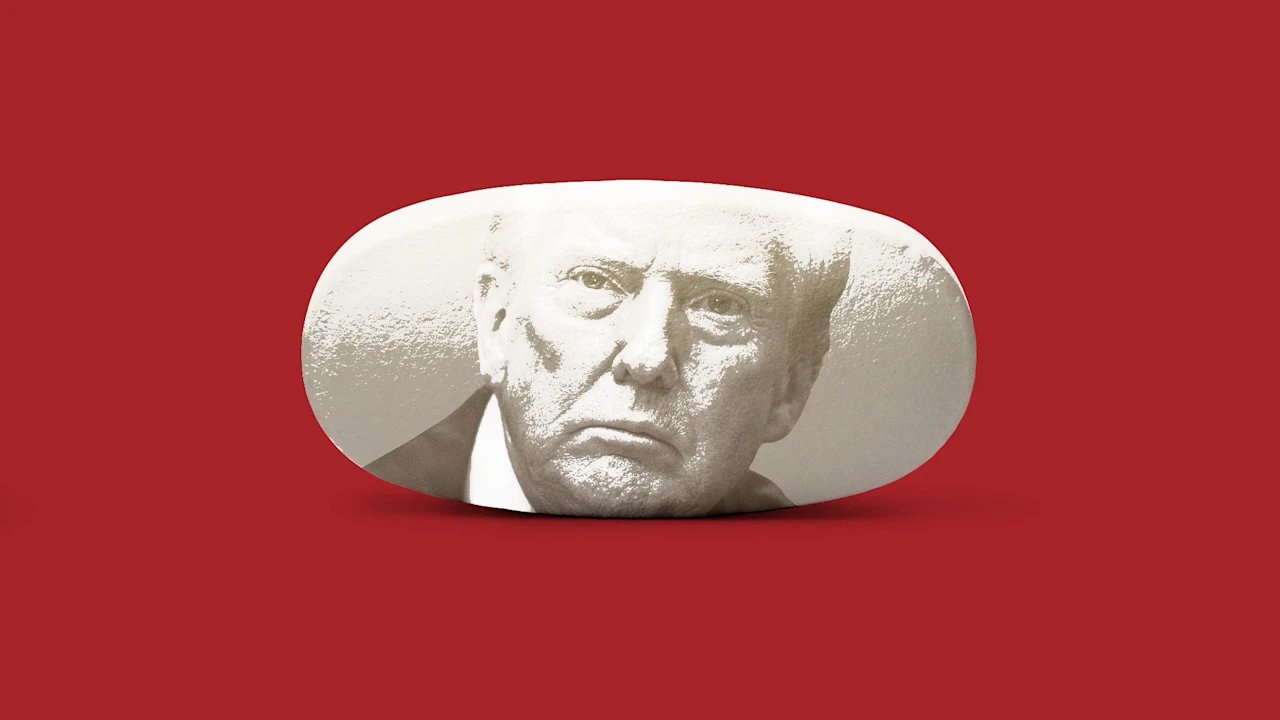
Last September, President Donald Trump took the stage at a White House press conference to give America some (completely unfounded) medical advice.
“Taking Tylenol is not good,” Trump said. “I’ll say it: It’s not good.”
Trump alleged that Tylenol, aka acetaminophen, is linked to autism, and that pregnant women taking the common painkiller increases the likelihood of their children being autistic. Trump had no scientific evidence to back up his claim, nor the support of the broader medical community—and yet, his critique of Tylenol had an impact on America’s emergency rooms nearly overnight.
A new study in The Lancet shows that between Trump’s speech on September 22 and the end of the study period on December 7, acetaminophen orders for pregnant patients ages 15 to 44 in emergency rooms declined by 10%. Meanwhile, orders for non-pregnant women in the same age range did not see any significant change.
Dr. Jeremy Faust, the lead researcher on the study, told NPR that Trump’s words “had an immediate impact on how much Tylenol or acetaminophen was being ordered in emergency departments.”
“This is thousands of women not getting pain control or not getting fever reduction when they need it, when they want it, when they would benefit from it,” he said.
Whether the drop in Tylenol orders was due to patients refusing the drug or doctors choosing not to prescribe it is unclear. The study was also limited to emergency departments, and did not account for other hospital departments nor for women potentially taking Tylenol at home.
Emergency room orders for Tylenol had mostly returned to normal by the end of the study period, suggesting that initial anxieties fueled by Trump’s speech were short-lived.
But another of Trump’s recommendations seems to have staying power: A drug Trump recommended as a cure for autism—again, with no scientific backing—jumped in usage.
At that same press conference, Trump said that the FDA would be changing the label for leucovorin, a vitamin B drug typically used in conjunction with cancer treatment, to allow its use as a treatment for autism.
“That’s one of the things that I’m very, very happy about,” Trump said.
Leucovorin has had no major clinical trials to prove its effectiveness in treating autism. Nevertheless, outpatient leucovorin prescriptions for children ages 5 to 17 increased by 71% during the study period and remain elevated compared to the months before Trump’s speech.
The shift in sales of both Tylenol and leucovorin point to Trump’s outsize influence on the American public, whether or not he has facts to back him up.
But forces in the healthcare industry, including Kenvue, the manufacturer of Tylenol, are fighting to keep consumers informed.
Kenvue spokesperson Melissa Witt told NPR, “We stand with science and continue to believe that there is no credible data that shows a proven link between taking acetaminophen and autism.”



