
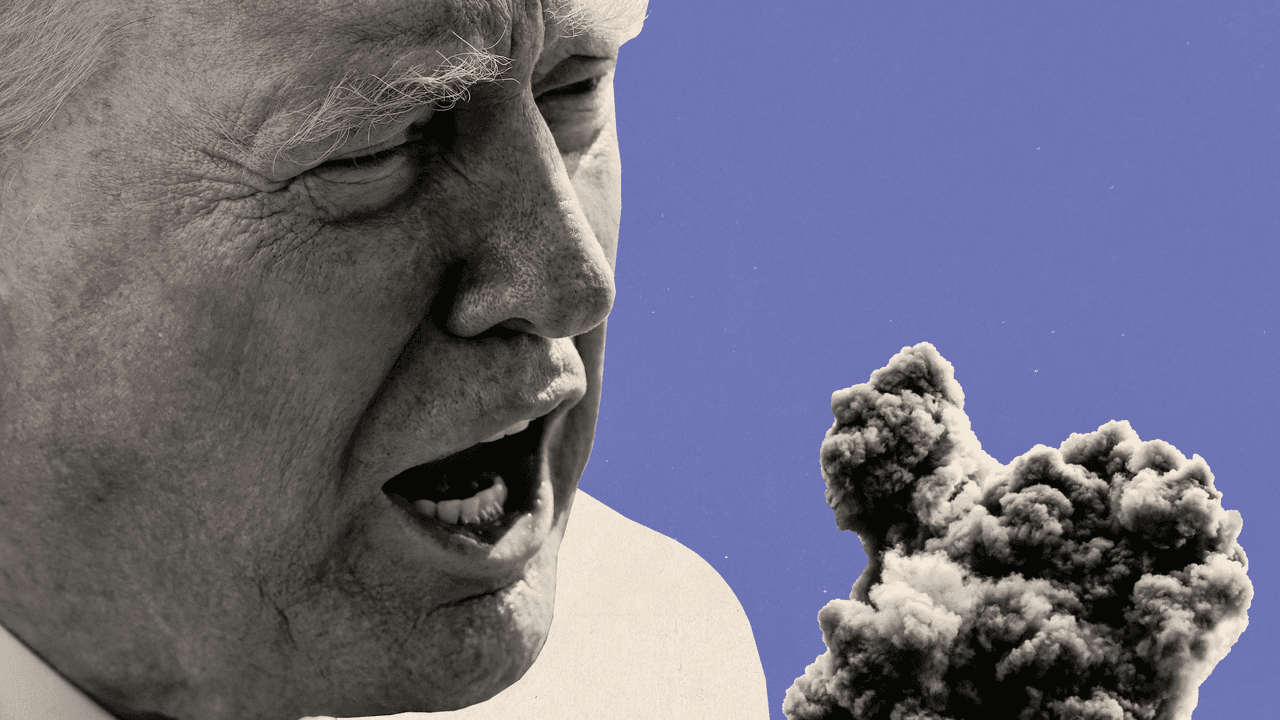
Since 1979, Iran’s revolutionary regime has been the nemesis of eight American Presidents. None could tame its political furies; its covert operations, which killed more than a thousand Americans in Lebanon, Iraq, and Afghanistan; or its expansion, through the creation of like-minded extremist movements, across the Middle East. The Islamic Republic considered its mini-realm a defensive buffer against U.S. and Israeli intervention. The U.S. and Israel viewed Iran as the most persistent threat in the world’s most volatile region. President Donald Trump and Prime Minister Benjamin Netanyahu have now set out to destroy the regime, militarily and politically, in a reckless war of choice with no visible or thoughtful endgame—and, in Trump’s case, no advance approval by Congress or warning to American taxpayers.
For Operation Epic Fury, the Trump Administration has so far deployed nearly half the United States’ air power and roughly a third of its naval assets. The cost is nearly nine hundred million dollars a day, the Center for Strategic and International Studies estimated. Much like the initial “shock and awe” campaign during Operation Iraqi Freedom, in 2003, the first week of the war was militarily stunning. The Supreme Leader, Ayatollah Ali Khamenei, and dozens of senior officials were killed. Iran’s arsenal of ballistic missiles was seriously depleted and its strategic installations left in rubble. Its navy was devastated; a U.S. submarine torpedoed an Iranian warship in the Indian Ocean, the first such strike since the Second World War. Pete Hegseth, the Secretary of Defense, boasted, “More and larger waves are coming. We are just getting started.” Iran’s capabilities, he added, are “evaporating.”
Trump, with his usual inconsistency, has called for Iranians to rise up against the ruthless theocracy—last week, he demanded its “unconditional surrender”—but also said that he’s prepared to deal with a new religious leader. Since 2017, millions of Iranians have participated in protests; tens of thousands have been killed. For now, though, an uprising seems unlikely. Iranians will first need to pick up the political and physical pieces of their lives, and although public fury at the government has not diminished, foreign military intervention has ignited a sense of millennia-old nationalism. The prospect of many members of the Iranian security forces—there are more than a million, counting reservists—joining a popular rebellion seems improbable, too.
The war has rattled the international order, troubled as it already was. After two disastrous U.S. wars, in Iraq and Afghanistan, there is an ominous sense of how messy and costly and deadly this one might get, however confident Trump sounds. Iran is larger, in size and in population, than Iraq and Afghanistan combined. It is arguably the most important geostrategic country in the three regions it borders—the Arab world; the formerly Soviet “stans” of Central Asia; and Afghanistan and nuclear-armed Pakistan, in South Asia. It has vast oil and gas reserves, along with the largest military in the Middle East, and it has had powerful sway in parts of the Muslim world, particularly among Shiites.
Trump said that the biggest surprise to him has been the scope of Tehran’s response. Iran was clearly prepared, especially after the Twelve-Day War, last June, when the President ordered B-2 stealth warplanes to drop bunker-busting bombs on nuclear facilities in Fordo, Natanz, and Isfahan. This time, it countered with missile and drone strikes on seven oil-rich neighbors allied with the United States, from Iraq to Saudi Arabia and Oman. It targeted international airports, hotels, businesses, ports, and energy facilities. Despite American defensive superiority, Iran hit the U.S. Embassy in Riyadh; the consulate in Dubai; the largest U.S. military base in the Middle East, at Al Udeid, in Qatar; and the U.S. Fifth Fleet headquarters in Bahrain, which coördinates U.S. naval operations across the Middle East. Netanyahu said that he has been dreaming for forty years about overthrowing the theocracy, but Iranian missiles penetrated Israel’s Iron Dome defenses. Air sirens repeatedly alerted the residents of Tel Aviv and Jerusalem to seek shelter. Dozens of buildings, including a military airbase, were hit. Hezbollah, Iran’s longtime partner, opened a second front with Israel from Lebanon.



