
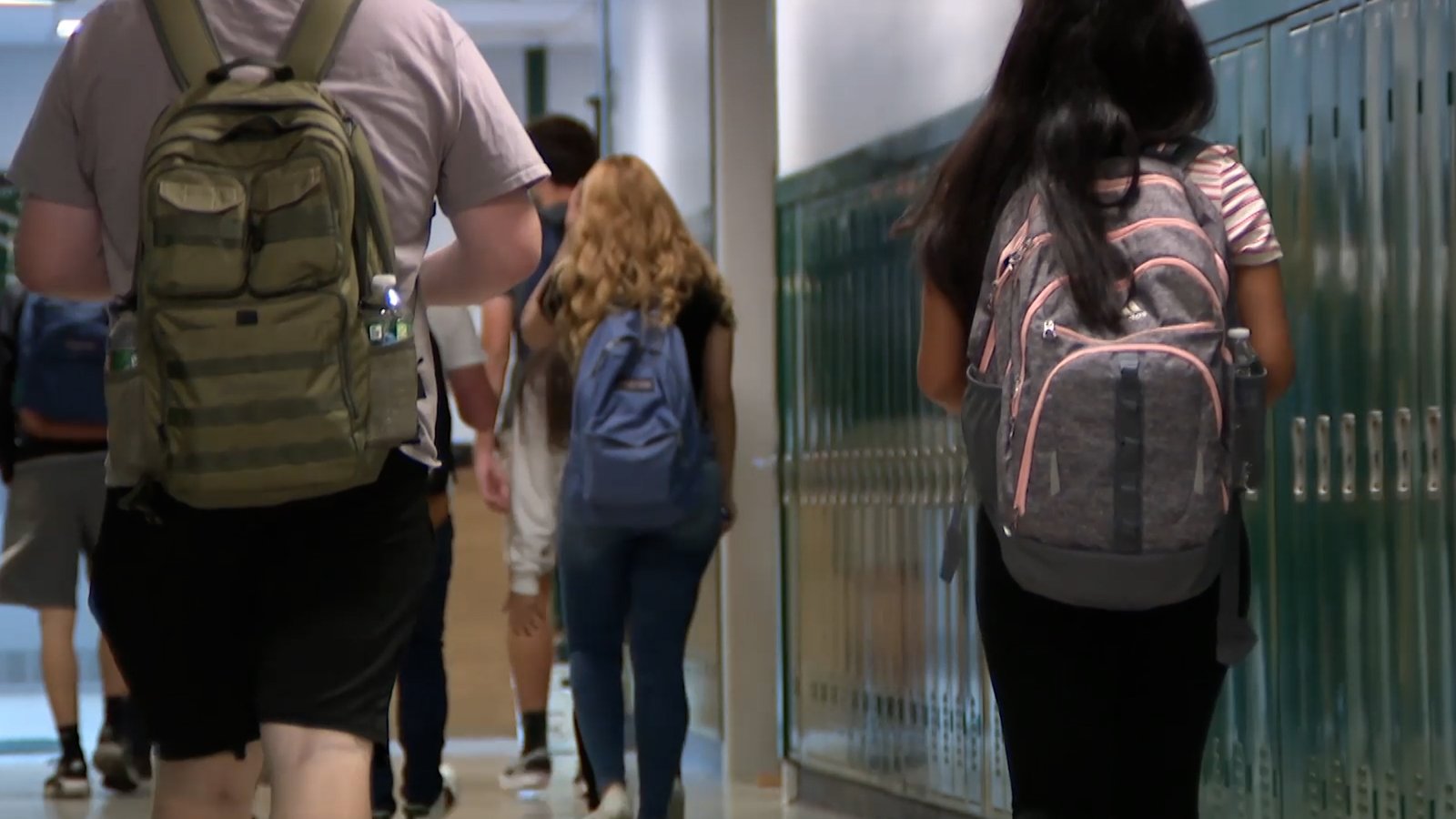
 Gov. Mikie Sherrill’s budget proposal will include millions of dollars for her youth mental-health agenda, including school-based counseling.
Since taking office in January, Sherrill has signaled that young people’s psychiatric well-being will be a focus of her administration. Among her first executive orders was to establish the Office of Youth Online Mental Health Safety and Awareness to help users navigate social media and other perils. The spending plan that she’ll introduce in Trenton today includes funding for that office, with the amount detail to come later, according to a person familiar with the spending plan.
She’ll also propose $33 million for a K-12 program called SPARK, for School-based Partnerships and Resilience for Kids. Districts would receive grants to offer in-school counseling and intervention services, particularly for children with behavioral issues. And she’ll pitch $500,000 for a New Jersey university to study the influence of online platforms.
At the same time, lawmakers are pushing a range of other mental-health proposals that may be tough to accommodate in a state that’s facing a $3 billion gap between projected spending and revenue for the fiscal year that starts July 1. Sherrill and Treasurer Aaron Binder this month warned that if spending continues unchecked, the state will exhaust its $7.2 billion surplus within a few years.
Federal grants to states for psychological treatment is subject to the whims of President Donald Trump. In January, his administration announced the cut of $2 billion for mental health and addiction services around the country, only to restore it after outcry from advocates. Almost one in five adults experience a mental-health episode each year, according to the National Alliance on Mental Illness.

In the Garden State, about 42% of teenagers said they felt persistently sad or hopeless for at least two weeks, a key indicator of depression, according to a 2023 survey by the New Jersey State Policy Lab at Rutgers University. In all, 20% had seriously considered taking their lives, and half of those had made attempts. Suicide is the third leading cause of death for New Jerseyans ages 10-24, according to the Centers for Disease Control and Prevention, and LGBTQ+ youth are particularly vulnerable.
The state’s 988 Suicide and Crisis Lifeline, meanwhile, is reporting rising use. The line logged about 57,000 calls during its first year, according to Valerie Mielke, deputy commissioner for health services. Over just six months in 2025, the hotline processed roughly 62,000 calls. New Jersey lawmakers want to establish permanent funding to operate the service via a 40-cent monthly fee on phone lines, similar to the way 911 services are funded.
The fee would raise $67 million annually, according to the nonpartisan Office of Legislative Services. That would help pay for the hotline, mobile counseling teams, acute-care centers as alternatives to hospital emergency rooms and short-term residential treatment facilities.
“Having to advocate for that funding as a budget line item each and every year against other important competing interests is really unnecessary,” the bill’s sponsor, Sen. Joseph Vitale (D-Middlesex), chairman of the Senate Health, Human Services and Senior Citizens Committee, told NJ Spotlight News. “There’s only so much state capital available for all the programs that we have, and having to essentially fight for it every year doesn’t make sense when the outcome could be damaging to the program and to those who are served.”
Expanding treatment capacity is another proposal before lawmakers. The New Jersey Mental Health Residential Reform Treatment Act, introduced in January, would create a licensing pathway for non-hospital, inpatient residential mental-health facilities serving adolescents and adults.
Other pending bills would require warnings on social media sites and expand treatment for police officers’ post-traumatic stress and other ills.



