
New Jersey Gov. Mikie Sherrill took 44 minutes Tuesday to pitch her plan for the state’s next budget in her first budget address.
The Legislature’s Republican leaders were a lot more concise in their response.
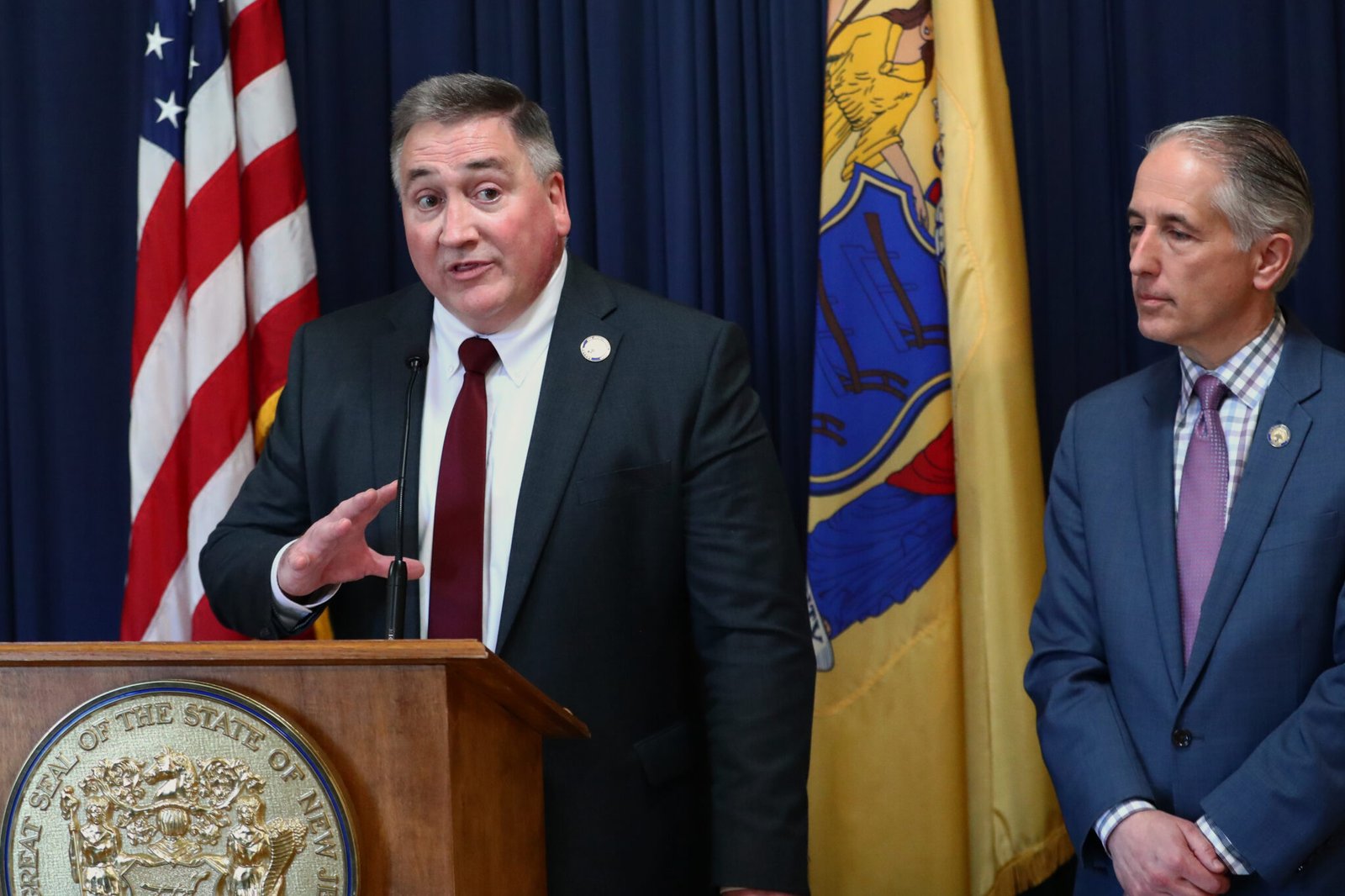
“New governor, same old song,” said Assemblyman Brian Rumpf (R-Ocean), the lower chamber’s budget officer.
Human trafficking warnings derail hearing on bills to protect abortion rights
While Sherrill got cheers from a largely supportive Statehouse audience, Senate and Assembly Republicans told reporters after the crowd cleared that Sherrill failed to deliver the tough budget cuts she promised both on the campaign trail and since she took office in January. Her $60.7 billion spending plan would be a record high and is almost $2 billion more than the last budget of her predecessor, Phil Murphy.
“This budget has already started out heading in the wrong direction,” said Sen. Anthony Bucco (R-Morris), the Senate’s minority leader.
Christopher DePhillips (R-Bergen), the minority conference leader, agreed her budget plan is “more of the same” and failed to deliver meaningful tax relief to either businesses or residents. He noted that New Jersey’s corporate business tax is the highest in the nation.
“This is a missed opportunity for this administration. Where is the cut in the sales tax rate? This tax is particularly punishing on regular working New Jerseyans,” DePhillips said. “Overall, this budget is not a win for the people of this state and does not — does not! — improve affordability in New Jersey.”
The GOP leaders said Sherrill failed to adequately address New Jersey’s controversial school funding formula, with Sen. Declan O’Scanlon saying her plan would continue a “ridiculously flawed” approach that distributes state aid based on students’ needs and districts’ wealth. Such a strategy means that per-pupil state funding varies greatly around the state.
“All that money, virtually all of it, is going to a handful of districts, while hundreds of districts are left choking on fumes. That needs to change, and you could fix it with relatively minor money,” O’Scanlon said.
While Republicans often demand less taxation, Rumpf, O’Scanlon, and Bucco decried Sherrill’s plan to lower the income eligibility threshold and maximum rebate caps for Stay NJ, the tax relief program for seniors that lawmakers passed in 2023 that sent out its first rebate checks in February and will send more in May.
“It’s another item that Republicans said, when it was proposed, would be difficult to maintain. And they said, ‘no, no, this is the savior for our taxpayers in New Jersey.’ Well, guess what? They just cut $500 million out of that program. That’s going to land squarely on the backs of our taxpayers,” Bucco said.
GOP leaders praised Sherrill’s vow to cut pork spending — both the last-minute budget additions derisively known as “Christmas tree items” and year-round legislation that, combined, balloon the budget each year.
“I would stand up and applaud that, because I think billions of dollars of random money to pet projects in coveted legislators’ districts is no way to run a railroad,” O’Scanlon said. “It shortchanges everybody else in the state of New Jersey.”
Sherrill has said that she hopes to get the budget passed earlier and more transparently than lawmakers did during Murphy’s tenure, when lawmakers typically did not see a finished budget until a few hours before they were asked to vote on it at the end of every June. Hundreds of millions in last-minute budget additions, known as budget resolutions, are supposed to be released publicly by the end of June — but typically aren’t until August.
That keeps the public and the press from inspecting budget details too closely, O’Scanlon said.
“That’s by design. They don’t want you to see it,” O’Scanlon said. “That is a crappy way to build a budget.”
A minority minority voice
The Legislature’s Republicans weren’t fully aligned on the budget.
Assemblyman Brian Bergen (R-Morris) didn’t wait for Monday’s budget address to speak out, introducing legislation Monday that would eliminate legislators’ salaries because he blames legislative Democrats for the state’s dismal fiscal outlook. Bergen was among Democrats’ loudest critics in 2024, when the majority party voted to hike legislative pay from $49,000 to $82,000 over GOP objections.
“I am proposing performance-based compensation reform that finally reflects the results this Democrat-led Legislature has delivered — zero,” Bergen said in a statement. “Despite warnings about a fiscal cliff and spending far outpacing revenues, Trenton Democrats voted to give themselves a 67% pay raise to $82,000. My bill repeals that selfish decision and makes clear that public service, not profit, should motivate elected officials.”
The raises went into effect in January. Pay for the state’s 120 legislators now costs the state almost $10 million a year. Bergen wants lawmakers, who are part-time and typically hold outside jobs, to work for free starting in 2028.
Bergen also introduced a bill intended to cut two property relief programs that he estimated would save the state $5 billion and reduce government inefficiencies. The bills would cancel Anchor and Stay NJ and use those savings to eliminate highway tolls and shrink the structural deficit that’s projected for the next fiscal year. Republicans have criticized such tax rebate programs, saying residents shouldn’t be so highly taxed in the first place.
“Trenton politicians love rebate programs because they tax you first, keep most of the money, and then send a small portion back with their name on the check,” he said. “That’s not tax relief, it’s political marketing.”
Stay NJ, in particular, has been controversial because of its projected annual cost of over $1 billion. Lawmakers passed the program in 2023 to reverse the flight of elderly residents who retire to lower-tax states.
The savings from cutting Anchor and Stay NJ would enable the state to eliminate highway tolls, one of the state’s most burdensome and inefficient ways of collecting revenue, Bergen said. He introduced a bill Monday that would bar authorities from charging tolls on highways including the New Jersey Turnpike, Garden State Parkway, and Atlantic City Expressway.
“New Jersey spends enormous amounts of money just to collect tolls,” Bergen said. “Instead of funding roads, a large portion of what drivers pay goes toward operating toll systems, enforcement, and administration.”
Nikita Biryukov contributed.
GET THE MORNING HEADLINES.



