
Since its founding in 2010, GoFundMe has become the go-to platform for helping others in need, with more than $50 million raised every week and more than 8,000 fundraising campaigns launched every day.
But using the platform to raise money from friends, family, and generous acquaintances or strangers often doesn’t come naturally, especially when people are already dealing with a traumatic situation like a house fire, medical problem, or other emergency.
“In order for help to occur, people have to do something quite difficult, which is asking for help,” says GoFundMe CEO Tim Cadogan. “That’s something that almost no one likes doing, so it’s a hard threshold to cross.”
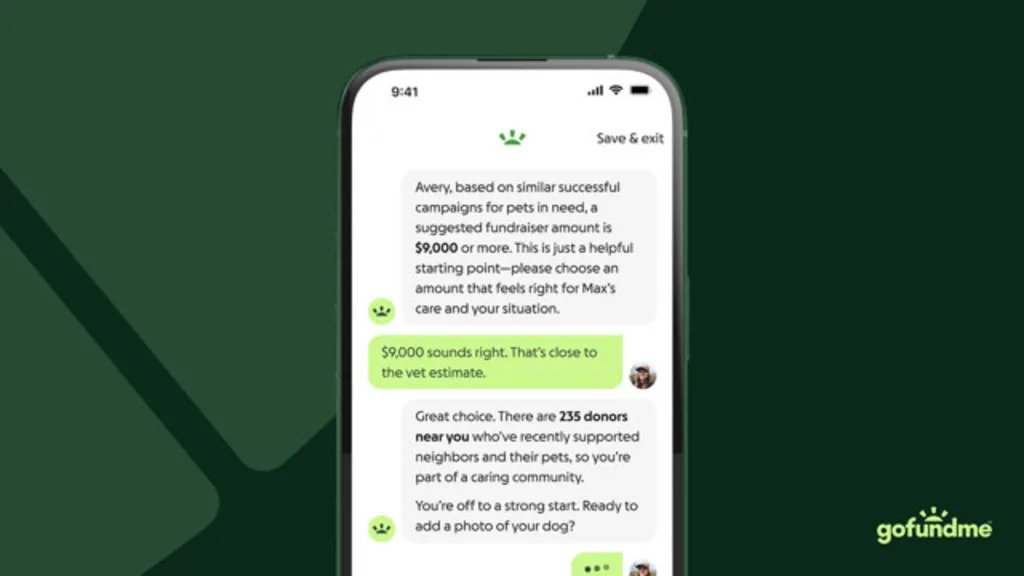
To make the process a bit easier, GoFundMe has rolled out an AI-powered “smart fundraising coach” that can assist people raising money for themselves or others from the moment they begin to plan a campaign. The coach can chat with users to gather information about their situations, show some AI-generated sympathy, and help draft an initial fundraising message and set an appropriate goal based on GoFundMe’s wealth of data. While much of what GoFundMe’s AI offers is similar to smart features that have sprouted up across marketing and sales software, it is also specifically designed to help users through what can be an unfamiliar, stressful, and even embarrassing process.
“We spend a lot of our time thinking about and working on products that make it easier for people to believe that they can ask for help and be successful,” Cadogan says.
The coach also provides a set of suggestions for campaign titles, which Cadogan says most users end up adopting. They typically perform better than user-generated headlines, he says. It can also help fundraisers select appropriate and effective photos to use for their campaigns, again based on GoFundMe data. The automated assistance helps people make practical decisions about a sensitive subject at a difficult time and, perhaps equally important, relieves some of the stress around raising funds.
“Between 65 and 75 percent of the folks we’ve surveyed say that the smart fundraising coach helps them feel more confident, less stressed, and critically, less alone,” Cadogan says.

Once users launch a fundraising campaign, the coach can continue to assist them through AI-generated daily action plans and notifications via the app, text, and email. That assistance includes guiding users to share their campaign with people likely to give, since GoFundMe’s research shows fundraisers who send one-on-one messages to likely donors are more successful. Successful campaigns often raise a few donations from fundraisers’ inner circles, gaining momentum before reaching out to looser connections, Cadogan says. Users can now also import their phone contacts into GoFundMe and see in a dedicated tab which contacts have donated or shared their fundraiser, making it easier to customize appeals to specific people.
“A common strategy that does work very well is to start by texting one-on-one to the people you know best, build that momentum, and then share on your social media platforms,” he says.
The coach can also advise people when and how to thank donors, set up automatic thank-you replies, and follow up with potential contributors. It also offers advice on when to post updates and when and how best to share a fundraiser on social media. The AI can even draft platform-appropriate posts for various social media sites, including generating video material suitable for TikTok and other content for more photo- or text-oriented social networks. It is often easier for users to tweak AI-drafted content than to start from scratch with a blank page, and the auto-generated material can help with formats like video that not all fundraisers find intuitive, Cadogan says.
Based on early testing, GoFundMe anticipates that the new AI features will help users raise an additional $125 million this year. Cadogan says the company will likely continue to iterate as it gathers more data about what’s helpful to users managing successful fundraisers.
“The awesome thing about a product like this is we’re going to learn so much about so many different dimensions,” he says. “Expect it to evolve quickly.”



