
Thirteen months away from the Women’s World Cup, a trip to Brazil still feels like a distant concept. Only the host nation is guaranteed a spot so far, still plenty of time on the clock for many teams to book their spots and hopeful players to make their case. Yet, as a new NWSL season begins on Friday, it is hard to shake the idea that the U.S. women’s national team’s path to Brazil – and potentially a fifth World Cup title – runs through the 2026 campaign, especially for some of the team’s rising stars.
Several U.S. internationals return to their clubs after a gritty week at the SheBelieves Cup, one in which head coach Emma Hayes may have tipped her hand at who might be the frontrunners for starting roles when World Cup qualification begins in late fall. November’s Concacaf W Championship is essentially Hayes’ self-imposed deadline to lock in her starters, having mostly settled on a core group of players in recent months. There is a strong symbiotic relationship between an important role on a team pushing for a World Cup and impactful moments at the club level, the onus now on players to demonstrate just that – especially those who are currently on the outside looking in at a starting role on the USWNT.
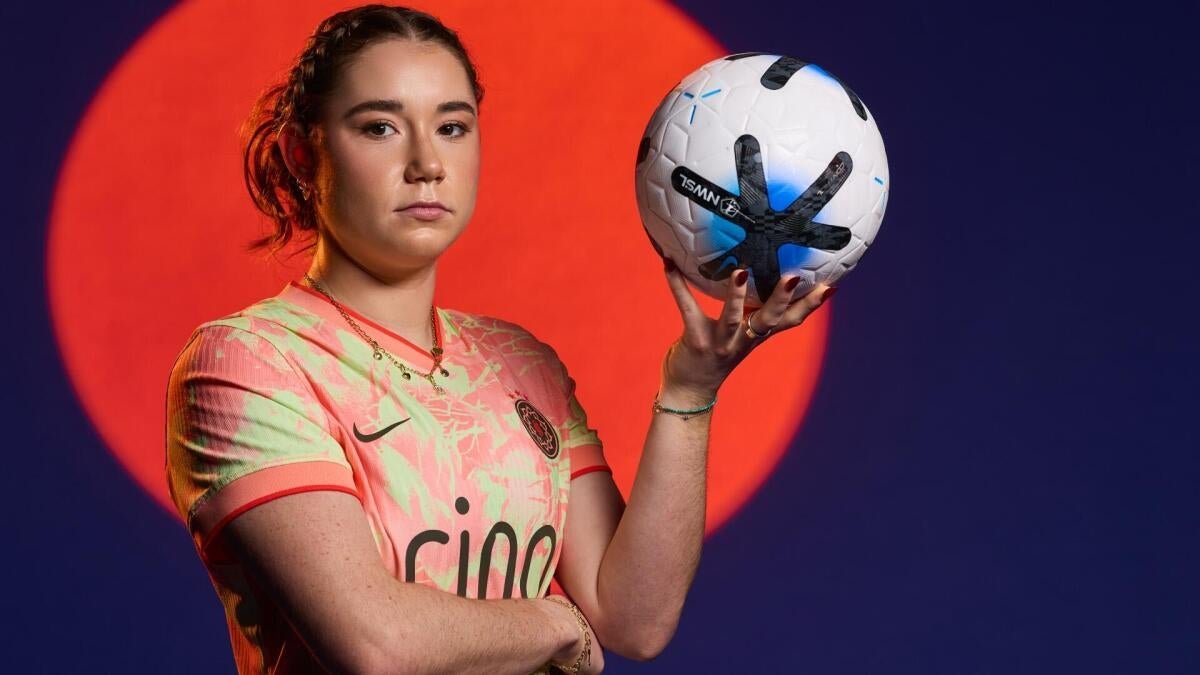
Take 20-year-old Olivia Moultrie as an example. The midfielder is transitioning from a prospect to a likely World Cup participant, growing into her newfound status as a national team regular after a 2025 season with the Portland Thorns that required multiple things from her. Moultrie sees herself as a central midfielder but reps on the wing paved the way for a role that marries both skillsets with the national team, developing a flexibility Hayes seems to prefer in players.
“At the end of the day, I’m trying to be as versatile as possible,” Moultrie said at NWSL media day in January. “I obviously played on the wing a lot last year before kind of the second half of the season, where I was more consistently in the midfield and so I think, funny enough, it ended up helping prepare me for that role with the national team because at the time you just do what your team needs and kind of how you’re built and obviously dealing with injuries and certain things like that and now it’s like, ‘well, that actually set me up to do really well in this position’ and so I think any experience that I can have in other places is good for me as a player.”
Moultrie has discovered new elements of her game at a crucial juncture of the USWNT’s road to the World Cup, doing so during Hayes’ year of experimentation as she rebuilt the national team in her image, allowing the player to gradually progress as 2027 nears.
“You learn the tactical expectations first and what each role on the field requires and then once you get that aspect of how it works within her system, you start finding the Olivia within that role,” she said. “That’s how it felt for me as I worked my way in, especially just through last year. It was like, okay, I want to nail what this system is and really understand it and now that I feel like I can explain to somebody else and I really get it, now how do I find like bringing kind of that Portland Thorns Olivia but refining her into what does that look like with the national team, so that same dangerous attacker but when you’re surrounded by so much talent on the field, you can just hold your position a little bit more and be a little bit more patient.”
Since winning Olympic gold in Paris in 2024, Hayes has spoken frequently about a layered tactical approach for a group of players who were mostly unfamiliar with the demands of the international game two years ago. At times, it is a sneaky approach but one that allows players more autonomy as time goes on.
“They’re super methodical and they do everything with a purpose and you can tell,” Ally Sentnor, the Kansas City Current forward whose national team profile is only rising, said. “Coming into the camps, we’ll do one formation and then you can tell they snuck in some little things and they’re like, ‘You know what to do and we’re moving to this,’ and it’s very seamless and it’s really an honor to play for a coaching staff that is so methodical and thought out, is 10 steps ahead of everyone.”
For the USWNT’s World Cup hopefuls, much of the work will happen in the NWSL. Sentnor is about to enter her first full season with the Current after a midseason move from the Utah Royals in 2025, explicitly with the hopes of improving her game in the short-term.
“When I made the decision, I was wanting … not a fix but something different in the immediate future and I think Kansas City has everything right now,” Sentnor said, citing the team’s facilities and the “behind-the-scenes stuff that sometimes isn’t showed as much. I was so happy just being around players that were pushing me – taking free kicks with Debinha after practice, and playing off of Temwa [Chawinga], Bia [Zaneratto], Michelle [Cooper] and really just creating those bonds was the aim for last year and then coming into this year, I’m flying.”
A strong 2026 season is also top of mind for Mia Fishel, whose promising start with the USWNT in 2023 was curtailed by an ACL injury in 2024. Fishel returned to the pitch a year ago but has not been called up by Hayes, her former coach at Chelsea, since, slowly working her way back to her top levels after a move to the Seattle Reign last summer.
“When I first came, [Reign head coach] Laura [Harvey] kind of put the pressure off me.” Fishel said. “She was like, ‘We do not expect pretty much anything of you besides trying to adapt to the team, trying our style of play and when we can fit you in games, we’ll fit you in games,’ so on her end, it was very just get used to the environment, get used to where you’re living, and we want you rocking and rolling for 2026. First preseason in about three years ’cause of my injury and coming in mid-season from Tigres to Chelsea, had my injury, came mid-season from Chelsea to here so I’m really excited to get this good build going into the season.”
For Sentnor and Fishel, the goal is the same – demonstrate a variety of ways to be impactful in front of goal with the hopes of leading a competitive race to start in the USWNT’s attack in Brazil.
“I think [the] big thing is continuing my shots, different types of shots – right foot, left foot, heading accuracy,” Fishel said, “then doing it consistently each day in training and being my absolute best every day so it’s a habit and which hopefully leads into the season.”
Though the players ultimately control their own fate, Hayes’ influence looms large as they return to their club settings. National team players often speak of advice the coach has offered them even at the club level, their ambition to earn minutes with the USWNT never a secret. That is especially true for the younger players in the group, who are only at the start of their international careers but are clearly willing to take any and all suggestions Hayes has in order to stick around.
“Going into that professional level, I didn’t realize how much nutrition and fueling your body was so important,” Angel City defender Gisele Thompson said. “When I was at school, I would have like a small piece of toast or something small for lunch and obviously that is not what my body can handle, especially for how hard I’m working. I’m doing gym, I’m doing extras after practice, I’m doing speed training, and all that contributes to how my body is feeling and getting hurt is your body telling you you need to rest so I think just focusing on that my whole time and Emma has told me that during tournaments, you’re going to need your body to be healthy because you have three games over such a small time period so I think that has motivated me even more to want to get my body healthy and to be in that high elite level.”
Hayes’ advice also embodies that symbiotic relationship between club and country, even if the two levels do not always align. During the SheBelieves Cup, Hayes emphasized a need for NWSL-based players to build a durability that their Europe-based counterparts have because they have to balance domestic play on weekends with midweek matches in the UEFA Women’s Champions League. The coach’s demand is understandable, but there is some friction with the demand.
“She’s trying to equip the U.S. women’s national team for success at a World Cup,” Sarah Gregorius, the NWSL’s VP of sporting told CBS Sports. “At a World Cup, you play three games within potentially eight days so of course she’s interested in a rhythm that prepares players for that type of schedule. If I think of player workload holistically, not just number of minutes played but also travel load as contributed to playing workload, that is just something that we have to factor in this league because it has the ability to contribute to cumulative fatigue and cumulative fatigue is something that can contribute to injury.
“I totally understand where Emma’s coming from and it’s true but if Arsenal are playing Chelsea, the distance that they travel for that game is very different to the distance that Portland has to travel this weekend to play Washington [Spirit] and that has to be factored in scheduling so I see both sides of it. … That’s certainly under the purview of the sporting team and something I really believe in and within Emma’s staff, we are in very regular communication with the women’s national team and U.S. Soccer and their programming. We want to help them. Our ambitions are inherently linked so we are in contact with them around scheduling and calendar to make sure that it’s optimal for both.”
The players’ ambitions for themselves underscore that shared ambition between club and country.
“I think I want to be a person that, like I said, can be dangerous in versatile ways and I feel like that is kind of my makeup as a player so wherever that ends up being, I’m happy for that,” Moultrie said. “I just want to be on the field and be a part of a team that’s competing, obviously, with the national team for World Cups and then with Portland for championships.”



