
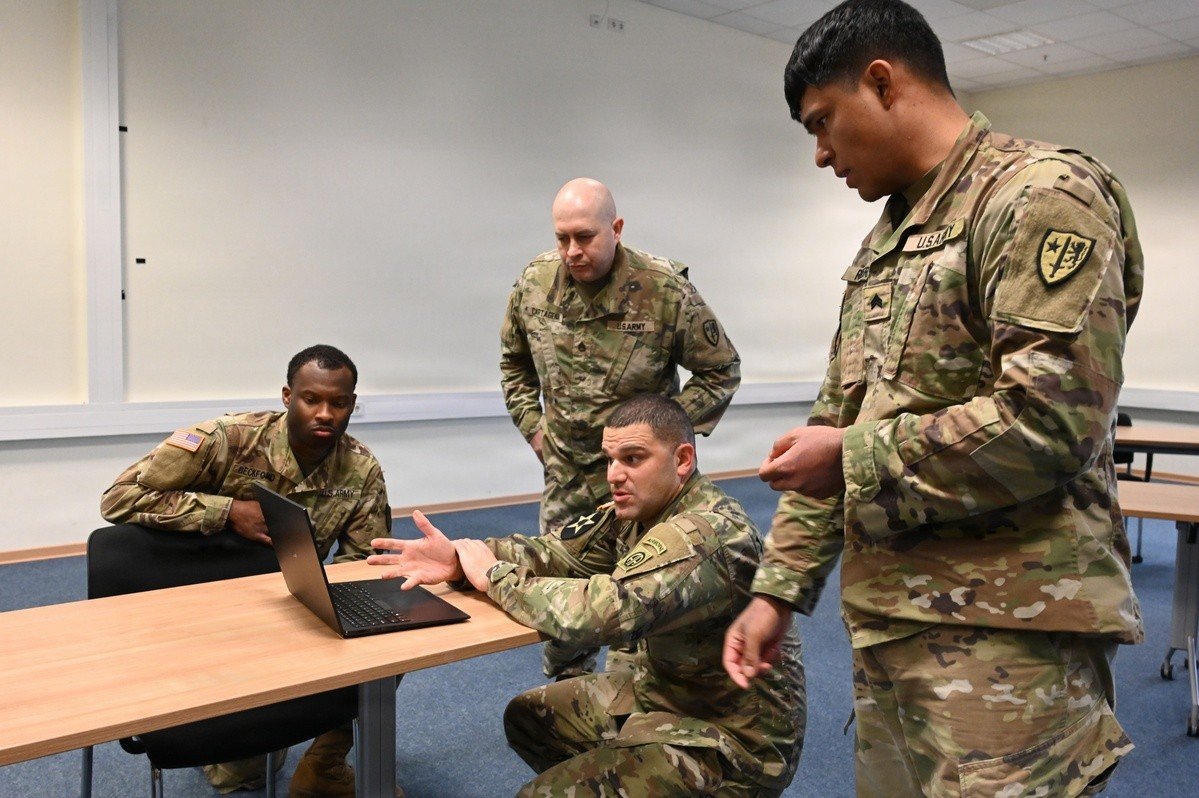
Sgt. Anthony Beckford, Staff Sgt. Albert Cartagena and Sgt. Jonathan Rivera with U.S. Army NATO G6 help Maj. Justin Allison with his computer during a U.S. Army Europe and Africa Military Personnel Exchange Program training and leader development event in Sembach, Germany. The purpose of the event hosted by U.S. Army NATO Feb. 23-27 was to facilitate mandatory readiness and training requirements for exchange officers assigned to isolated locations in seven European countries. Allison is an exchange officer assigned to the German Rapid Response Division in Stadtallendorf, Germany. (Photo by Troy Darr)
VIEW ORIGINAL
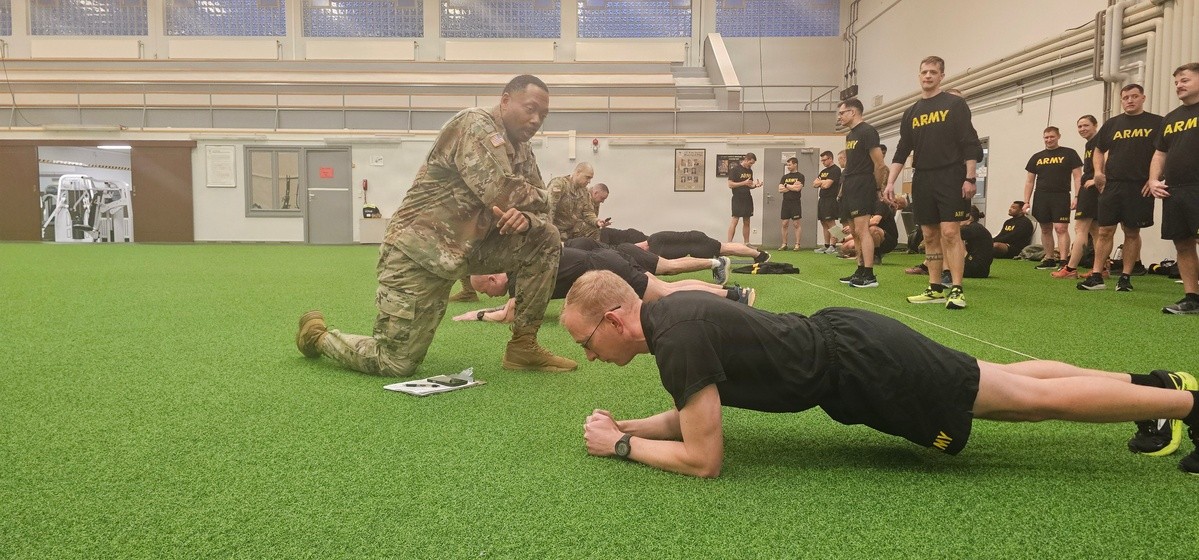
Sgt. 1st Class Lavante Williams with U.S. Army NATO G3 grades Maj. Caleb McCollum during an Army Fitness Test at Miesau Army Depot in Germany. The fitness test was part of a U.S. Army Europe and Africa Military Personnel Exchange Program training and leader development event held in Germany from Feb. 23-27 to facilitate mandatory readiness and training requirements for U.S. Army exchange officers assigned to isolated locations in seven European countries. McCollum is assigned to the British Land Warfare Centre in Warminster, England. (Photo by Staff Sgt. Albert Cartagena)
VIEW ORIGINAL
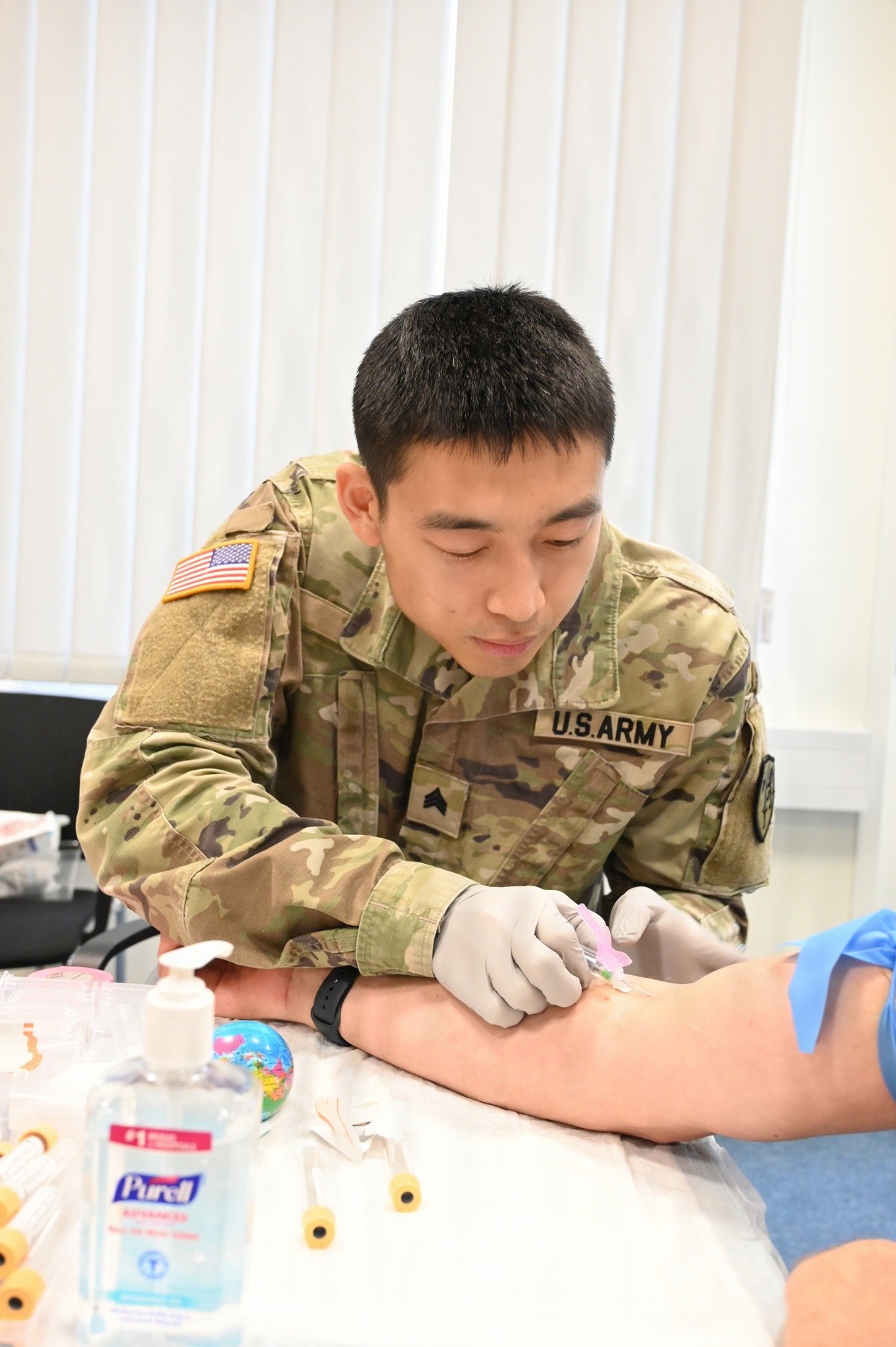
Sgt. Daijang Yu with U.S. Army NATO Surgeon’s Office takes a blood sample from an exchange officer during a U.S. Army Europe and Africa Military Personnel Exchange Program training and leader development event in Sembach, Germany. The purpose of the event hosted by U.S. Army NATO Feb. 23-27 was to facilitate mandatory readiness and training requirements for exchange officers assigned to isolated locations in seven European countries. (Photo by Troy Darr)
VIEW ORIGINAL
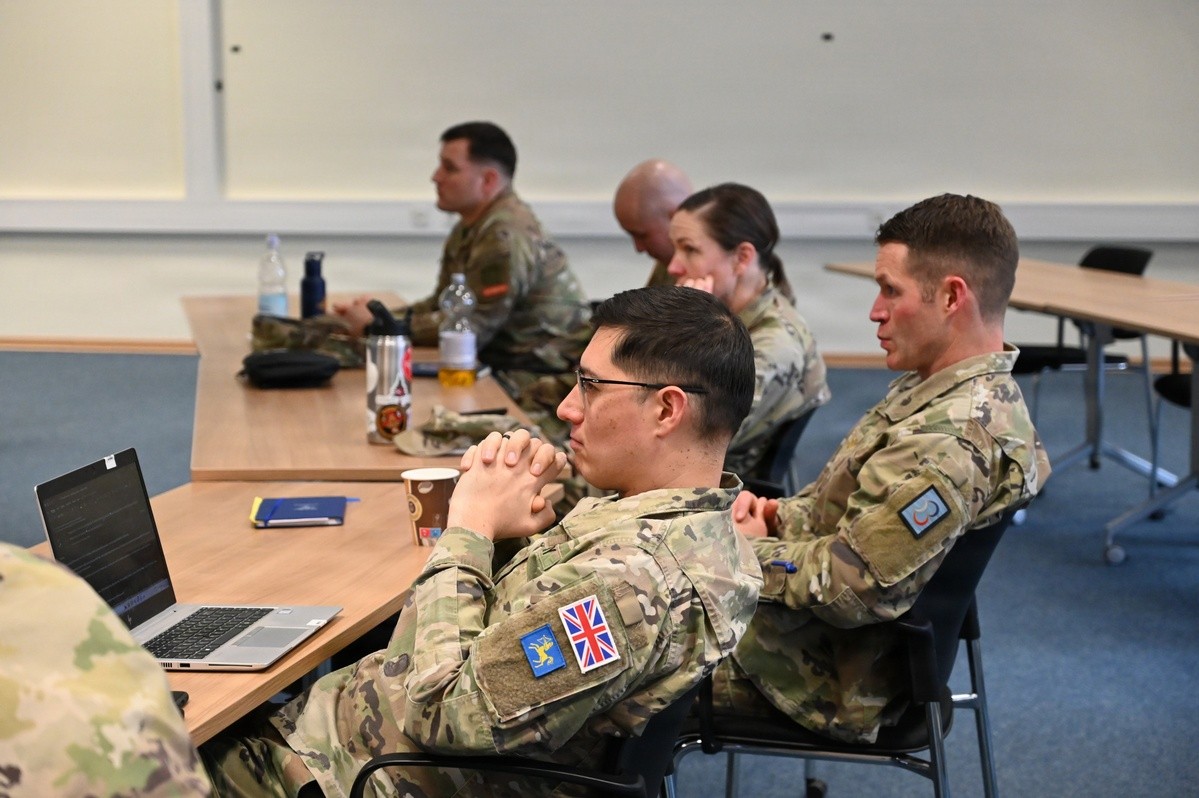
Exchange officers receive a briefing on the Army enterprise Azure Virtual Desktop initiative during a U.S. Army Europe and Africa Military Personnel Exchange Program training and leader development event in Sembach, Germany. The purpose of the event hosted by U.S. Army NATO Feb. 23-27 was to facilitate mandatory readiness and training requirements for exchange officers assigned to isolated locations in seven European countries. (Photo by Troy Darr)
VIEW ORIGINAL
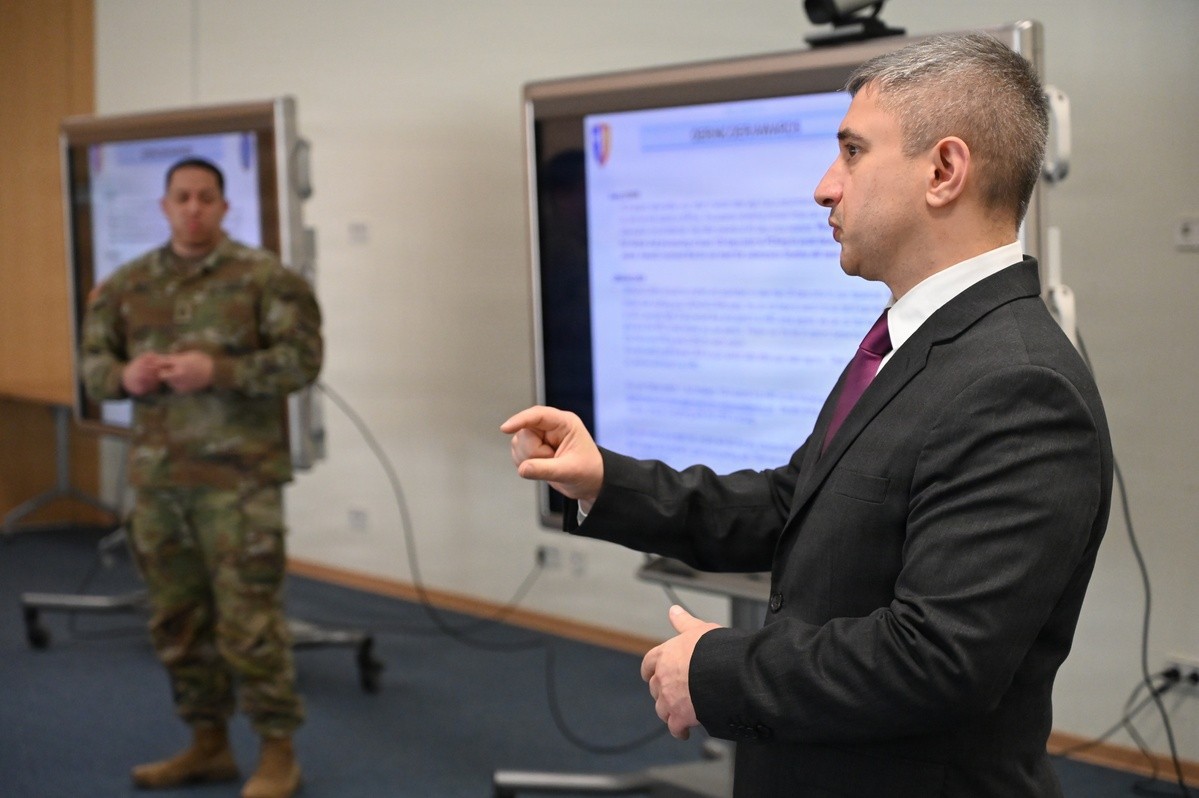
Max Ivulich with U.S. Army NATO G3 discusses quality of life issues with exchange officers during a U.S. Army Europe and Africa Military Personnel Exchange Program training and leader development event in Sembach, Germany. The purpose of the event hosted by U.S. Army NATO Feb. 23-27 was to facilitate mandatory readiness and training requirements for exchange officers assigned to isolated locations in seven European countries. (Photo by Troy Darr)
VIEW ORIGINAL
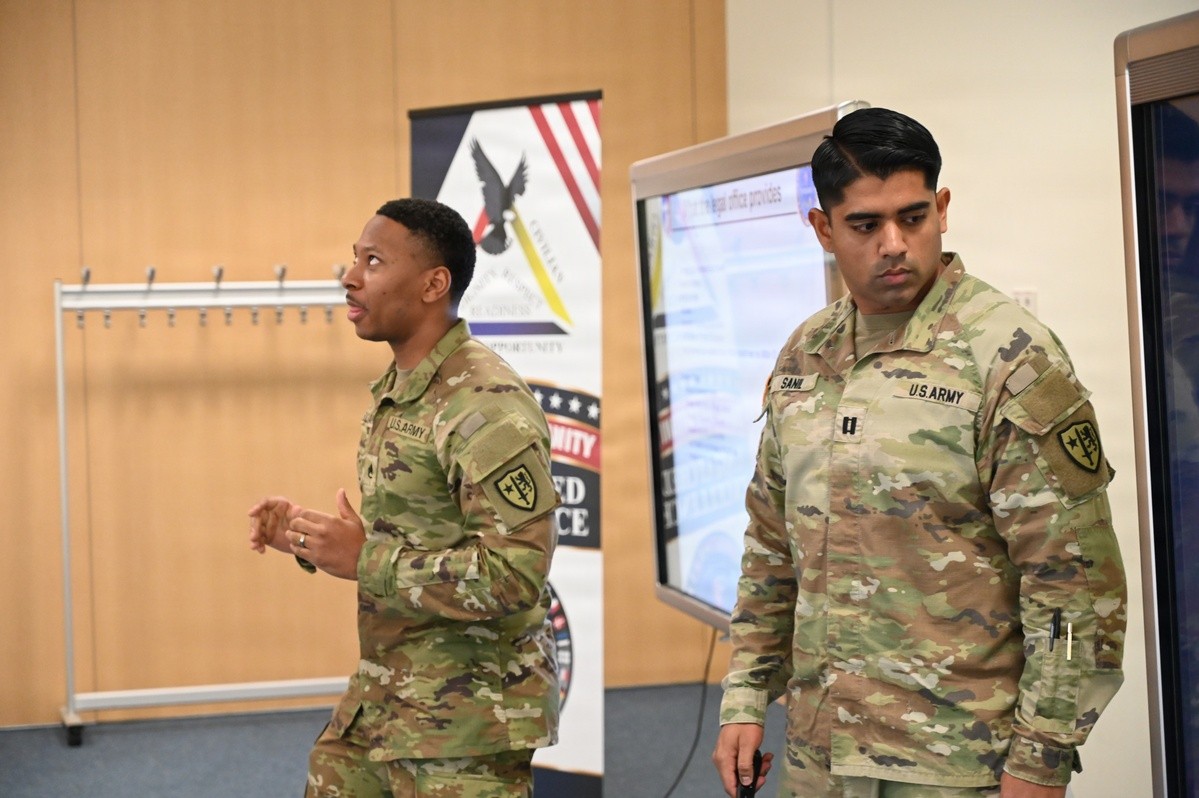
Capt. Benoy Sanil and Staff Sgt. Louis Sullivan with U.S. Army NATO Staff Judge Advocate brief exchange officers during a U.S. Army Europe and Africa Military Personnel Exchange Program training and leader development event in Sembach, Germany. The purpose of the event hosted by U.S. Army NATO Feb. 23-27 was to facilitate mandatory readiness and training requirements for exchange officers assigned to isolated locations in seven European countries. (Photo by Troy Darr)
VIEW ORIGINAL

Maj. Kenneth Smith prepares to start an Army Fitness Test at Miesau Army Depot in Germany. The fitness test was part of a U.S. Army Europe and Africa Military Personnel Exchange Program training and leader development event held in Germany from Feb. 23-27 to facilitate mandatory readiness and training requirements for U.S. Army exchange officers assigned to isolated locations in seven European countries. Smith is an exchange officer assigned to British Army Headquarters in Andover, United Kingdom. (Photo by Staff Sgt. Albert Cartagena)
VIEW ORIGINAL

A military family life counselor explains the services she provides to exchange officers at a U.S. Army Europe and Africa Military Personnel Exchange Program training and leader development event in Sembach, Germany. The purpose of the event hosted by U.S. Army NATO Feb. 23-27 was to facilitate mandatory readiness and training requirements for exchange officers assigned to isolated locations in seven European countries. (Photo by Troy Darr)
VIEW ORIGINAL

Maj. Victoria Martin with Landstuhl Regional Medical Center gives a hearing test to exchange officers during a U.S. Army Europe and Africa Military Personnel Exchange Program training and leader development event in Sembach, Germany. The purpose of the event hosted by U.S. Army NATO Feb. 23-27 was to facilitate mandatory readiness and training requirements for exchange officers assigned to isolated locations in seven European countries. (Photo by Troy Darr)
VIEW ORIGINAL
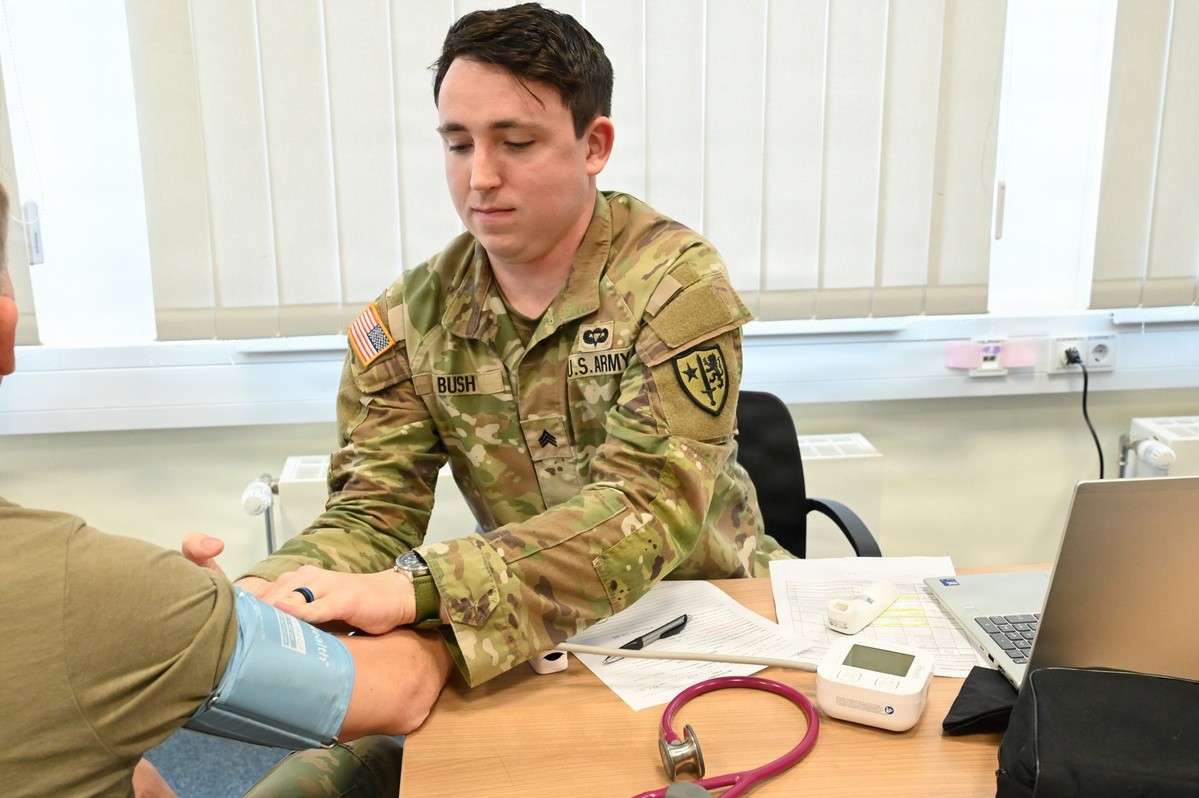
Sgt. Paul Bush with U.S. Army NATO Surgeon’s Office checks the blood pressure of an exchange officer during a U.S. Army Europe and Africa Military Personnel Exchange Program training and leader development event in Sembach, Germany. The purpose of the event hosted by U.S. Army NATO Feb. 23-27 was to facilitate mandatory readiness and training requirements for exchange officers assigned to isolated locations in seven European countries. (Photo by Troy Darr)
VIEW ORIGINAL

Maj. Ethelyn Jackson with U.S. Army NATO Surgeon’s Office discusses periodic health assessment requirements with an exchange officer during a U.S. Army Europe and Africa Military Personnel Exchange Program training and leader development event in Sembach, Germany. The purpose of the event hosted by U.S. Army NATO Feb. 23-27 was to facilitate mandatory readiness and training requirements for exchange officers assigned to isolated locations in seven European countries. (Photo by Troy Darr)
VIEW ORIGINAL

Exchange officers receive a briefing on the finer details of the Defense Travel System from Sgt. Vanessa Javier from U.S. Army NATO G8 during a U.S. Army Europe and Africa Military Personnel Exchange Program training and leader development event in Sembach, Germany. The purpose of the event hosted by U.S. Army NATO Feb. 23-27 was to facilitate mandatory readiness and training requirements for exchange officers assigned to isolated locations in seven European countries. (Photo by Troy Darr)
VIEW ORIGINAL

Master Sgt. Monalisa Christian with U.S. Army NATO Military Equal Opportunity briefs exchange officers on recent updates to the MEO program during a U.S. Army Europe and Africa Military Personnel Exchange Program training and leader development event in Sembach, Germany. The purpose of the event hosted by U.S. Army NATO Feb. 23-27 was to facilitate mandatory readiness and training requirements for exchange officers assigned to isolated locations in seven European countries. (Photo by Troy Darr)
VIEW ORIGINAL

Exchange officers pose for a group photo during a U.S. Army Europe and Africa Military Personnel Exchange Program training and leader development event in Sembach, Germany. The purpose of the event hosted by U.S. Army NATO Feb. 23-27 was to facilitate mandatory readiness and training requirements for exchange officers assigned to isolated locations in seven European countries. (Photo by Troy Darr)
VIEW ORIGINAL
SEMBACH, Germany — Far from the familiar formations of the U.S. Army, a select group of American Soldiers is deeply embedded within the military forces of their European allies. Each year, U.S. Army NATO brings these exchange officers together for a crucial training and leader development event, ensuring they remain ready and connected while serving in isolated assignments across seven countries.
This initiative is part of the Military Personnel Exchange Program, a cornerstone of security cooperation since 1954. The program is designed for the reciprocal exchange of personnel, placing U.S. Soldiers in allied units and vice versa. According to Todd Scatini, the MPEP program manager for U.S. Army Europe and Africa, it’s a powerful framework for building partner capacity and integrating forces at the unit level. The program, he said, allows the U.S. to tangibly demonstrate its commitment by having a presence directly within allied formations.
The annual gathering is more than just a training requirement; it’s a vital opportunity for connection and shared understanding.
“It’s always good to bring the folks in to put a face to a name and have a discussion about what’s going on in your part of the world,” said Col. Jeremiah D. Pope, commander of U.S. Army NATO Brigade.
Beyond the immediate benefits of camaraderie, the program plays a vital role in the strategic fabric of the alliance. This broader perspective was emphasized by U.S. Army Brig. Gen. Kareem (Monty) Montague, an exchange officer assigned to the French Forces Command in Lille, France.
“I think this training is incredibly important because we are all stationed across Europe, working regularly with our European partners,” he said. “And there is a benefit to bringing all of us together once a year, not just to meet annual training requirements, but to share lessons learned and integrate our understanding of the unique challenges we all face.”
Montague stressed that the true power of the program lies in building the deep-seated trust that is essential for combined operations.
“If we’re going to fight with allies, we have to understand them, and there has to be a mutual trust that’s only gained over time,” he explained. “The more people who have experiences serving in those allied formations and take those experiences back to the U.S., the better we understand our allies and the more effective we’ll be on the battlefield, which is where it all matters.”
This visible presence of American Soldiers in allied ranks sends a clear message of solidarity. Capt. Paolo Bonventre, a military exchange officer with the Folgore Airborne Brigade in Livorno, Italy, sees this as a fundamental aspect of his role.
“I think right off the bat, it is important because it provides a presence and shows our commitment to our allies, that we are invested in our relationship with them,” he said.
The program’s influence also cascades through the ranks. Scatini highlighted that U.S. Army sergeants major are teaching in NCO academies in the Netherlands, Germany, and Italy. “In terms of impact and ability to educate and inspire an allied NCO Corps,” he said, “those sergeants major are senior leaders to a generation of noncommissioned officers that then go out and become the backbone of our partner armies.”
For the officers themselves, the annual training is a welcome chance to build their own support network. “This is a time for me to be able to meet these guys, get some perspective from them, and make those connections with them,” Bonventre noted.
Recognizing the challenges of being in isolated assignments, the leadership of U.S. Army NATO ensures that robust support is always available.
“Don’t suffer in silence,” Pope urged the exchange officers. “The U.S. Army NATO support staff, whether it’s finance, medical, administrative, whatever it is, we have a section to help you take care of that… I have an open-door policy. Just come right down and talk to me.”
U.S. Army NATO provides direct support to approximately 60 MPEP Soldiers and their families across Europe and also supports roughly 1,000 Soldiers assigned to NATO billets at 84 locations in 24 countries.



