
 WASHINGTON — Furious that the Nixon administration secretly deployed U.S. troops to Laos, Vietnam and Cambodia, where a covert bombing operation leveled swathes of countryside, Congress passed the War Powers Act of 1973, overriding Richard Nixon’s presidential veto.
Five decades later, Congress is again trying to rein in a Republican president at war.
Democratic senators demanded Secretary of Defense Pete Hegseth and Marco Rubio, the secretary of state, testify publicly this month about why the Trump administration began the war against Iran, now in its third week, and provide cost estimates for the conflict.
“The Trump administration must answer questions publicly under oath in front of the American people, not just behind closed doors,” Sen. Cory Booker (D-NJ), a member of the Senate Foreign Relations Committee, wrote John Thune, the Republican leader of the chamber.
Democratic senators filed resolutions, under the 1973 law, to force the end of the war — measures that will ripen this week and chew up floor time in the Senate, where they are expected to receive votes.
Since U.S. and Israeli forces bombed Iran, Congress has twice rejected legislation to check Trump’s legal authority to conduct military operations against the Middle Eastern nation of more than 90 million people.
New Jersey’s delegation voted along party lines, in the Senate and the House, on those resolutions. Democrats like Frank Pallone (D-6th), who voted for a resolution to halt the war, likened the conflict with Iran to the Iraq war started in 2003.
“Now we are watching the same reckless playbook unfold again,” Pallone said.

Republicans stuck with Trump, who in his public statements has set varying objectives for the war, which he has taken to calling an “excursion” rather than a war.
Rep. Chris Smith (R-4th) said Trump did not need to brief Congress before bombing Iran.
“I think the element of surprise means fewer casualties on our part,” he said. Smith and New Jersey Republicans Jeff Van Drew (R-2nd) and Tom Kean Jr. (R-7th) voted against the resolution.
At the core of the dispute between elected Democrats and the White House, as well Republicans in Congress, is a tension between branches of the federal government.
Congress is the sole branch that can declare war, plus it funds the U.S. military. Yet as commander in chief, the president leads the armed forces.
Under the War Powers Act, a president must notify Congress within 48 hours of an attack and prohibits troops from being engaged in a given conflict for longer than 60 days.
The federal law, which mandates Congress be consulted “in every possible instance,” also binds the president to file reports with Congress every six months during a conflict.
Since the law’s creation, sitting presidents have submitted more than 132 reports to Congress, according to the Nixon presidential library.
“Although the United States desires a quick and enduring peace, it is not possible at this time to know the full scope and duration of military operations that may be necessary,” Trump wrote in a letter to Congress the first week of the war.
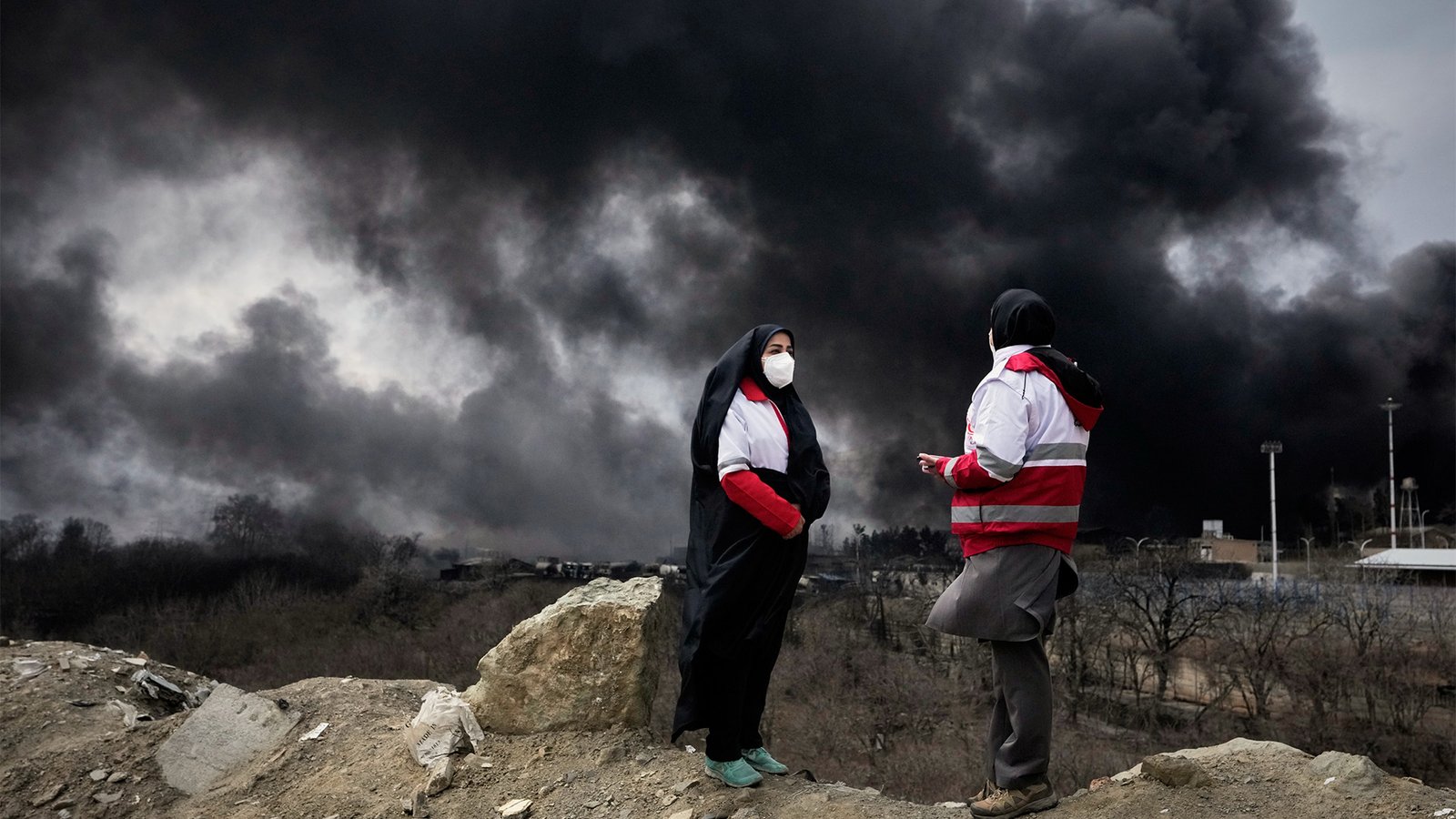
 Credit: (AP Photo/Sajjad Safari)
The first few days of Operation Epic Fury, the military’s name for the war, cost an estimated $3.7 billion, or about $890 million a day, according to researchers at the Centers for Strategic and International Studies, a think tank. For context: that’s about the same sum as the cuts to Medicaid that face New Jersey this year.
Members of Congress expect the administration to request $50 billion on top of regular military funding for the war.
After the war began, Hegseth and Rubio, along with CIA Director John Ratcliffe and Chairman of the Joint Chiefs of Staff Dan Caine led all-members briefings in the bowels of the Capitol.
Those briefings did not include cost estimates for the war.
After the Senate briefing, Sen. Andy Kim (D-NJ) said he worried U.S. forces could burn through their “interceptors” — missiles fired to block incoming missiles — depending on the war’s length.
In their letter, Booker and peers pressed for open hearings on the Iran war.
“With at least 50,000 troops participating in the largest U.S. naval and air mobilization since the 2003 invasion of Iraq, the Trump administration has provided no clear strategy, timeline, objectives, cost assessment, or credible legal basis for these military operations,” Booker and five other Democrats wrote in a letter.
Lawmakers separately urged the U.S. military to provide cost estimates for the war, which has killed thousands in Iran and cost the lives of at least 11 U.S. military members.
Lawmakers in the Senate, except John Fetterman of Pennsylvania, separately pressed the Department of Defense for an investigation of a missile strike that killed at least 168 people in Iran, mostly kids, on the war’s first day.
Vice President JD Vance told reporters Friday it was “unclear” what happened at the school and that an investigation is pending.
The missile type that struck the school, a Tomahawk, is only made in America.
For decades, the theocratic regime in Tehran has been a menace to its nation’s citizens, the region and U.S. interests. At the end of last year, the regime killed tens of thousands of its citizens in a brutal crackdown in dissent.



