
An Assembly panel approved legislation that would levy three new taxes on private prisons operating in New Jersey in a party-line vote Thursday.
The bill, which cleared the Assembly’s public safety committee in a 4-2 vote, would impose a fee based on the value of a private prison’s contract with a government entity, create a monthly per-inmate fee, and subject private prisons to a new corporate tax surcharge in what a sponsor said was a bid to recoup public costs created by the facilities.
“The financial consequences fall squarely on the communities where these facilities operate. New Jersey knows this firsthand — profits from private detention operations in our state increased by more than 10% per quarter last year,” said Assemblywoman Mitchelle Drulis (D-Somerset). “That means more pressure on our local police, on our fire departments, on our emergency services, on our housing programs.”
Employers must heed NJ wage laws for migrants despite their status, high court rules
The measure follows months of consternation over the Trump administration’s immigration policies, including public scuffles at a privately run Newark immigrant detention center that led to criminal charges against Democratic Rep. LaMonica McIver.
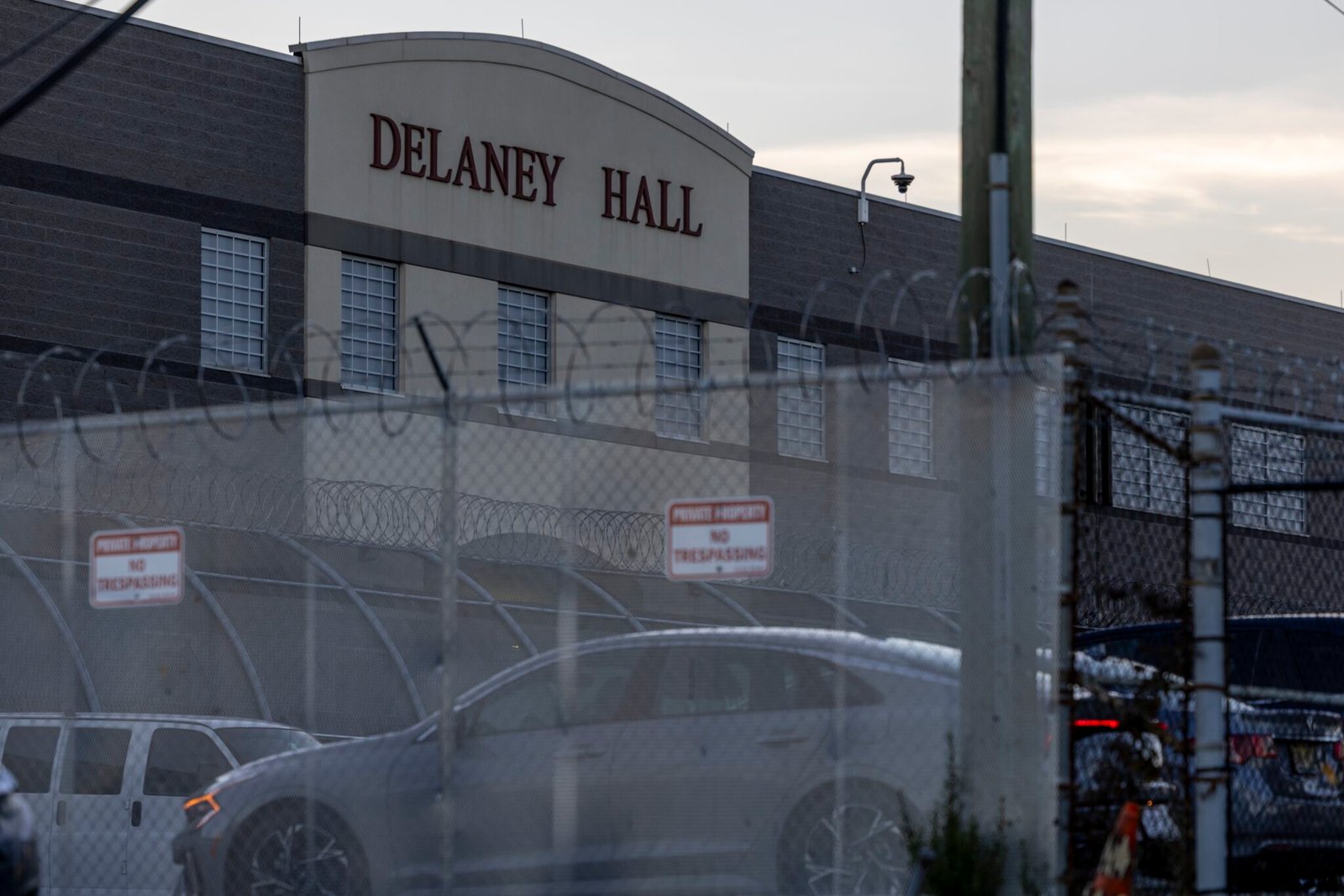
There are two private prisons in New Jersey, both of which are contracted to provide immigrant detention for the federal government. Those are Delaney Hall in Newark and the Elizabeth Detention Center in its eponymous city. They are operated by the Geo Group and CoreCivic, respectively.
Alex Wilkes, a spokesperson for the Day 1 Alliance, a trade group representing the Geo Group, CoreCivic, and other private prison operators, challenged the legality of the taxes.
“For decades, federal contractors have played a limited but valued role in our country’s criminal justice and immigration systems, under both Republican and Democratic leadership, providing dignified, respectful care under multiple levels of government oversight,” Wilkes said. “Efforts to unfairly target government contractors in this manner are plainly illegal and do not serve the best interests of taxpayers or detained individuals.”
Under the bill, facilities contracting with a public entity to provide corrections services would be forced to pay an annual fee equal to 8% of the contract’s value. The money would flow into a new dedicated fund that would pay for New Jersey law schools to provide pro bono legal services to indigent immigrants facing deportation.
Assemblyman Paul Kanitra (R-Ocean) questioned the use of state funds for legal aid to immigrants without legal permission to reside in the United States.
“Obviously, some of the moneys that are raised from this legislation go toward the Detention and Deportation Defense Initiative, the DDDI. Why did you feel that it was important to direct funding to illegal aliens to be able to fight their own deportations?” he said.
Undocumented immigrants are still entitled to due process, Drulis said, adding that federal immigration authorities have detained U.S. citizens or their spouses.
“I have no way of looking at someone and knowing their status, their immigration status. What I do know is we’ve had American citizens locked up. We’ve had spouses of American citizens locked up,” she said. “There is a cost to due process. It’s just the way it is, and I believe in due process, which I hope you do too.”
She said the bill was inspired by the detention of Karim Daoud, a Flemington resident held for more than nine months after being taken into custody at an appointment to renew his work authorization documents before being released in December.
The bill would separately charge private prison operators a monthly $15 fee per day each inmate spends detained there.
Prisons subject to that tax would also be mandated to report how many inmates they have and how long each of them was detained each month to state tax officials. The bill demands the fee’s collections be used to support programs related to food security, housing, job training, youth mentorship, and recreation.
Together, the two private facilities in New Jersey averaged a little more than 1,200 detainees last month, according to the Transactional Records Access Clearinghouse, a research organization focused on gathering public records. At those levels, the fee could bring in more than $500,000 per month.
The bill would subject private prisons to a 3% non-marginal corporate business tax surcharge on their net New Jersey income, and it bars tax credits from reducing obligations under the surtax.
The surtax’s revenue would be equally split between state, county, and local programs, though money that flows to municipalities must be used to support their police and fire services.
“If there was some kind of emergency situation at one of these detention facilities, and with the number of people and the way the facility’s set up, it’d be our local taxpayers’ whose budget would be affected,” Drulis said.
The bill would go into effect Jan. 1 if passed through both chambers and signed into law. The measure must still clear the Assembly Appropriations Committee before reaching a floor vote in the lower chamber.
A companion bill in the Senate has yet to receive a hearing since being introduced last month.
GET THE MORNING HEADLINES.



