
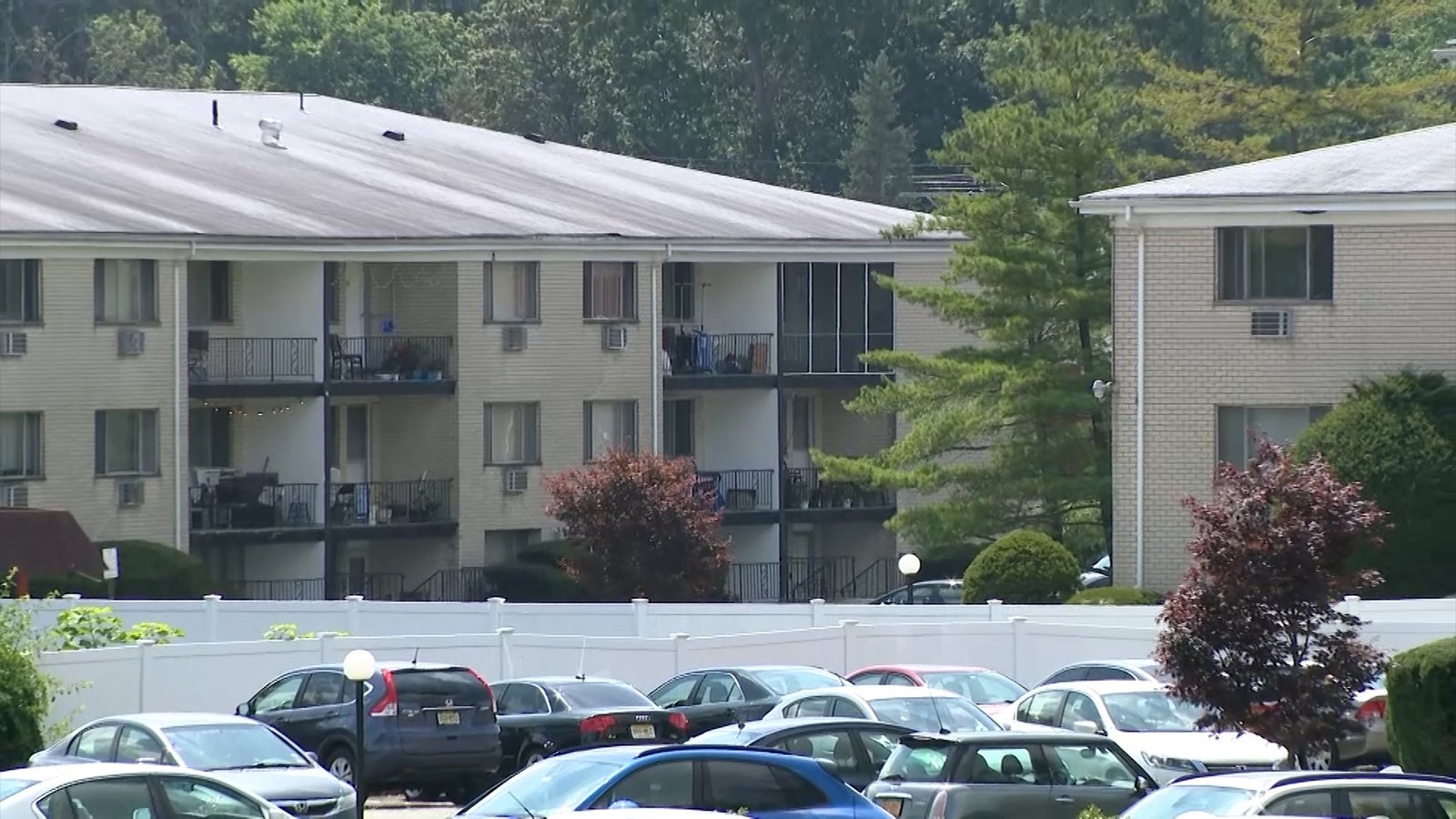
All 564 New Jersey municipalities this week faced a deadline to comply with the state’s affordable housing law. That means they had to adopt ordinances stating how they’ll plan for such residences over the next decade. It’s been a contentious journey. Several towns are still not on board, even as housing advocates say the state needs more than 200,000 new units to help address the affordability crisis. In February, the median home sale price hit $540,000, or 3.8% higher than a yaer before, according to Redfin.com.
Jag Davies, the communications director with Fair Share Housing Center, explains why New Jersey towns and cities have to comply. This interview has been lightly edited.
Joanna Gagis, anchor: Help folks understand what the Fair Share Housing Center is and how it was created in 1975.
Jag Davies: New Jersey’s affordable housing law is based on a series of Supreme Court decisions known as the Mount Laurel doctrine, which says that every municipality has to allow for its fair share of affordable homes. Fair Share Housing Center was founded in 1975, the year of the first Mount Laurel ruling, by the lawyers and community activists who brought that case. New Jersey is historically one of the most racially and economically segregated states in the country, and the Mount Laurel doctrine has played an important historical role in putting a dent in that and integrating New Jersey.
JG: We’re in round four of these towns needing to declare how many units they’ll build. Can you tell us what this deadline this week required of those municipalities?
JD: This week was really a historic milestone. This was the final date in the process for the fourth round, by which point every municipality had to submit their final fair share housing plans. The Mount Laurel doctrine has not always been enforced adequately, and some towns have tried to skate around their affordable housing requirements.
In 2024, a new law was passed that really strengthened the Mount Laurel doctrine. It made the process a lot more streamlined and a lot easier for towns to participate. As a result, we’ve seen historic progress. Over 400 towns have now adopted their final implementing ordinances.
It really shows how the politics of affordable housing and housing more broadly are changing. Housing costs have gone up so much faster than people’s incomes, and even people with several full-time jobs and households with several working parents aren’t able to afford a decent place to live.
JG: Democratic and Republican mayors alike say the law puts requirements on them that they simply can’t meet. They say they don’t have the infrastructure, they don’t have the water, the schools, the space.
They have to give up green space in order to build. Some have even taken legal action against the law. It did not work. How and when do you decide to critically look at some of these municipalities that say they can’t meet their fair share, that they can’t comply with the next round. When do you take legal action? When do you step in?

JD: There’s only about 20 towns left that we haven’t reached settlement agreements with, and that are not moving forward with creating affordable housing. Those cases will be heard by a judge in the summer. So many towns are complying with the law and participating because they have wide latitude to create affordable housing in the way that works best for their towns.
No one is coming in and saying you have to put this exact type of housing in this exact place. Towns have a lot of latitude in the process. They can create 100% affordable housing. They can create mixed-income housing that also includes a substantial amount of market-rate housing. They can create supportive housing for seniors and people with disabilities.
JG: Talk about some of the more creative ways that municipalities are addressing this.
JD: A lot of the affordable housing projects under the fourth round are redevelopment projects — not paving over green space, but utilizing underused properties, abandoned malls, empty offices. And that really has a lot of benefits because from an infrastructure perspective, you already have roads, you already have electric and sewer and infrastructure there. All over the state, there’s towns who are revitalizing underutilized areas, areas that are central in their town near transit, and are creating new vibrant mixed-income communities.
JG: About two dozen towns tried to fight this. They were hoping that it would go all the way to the U.S. Supreme Court. Justice Samuel Alito, who is a New Jersey native — they were hoping that he would hear the case. What happened?
JD: That lawsuit has failed at every level. It was rejected at multiple levels of the state courts. And then this small group of 20 towns went to the Supreme Court and asked them to pause the implementation. And Justice Alito declined that and said that means that the law has to move forward and that towns need to meet the deadlines this month.
JG: Some say: “Look, this is a burden on small communities. Why not look to the big cities where there’s better infrastructure, transportation, more access to jobs?” The law has not agreed with that thinking, though. Why not?
JD: Towns near transit ,with more space in more urban areas, have much higher requirements. And towns in more rural or suburban areas have much lower requirements. But everywhere in the state is facing an affordability crisis.
It’s essential to create more inclusive communities. And the reason most towns are participating in the process is because they realize that it’s good for their local economies. It helps supports small businesses. It brings in new property tax revenue. So there’s a lot of benefits to even the smaller towns in creating new affordable housing.
And of course, there’s transformative benefits for residents who are able to access housing in high-opportunity communities. We can’t just segregate affordable housing only in urban areas. That’s not a solution to the housing crisis.



