
 Amid ever-increasing rents, thousands of senior tenants in New Jersey are in danger of seeing their state-funded Anchor rebates slashed later this year.
Unless lawmakers go along with a budget proposal Gov. Mikie Sherrill offered earlier this month, such payments would drop to $450 from $700 for seniors earning up to $150,000 annually.
But there’s a catch to Sherrill’s proposal that she included in a budget that seeks to deliver restraint in Trenton after years of state government’s spending more than it takes in each year from taxes.
While Sherrill is proposing to maintain funding to sustain the $700 Anchor rebates for income-qualified senior tenants for another year, the first-term Democrat is seeking to reduce spending on other relief benefits provided to a different group of New Jersey seniors.

This part of Sherrill’s proposal would halve the annual $500,000 income ceiling for the Stay NJ program, designed to benefit only senior homeowners.
The same proposal also calls for reducing to the maximum benefit to $4,000, a $2,500 cut for senior homeowners eligible for Stay NJ.
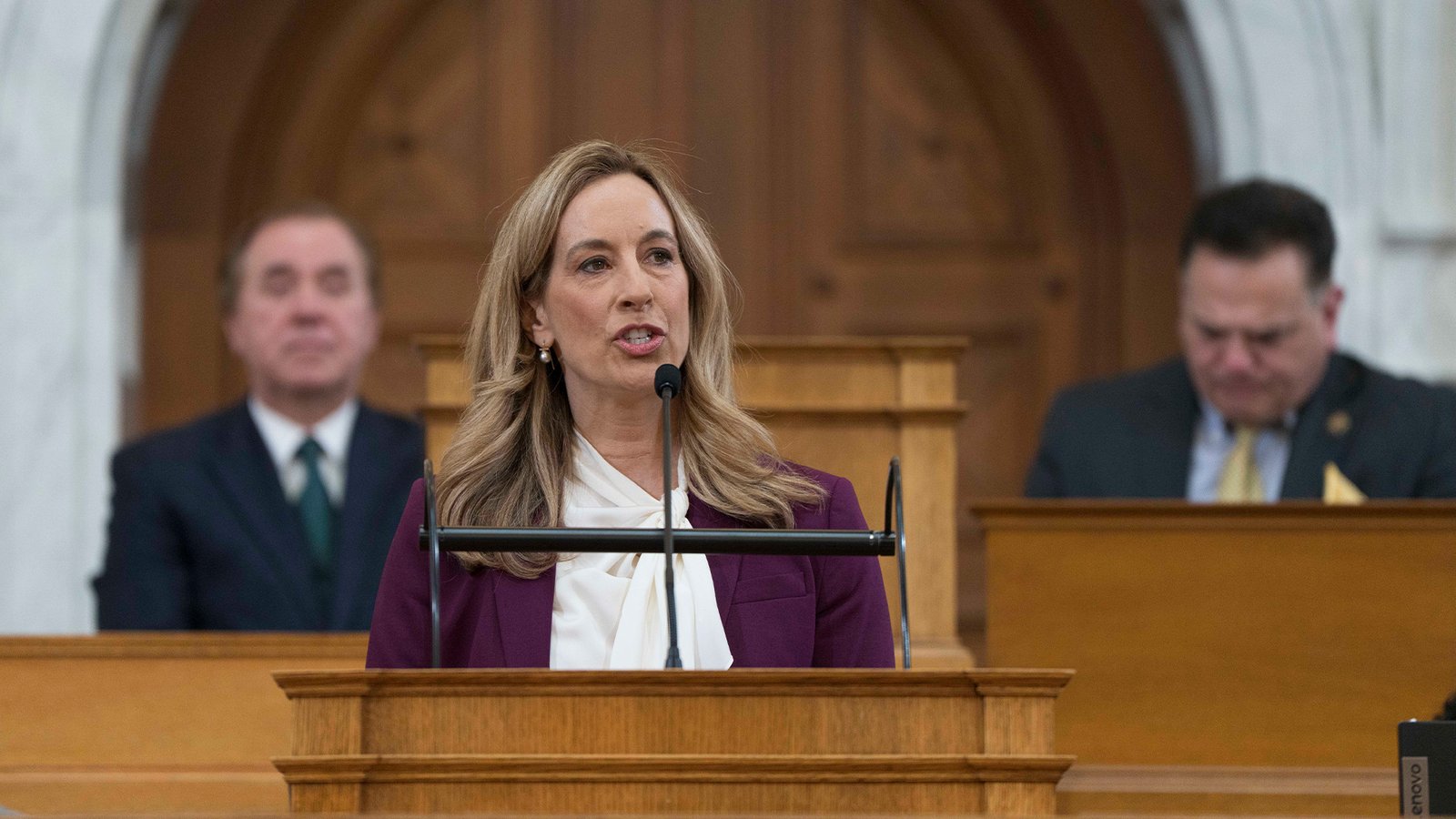
In her March 10 budget address, Sherrill said her proposed policy tweaks would “safeguard Stay NJ for middle-class seniors” amid the state’s worsening budget crunch.
She also suggested her plan would make the state’s direct relief allocations more targeted by prioritizing funding for the low- and middle-income senior and disabled tenants who receive Anchor benefits. That group totals more than 110,000 recipients, according to budget documents.
“That’s a fairer, more efficient use of taxpayer money,” Sherrill said.
Democrats’ buy-in
While the governor is portraying the issue as a matter of both fairness and fiscal responsibility, it relies on fellow Democrats who control the Legislature to go along with her plan.
Under the state constitution, the governor has the authority to put forward an annual budget, but it’s up to lawmakers to draft the spending bill that will become the next state budget.
With public hearings underway on Sherrill’s proposed budget, a key debate topic already is her plan to preserve the full Anchor benefits for senior renters, while modifying the rules for Stay NJ.
Any Stay NJ modifications are likely to be a big lift in the Assembly, where the program has been pitched as a signature policy achievement during the tenure of longtime Assembly Speaker Craig Coughlin (D-Middlesex).
“It’s been wildly well-received. It’s an impactful and perhaps transformative program.”
This is the first distribution period for Stay NJ benefits after years of setting aside money to roll out the program, which was conceived in 2023 to help seniors remain in their homes in the face of record-high property taxes.
In all, nearly $600 million in Stay NJ benefits are being distributed on a quarterly basis to more than 460,000 recipients, according to budget documents.
“It’s been wildly well-received,” Coughlin said during an interview with NJ Spotlight News. “It’s an impactful and perhaps transformative program,” he said.
Also very popular in New Jersey is the Anchor program, which benefits more than 2 million homeowners and renters of all agese.
Sherrill’s $60.7 billion proposed budget earmarks more than $4 million for direct property tax relief during the fiscal year that starts July 1. More than half that relief total would continue to be set aside to fund Anchor benefits of $450 to $1,500, depending on income and residency.
For seniors renters she is also seeking to maintain a $250 bonus that otherwise would sunset in fiscal year 2027.
Meanwhile, state government would log $500 million in estimated savings by modifying the Stay NJ, helping to narrow a projected structural budget imbalance that Sherrill has identified as a key fiscal challenge.
That gap that would grow to $3 billion during the next fiscal year, according to the Sherrill administration, unless spending cuts and other fiscal policies she’s proposing as part of her budget plan are enacted by lawmakers.
Last year, a report issued by the Trenton-based New Jersey Policy Perspective think tank raised concerns about the growing cost of Stay NJ, while also calling for increased aid for senior tenants. That population indirectly pays New Jersey’s sky-high property tax levies through their monthly rents.
Tenant ‘insecurity’
“Senior renters face serious housing insecurity challenges, putting them at higher risk of housing insecurity than senior homeowners,” the report said.
During a public budget hearing this week Peter Chen, the report’s author, credited Sherrill for proposing to rein in Stay NJ spending. The reforms, he said, “we have been talking about for some time that would help reduce the overall cost, while primarily impacting those with very expensive homes or much higher incomes,” Chen told the Senate Budget and Appropriations Committee.
Robert Rashkes, an AARP New Jersey volunteer from West Orange, gave lawmakers a different take, citing his own experience with Stay NJ, which he called “a promise” that has been made by the state.
“Like many older New Jerseyans, I live on a fixed income, while property taxes, utilities and everyday expenses continue to rise,” Rashkes said. “Recently, I received my Stay NJ check, which has helped me avoid dipping into savings I may need for health care or emergencies down the road,” he said.
This story is made possible in part by the Corporation for Public Broadcasting, a private corporation funded by the American people.



