
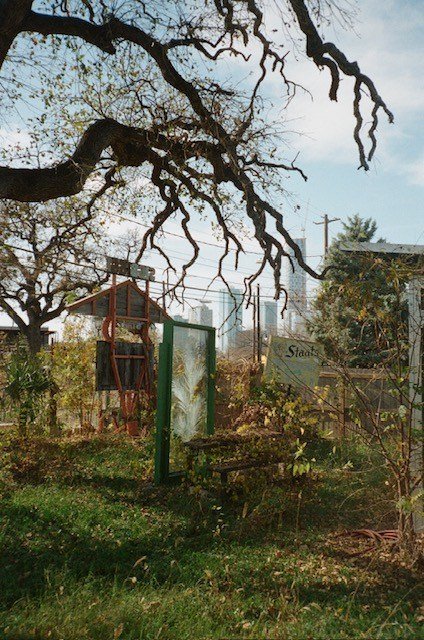
One year after Willa Staats and her brother inherited their family’s East Austin home and the adjacent lot, they were hit with a combined property tax bill of $48,000.
It was nearly 90% higher than what their father had last paid, and more than half of Staats’ salary at the time.
On paper, the siblings had inherited something immensely valuable: two properties in a Texas city where homeownership had minted enormous wealth during the COVID-19 pandemic boom, and a foothold in one of the country’s most competitive housing markets.
But that value came with a catch. Their inheritance gave them equity, not cash—and stripped away the tax protections that had helped their father hold on to the property for decades.
As a longtime homeowner, their father had benefited from a homestead exemption that capped annual increases in taxable value at 10%. But when the property passed to his heirs, the taxable value reset to market rate—right as Austin home prices peaked.
“We inherited nothing else. There was maybe $15,000 in cash accounts for my dad. He had no retirement, no life insurance,” Staats tells Realtor.com®.
That left the siblings with substantial housing wealth on paper, but little liquidity to carry its costs. To keep the property would mean taking on a tax burden they couldn’t afford. To sell would mean forgoing both their foothold in Austin and a deeply rooted family legacy.
The siblings’ struggle to keep their childhood home captures a growing tension for a generation set to inherit housing wealth: A family home can be a valuable asset and still be financially out of reach.
More than a house
Staats’ parents moved to East Austin in 1999, long before the historically Black and Hispanic neighborhood became one of the city’s hottest retail districts. Over time, they assembled something that seems increasingly rare in the city: an improvised, eccentric, and proudly “weird” family compound.
There was the main house, a vacant lot turned backyard, and a commercial parcel leased to local businesses at what Staats says were well below market rates.
After their mother—an attorney and the family’s breadwinner—died in 2010, the property also became the family’s source of income.
Staats’ father, a photographer and creative, began renting out the main house, often to business clients visiting the emerging tech hub, and reshaping the rest of the land into a patchwork of improvised backyard structures supported by plumbing that ran from the nearby commercial property.

On weekends in high school, Staats slept in an Airstream trailer while her father slept in a greenhouse.
She describes her home as “as cool as Austin gets,” and it’s easy to see why.
There are mature oak trees, an old boat converted into a beer pong table for guests, and a hand-built sauna with the feel of an onsen. It is bespoke, artsy, and distinctly different from the homogenous style of new-construction homes that have become so common across Travis County.
That was always part of the appeal to guests. Staats estimates that her father was able to generate close to $80,000 a year in short-term rental income—enough to cover his living expenses along with an average combined annual property tax bill of about $13,000, property records show.
The tax protections didn’t transfer
But while the Staats family was living creatively, the city and neighborhood around them were changing. In the 30 years they had lived in East Austin, the median home value had skyrocketed almost 640%, according to data from Realtor.com.
That helps explain the siblings’ first tax bill, which Staats describes as a “double punch.”
The 90% jump reflected both the sharp rise in East Austin property values and the loss of the protections that had helped her father absorb those increases over time.
“It was such a leap,” she says. “It was the double punch of the prices that probably increased 30%, and then also, my dad had been protected year over year for the growth.”
But the knockout was losing the homestead cap.
“A change in ownership triggers the loss of any homestead exemptions on a property,” explains Cynthia Martinez, chief strategy officer for the Travis Central Appraisal District.
Heirs who occupy an inherited home as their primary residence may still qualify for their own homestead exemption by filing an affidavit of heirship. But, she adds, “because this process relates to a new owner of the property, the exemption benefits from the prior owner will be lost.”
Property records show the taxable value of the primary residence lot jumped 77% in the year Staats and her brother took ownership, while the backyard lot rose 124%—helping drive their combined tax bill to $48,000.
To relieve the immediate pressure, the siblings sold the commercial property for a sum of over $2 million, paying off their tax bills along with the remaining mortgages on all three properties.
The county saw improvements—but were they?
It’s easy to see those commercial proceeds and cast them as a blanket windfall for the siblings. And in some ways, it was. But the sale also came at an enormous cost.
Beyond losing the rental income from commercial tenants, it also effectively shut down their father’s short-term rental business.
Because the plumbing for the backyard structures was tied to the commercial property, the sale cut off their water supply—leaving those units without running water and making them unusable as rentals or living quarters.
So the following year, when the siblings were hit with another tax bill of more than $46,000—including an almost $17,000 bill for their backyard lot—they were stunned. A bill that large made some logical sense when the lot contained functioning short-term rentals, but now those structures weren’t usable—reduced to the functional equivalent of a shed.
By the city’s own definition, accessory dwelling units need to have “a habitable space, a full bathroom, and a sink or dishwasher outside of a full bathroom.” So, Staats protested the valuation.
“I thought I had an open-and-shut case,” she says. “I had a slam dunk with my city definition.”
But in the eyes of the Travis Central Appraisal District, the answer was less straightforward. To the appraisal district, the structures still had value, and a review board ultimately agreed, upholding their valuation.
In response to a series of follow-up questions from Realtor.com on how detached structures are valued and determined as habitable, the county appraisal district responded, “It may vary depending on the characteristics of the improvement. However, if a structure exists, it has value.”
For Staats, the fight exposed how quickly the lived reality of a property—its history, its actual condition, even its apparent fit with the city’s own rules—could be flattened into a bill.
What happens when a family legacy becomes too expensive to keep?
The siblings have now contested the property’s valuation at least twice—once with help from a local organization, and once with Staats representing herself.
“It was hard to do the personal representation in these property tax meetings, because we’re talking about a greenhouse that has housed all these wonderful memories,” she says.
The fight may also have clarified what was coming.
“I was probably the first to see it, that we couldn’t stay here forever,” she says.
This summer, the siblings plan to put the properties on the market. Developers have already expressed interest. So have neighbors, some of whom have urged them not to sell.
But Staats says she can’t be the one who holds the line forever.
“I’m not going to be the last stronghold here, and I can’t control who the next person sells it to.”
She plans to start over somewhere new once they sell. In that sense, the inheritance may finally do what homeownership is supposed to do: Give the next generation a new start.
But for Austin, the sale marks another kind of inheritance story—a city growing richer in land value while growing poorer in the family histories and neighborhood character that made it worth wanting.
In Staats’ words, “The reason why you find this neighborhood cool at all is because of its history and its residents. … It feels like their loss. Austin’s loss.”



